
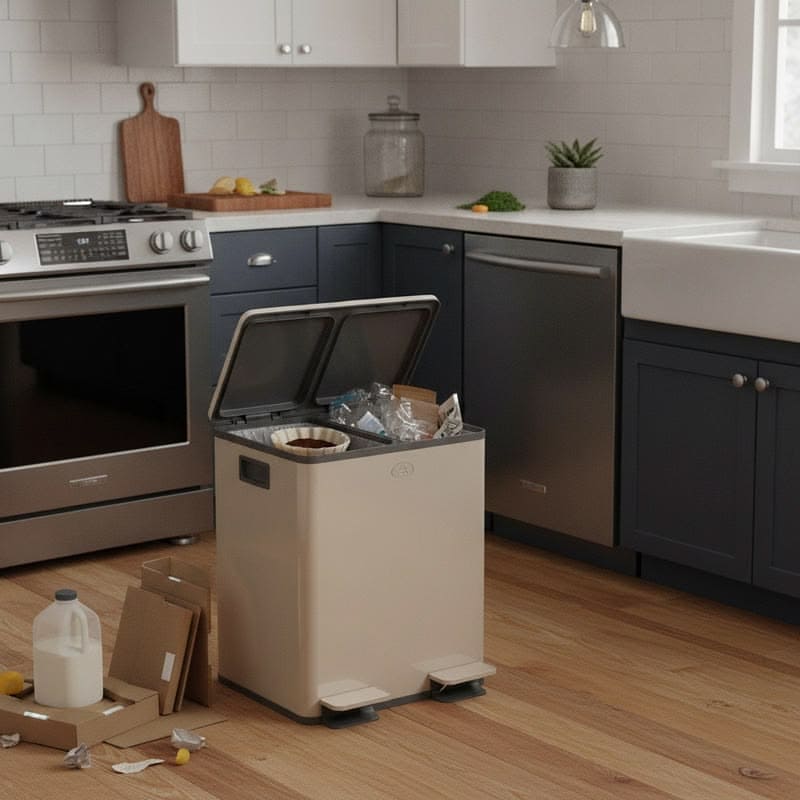
Selecting the right waste management solutions for residential and commercial projects is crucial for optimizing kitchen functionality, cabinet ergonomics, and interior aesthetics. The average kitchen trash can size ranges from 12 to 16 gallons (approx. 45 to 60 liters), with 13 gallons (50 liters) recognized as the standard specification for modern homes. Whether you are an architectural specifier, real estate developer, or wholesale buyer, understanding global dimension standards ensures seamless integration with custom cabinetry and layout designs.
Key Takeaways
- Standard Industry Benchmark: The standard average kitchen trash can size is 13 gallons (50 liters). It fits off-the-shelf liners and balances capacity with spatial efficiency.
- Dimensional Planning: Always Measure your kitchen space prior to specifying pull-out cabinet hardware or freestanding units to prevent obstruction of walkways and doors.
- Bag & Liner Compatibility: Ensure you Match your trash bags to bin capacity and thickness requirements (e.g., 1.0–1.2 mil for heavy waste) to eliminate bag slipping and tearing.
- Layout Optimization: For Average-sized kitchens, a 10–13 gallon built-in or freestanding bin provides the ideal footprint without sacrificing cabinet storage.
Introduction: Why Trash Can Dimensions Matter for Global Procurement
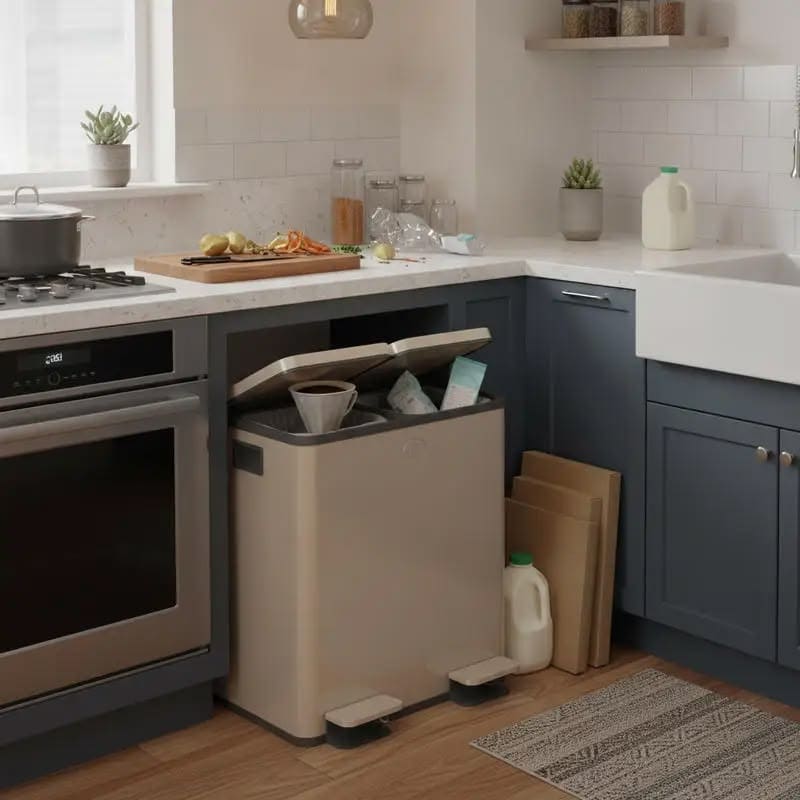
In international building projects and whole-house custom furnishing, kitchen accessories are far more than an afterthought. Specifying the wrong bin dimensions can result in costly cabinet modifications, unseemly clutter, and operational friction for end users.
When sourcing for residential developments, global buyers often inquire about the average size of kitchen trash can units that fit standard kitchen cabinets across American, European, and Asian markets. Aligning bin dimensions with international cabinet standards allows developers and importers to streamline ordering, lower freight costs, and offer superior user convenience.
Standard Kitchen Trash Can Sizes & Metric Conversions
Common Capacities by Project Application
When overseas clients ask what is the average size kitchen trash can, the benchmark capacity for single-family residences is 13 gallons (50 liters). However, specifications vary depending on target market demographics and kitchen square footage:
| Household / Project Type | Recommended Capacity (Gallons) | Metric Equivalent (Liters) | Primary Application |
| Studio / Micro-Apartment | 4–6 gal | 15–22 L | Under-sink bins, vanity, compact prep zones |
| Single / Couple Unit | 7–10 gal | 26–38 L | Compact kitchens, multi-bin recycling setups |
| Standard Family Home | 12–16 gal | 45–60 L | Primary kitchen waste for Average-sized kitchens |
| Large Estate / Villa | 20–30 gal | 75–113 L | High-occupancy homes, semi-commercial pantries |
To answer what is the average size of a kitchen trash can across global markets, standard residential units universally fall between 10 and 16 gallons (38 to 60 liters).
Typical Physical Dimensions (Height × Width × Depth)
Freestanding and integrated kitchen trash cans generally adhere to the following dimensional ranges:
- Height: 24 to 36 inches (61 to 91 cm)
- Width: 15 to 20 inches (38 to 51 cm)
- Depth: 12 to 16 inches (30 to 41 cm)
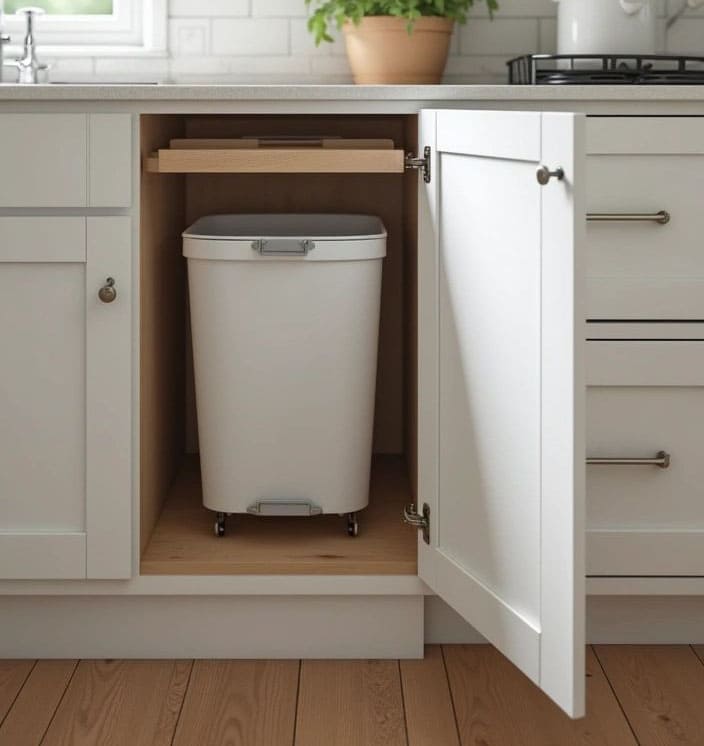
Pro Tip for Cabinet Integration: When specifying pull-out trash bin hardware inside base cabinets, allow an additional 8 to 12 inches (20 to 30 cm) of overhead clearance if lid-opening mechanisms (such as top-hinged or sensor lids) are used.
Factors to Consider When Sourcing Kitchen Trash Cans
1. Kitchen Space & Cabinet Layout
Floor plan layouts dictate whether freestanding, under-sink, or soft-close pull-out units are appropriate. Before finalizing floor plans or custom kitchen joinery, always Measure your kitchen space—including cabinet door openings, under-sink plumbing clearances, and traffic aisles—to ensure comfortable clearance.
2. Household Size & Trash Volume
In markets with strict municipal recycling rules, multi-compartment waste systems are preferred over single large bins. Dual 7–9 gallon (26–34 L) compartments built into one 15–18 gallon pull-out frame allow convenient sorting of organic waste, recyclables, and general refuse.
3. Mechanism Types
- Step-On (Foot Pedal): Hands-free operation; ideal for freestanding placement in prep areas.
- Pull-Out (Base Cabinet Mount): Concealed design that keeps floors clear; highly favored in high-end whole-house custom projects.
- Motion Sensor (Touchless): Hygienic, modern infrared technology suitable for luxury residential developments.
Small vs. Large Kitchen Trash Cans for Property Projects
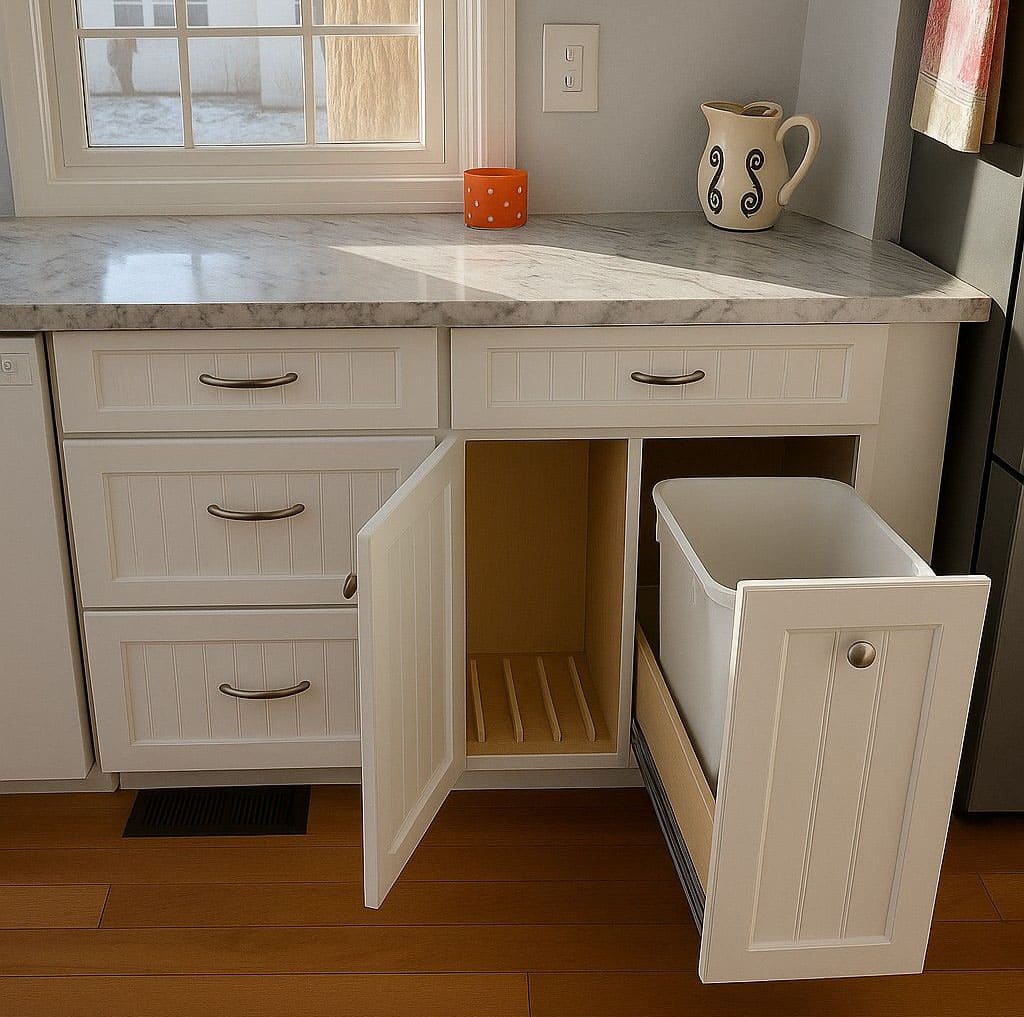
Compact Bins (4–10 Gallons)
- Pros: Fits under sinks or inside narrow base cabinets; keeps kitchen floors uncluttered; forces frequent disposal to minimize indoor odors.
- Cons: Fills quickly in multi-person households; requires non-standard liner sizes if small.
High-Capacity Bins (13–30 Gallons)
- Pros: Holds large volumes of waste; accommodates standard 13-gallon or 30-gallon commercial bags; reduces maintenance frequency in busy households.
- Cons: Consumes visible floor space; requires careful ventilation and odor management if food waste remains inside for several days.
Matching Trash Bags with Commercial & Residential Bins
To prevent torn liners or unsightly bag overhang in commercial or residential properties, advise end-users to Match your trash bags to the exact vessel shape and capacity:
| Can Capacity | Liner Size | Recommended Thickness | Ideal Waste Type |
| 7–10 Gallons | 8–10 Gal Bags | 0.5–0.8 mil | Light office/vanity trash |
| 12–13 Gallons | 13 Gal Standard Bags | 0.9–1.2 mil | Regular domestic food & food packaging |
| 14–16 Gallons | 16 Gal Bags | 1.2–1.5 mil | Heavy kitchen waste, wet refuse |
| 20+ Gallons | 20–30 Gal Heavy Duty | 1.5–2.0 mil | High-volume commercial / outdoor trash |
Conclusion: Streamline Your Kitchen Sourcing with George Group One-Stop Solutions
Choosing the correct kitchen trash can dimensions is essential for creating functional, visually appealing, and hygienic living spaces. From compact pull-out bins for city apartments to multi-bin recycling units for luxury estates, precise dimensional planning ensures long-term customer satisfaction.
As a global leader in whole-house customization and building materials, George Group simplifies the procurement process for international buyers. With over a decade of experience managing complex residential and commercial projects, George Group offers a comprehensive, end-to-end one-stop solution.
From custom kitchen cabinets with integrated pull-out trash systems to doors, windows, wardrobes, sanitary ware, and lighting, George Group seamlessly handles workflow from initial design drawings to engineering production, quality inspection, and international shipping. Partnering with George Group guarantees rigorous engineering standards, cost efficiencies, and a unified aesthetic for your entire project.
Frequently Asked Questions (FAQ)
What is the most widely specified trash can size for residential projects?
The standard average kitchen trash can size globally is 13 gallons (50 liters). It fits standard base cabinet heights and matches widely available trash liners.
How do I ensure pull-out trash bins fit inside custom kitchen cabinets?
First, Measure your kitchen space including interior cabinet clear width, depth, and vertical clearance around plumbing traps. Working with an integrated supplier like George Group allows pull-out hardware and cabinet dimensions to be customized simultaneously during the design phase.
What material is best for high-traffic rental or commercial kitchens?
Grade 304 stainless steel with anti-fingerprint coating or heavy-duty polypropylene plastic are recommended for maximum durability, ease of cleaning, and odor resistance.