
When you ask, “What brand of windows is best?” the answer depends on your villa, location, climate, budget, and project requirements. Best Window Brands in the U.S. include Andersen, Marvin, Pella, Milgard, JELD-WEN, Simonton, and PGT are some of the popular window brands in the U.S. Nevertheless, the most popular window brand might not necessarily be the most suitable one in your project. Before you purchase, you must compare the material, energy rating, hurricane resistance, design pressure, type of glass, warranty, and local code requirements of the window.
We assist architects, designers, developers, engineers, and homeowners at George Group to compare specifications and customize window solutions and large-scale sourcing in China. We can assist in matching the window design, materials, finishes and performance requirements before you place a bulk order, should you have villa drawings, window schedules, and project specifications.
1. What Makes a Window Brand the Best?
No single window brand is suitable to all U.S. villas. A brand must provide quality products, technical specifications that are clear, appropriate materials, good warranties, and products that are in line with your project needs.
To illustrate, a house in Florida might require impact-resistant high-design-pressure windows that are hurricane-resistant. A cold northern house will require more thermal insulation and a low U-factor. A luxury villa of the modern world can require big glass windows with thin aluminum frames.
Ask, then, not simply, Which brand is best? but:
- Is the window in accordance with my local building requirements?
- What is it made of?
- What U-factor and SHGC does it have?
- Does it have an NFRC rating?
- Is it ENERGY STAR certified where necessary?
- Does it meet the project’s wind-load requirements?
- Does it provide protection against impact in case the area needs it?
- Is the manufacturer able to tailor the size and glass?
Is the supplier able to give the details of installation and technical documentation?
That will provide you with a far superior answer compared to selecting a brand based on popularity alone.
2. Best Window Brands and Manufacturers in the U.S.
The U.S. market has a number of brands that are well-recognized. Among the major choices, Marvin, Andersen, Pella, Milgard, PGT, Simonton, and JELD-WEN are often listed in the current industry comparisons.
Their common strong points can be compared in the following manner:
| Brand | Often Considered For | Common Material Focus |
| Andersen | Premium residential and architectural projects | Composite, wood, vinyl and other systems |
| Marvin | Premium and custom villa projects | Fiberglass, wood, aluminum-clad systems |
| George Group | Customized windows for villas, hotels, apartments, and commercial projects | Thermal break aluminum, aluminum alloy, vinyl, and other customized systems |
| Pella | Design variety and energy-efficient options. | Wood, fiberglass, vinyl |
| Milgard | Replacement and residential projects | Vinyl, fiberglass |
| JELD-WEN | Customization and broad product selection | Vinyl, wood, aluminum and other systems |
| Simonton | Vinyl replacement windows | Vinyl |
| PGT | Hurricane-susceptible and impact applications. | Aluminum, vinyl and impact systems |
These names might provide you with a good starting point, but a brand name by itself is not a guarantee that a particular window will fit the needs of your project. NFRC keeps product-level performance information, and its ratings allow buyers to compare U-factor, SHGC, visible transmittance, air leakage, and other performance characteristics across window products.
For this reason, you should compare the specific window series, materials, performance ratings, certifications, customization options, lead time, and project cost before making your final selection. If you are sourcing windows for a large villa, hotel, apartment, or commercial project, George Group can help you evaluate suitable systems and coordinate the procurement process from product selection through production and delivery.
As an example, Andersen has products with NFRC-rated performance ratings, and Simonton also has numerous products that are rated individually. You must compare the precise series and glass structure and not just the company names.

3. What Are the Main Types of Windows Used in U.S. Villas?
Frame material has a great influence on the appearance, durability, thermal performance, and price of the window.
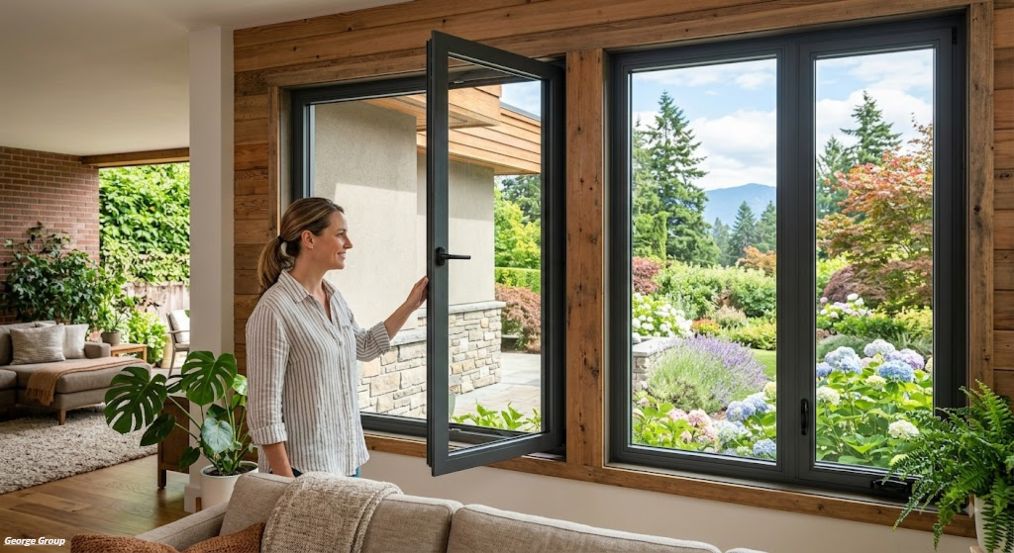
Aluminum Windows
Aluminum windows are suitable for modern villas, as aluminum offers a robust frame with relatively narrow sightlines. They can be used in large openings, wide glass spaces, sliding systems, and modern designs.
However, standard aluminum transfers heat more easily than thermally improved systems. In case of energy performance consideration, consider thermal break aluminum windows instead of selecting aluminum on the basis of appearance.
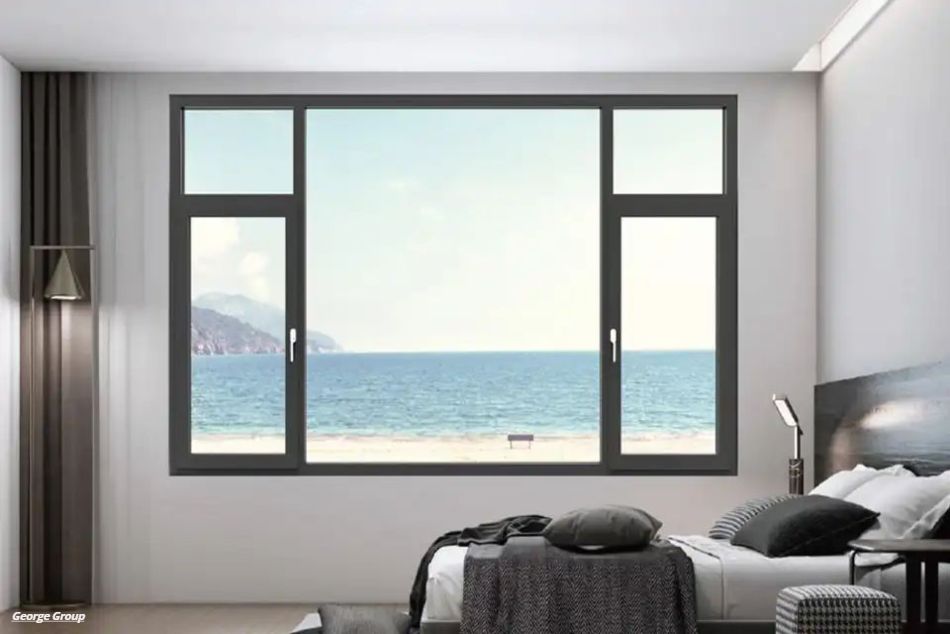
Thermal Break Aluminum Windows
A thermal break is an insulating material that is inserted between elements of the aluminum frame. This minimizes direct heat transfer via the frame.
This aspect could be a significant difference between hot and cold climates. It also renders thermal break aluminum a powerful alternative when it comes to large luxury villas that would desire the slenderness of aluminum without sacrificing as much thermal performance.
In product comparison, demand the actual performance data but not thermal break as the sole specification.
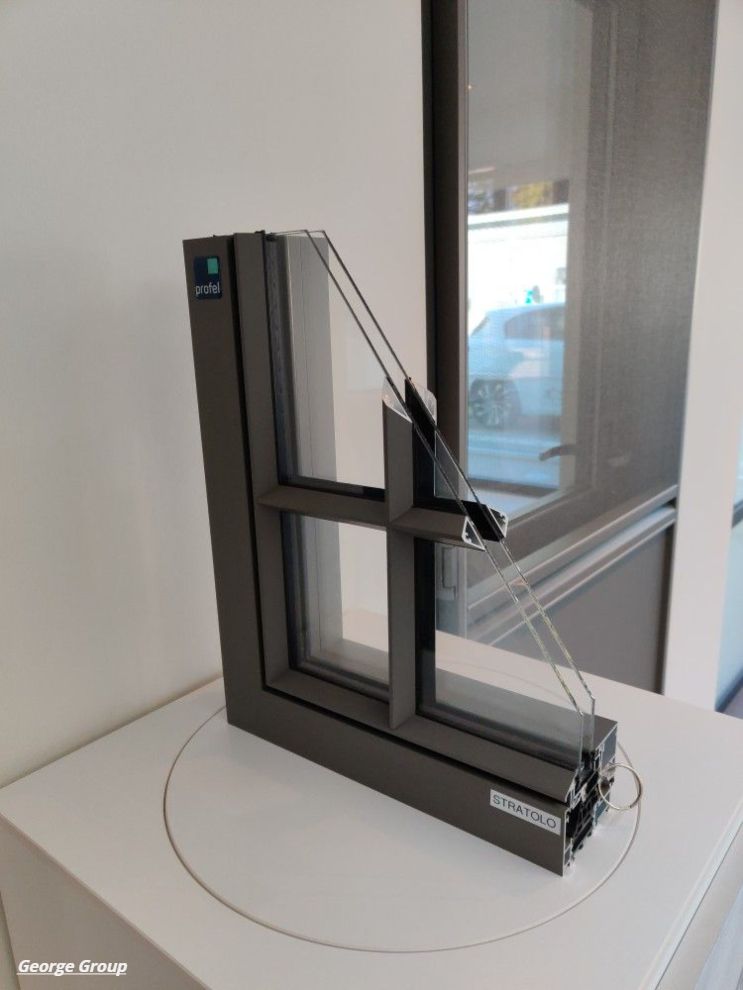
Aluminum Alloy Windows
Aluminum alloy windows are made with engineered aluminum alloys that offer strength, durability, and resistance to corrosion. Manufacturers also have the option of powder coating, anodizing, or other finishes to produce various colors and surface appearances.
Aluminum alloy systems may provide a reasonable balance of strength, customization, and modern design to large villas.
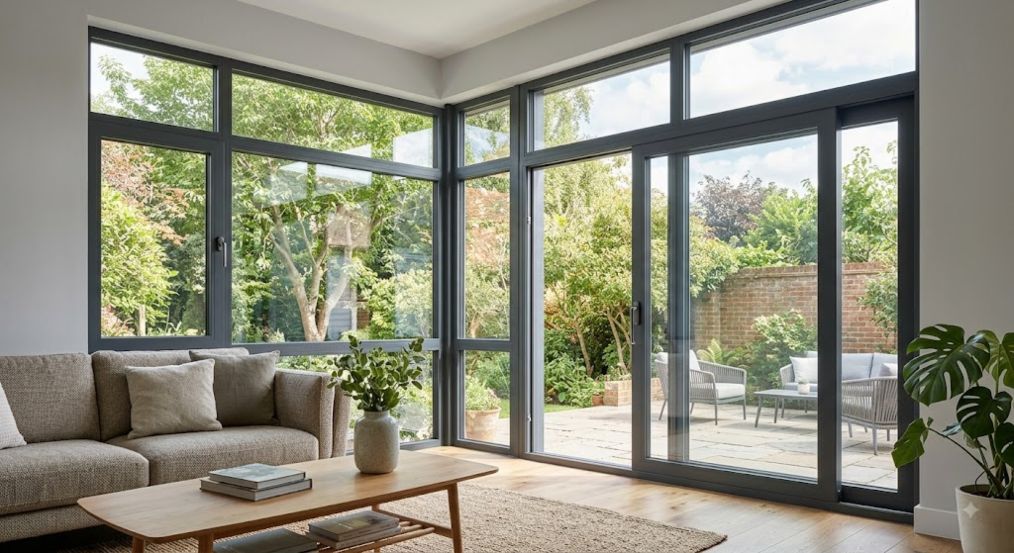
Vinyl Windows
Vinyl windows are a relatively inexpensive choice when it comes to residential work. They are able to provide good thermal performance with low maintenance.
An example is Simonton, which has put much emphasis on replacement windows made of vinyl and has various styles and customization.
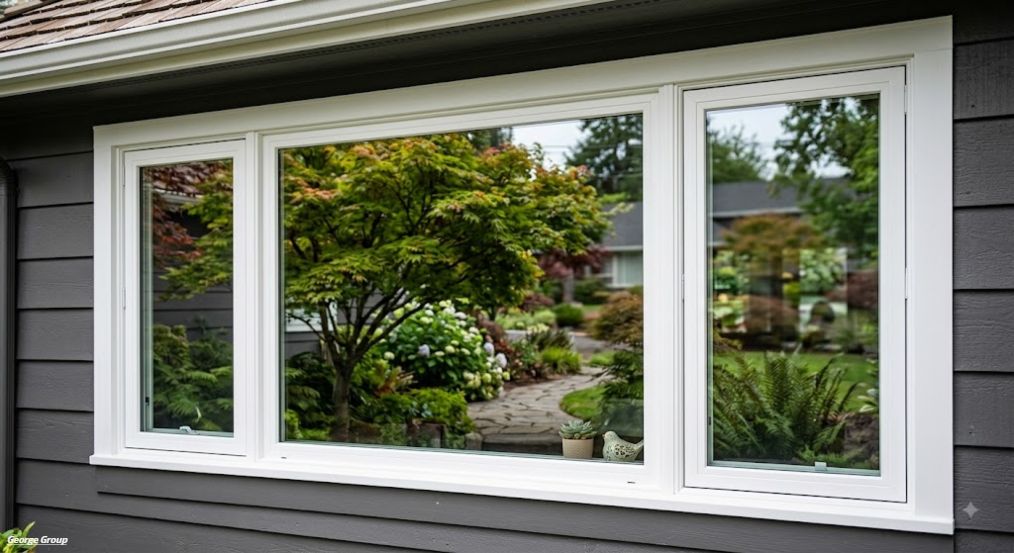
Fiberglass Windows
Fiberglass has the potential to offer good dimensional stability and durability. It is appropriate for homeowners that desire high thermal performance without necessarily opting to use traditional wood.
Wood and Wood-Clad Windows
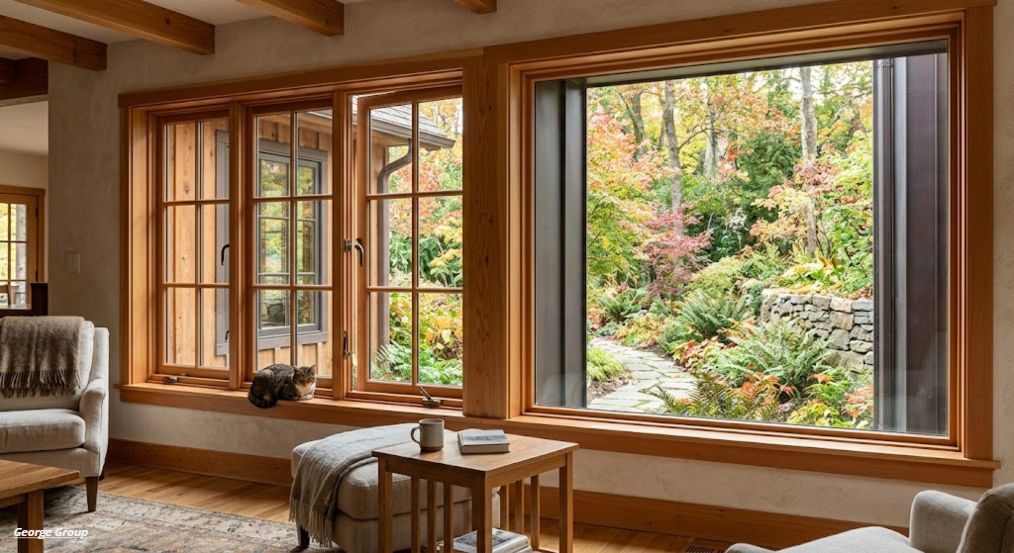
Wood provides a cozy, high-end look, and it is particularly suitable in classical or luxury villa style. Wood cladding can be used to provide a more natural interior look and a more weather-resistant exterior surface.
4. What Are the Best Window Brands for Different Villa Requirements?
The most appropriate decision varies with your project objective.
| Your Priority | What to Look For |
| Luxury appearance | Custom wood, fiberglass, or premium aluminum systems |
| Large glass openings | Strong aluminum or engineered systems |
| Energy efficiency | Low U-factor, suitable SHGC, Low-E glazing |
| Hurricane protection | Impact testing, design pressure and local approval |
| Budget replacement | Vinyl systems |
| Modern architecture | Thermal break aluminum |
| Cold climate | Low U-factor and insulated glazing |
| Coastal project | Corrosion-resistant finishes and required wind/impact performance |
That is why a good procurement team begins with the project specification, not with the brand.
5. Hurricane Windows: What U.S. Villa Owners Need to Know
When your villa is located in a hurricane-prone area, then you should be keen on hurricane windows, hurricane-resistant windows, and impact-resistant systems.
A window that is hurricane resistant can use:
- Laminated impact glass
- Reinforced frames
- Stronger hardware
- Tested anchoring systems
- Increased design pressure ratings.
- Impact-resistant glazing
- Water and air testing.
However, do not buy a product because the manufacturer declares it to be hurricane-resistant.
You must verify the test reports of the actual product, approval documents, size limits, design pressure, glass configuration, and installation instructions.
What Is a Window Design Pressure Rating?
Design pressure is a measure of the amount of wind pressure that the window system can withstand under the conditions it was tested. It is commonly given in pounds per square foot (psf).
Depending on factors like:
- Building location
- Building height
- Wind speed
- Exposure
- Window size
- Building shape
- Distance from the coast
- Local code requirements
The Florida Product Approval System allows users to search approved products and review information relevant to Florida construction requirements.
What Are Miami-Dade and Florida Product Approvals?
Florida takes special consideration for high wind and hurricane-prone regions. Applicable products might require Florida Product Approval, and products in the High-Velocity Hurricane Zone (HVHZ) might require special approval.
The product database used in Florida now identifies products by their characteristics, like whether they can be used in HVHZ or not and whether they are impact resistant.
As an example, Florida approval records could recognize an aluminum fixed window as an impact product authorized to be used in HVHZ and then refer buyers to the evaluation report and installation specifications to determine the sizes that can be used and the installation requirements.
And so, when you construct a Florida villa, do not just tell a supplier, I require hurricane windows. Provide the supplier with the location of the project, opening sizes, the design pressure needed, impact requirements, and approval requirements.
6. What Window Certifications and Standards Should You Check?
The certifications assist you in checking performance, but they are all different.
NFRC Ratings
The National Fenestration Rating Council (NFRC) offers standard energy-performance ratings of windows, doors, and skylights.
Important ratings include:
- U-factor: The smaller the value, the better the resistance to heat flow.
- SHGC: Displays the amount of solar heat that enters via the product.
- Visible Transmittance: Displays the amount of light that passes through.
- Air Leakage: Indicates the amount of air to go through the product.
- Condensation Resistance: Refers to resistance to condensation.
NFRC gives such ratings to allow buyers to compare products based on similar performance data.
ENERGY STAR
ENERGY STAR is an additional layer of help. ENERGY STAR states that certified windows should be manufactured by an ENERGY STAR partner, be tested and certified by NFRC, and comply with the EPA energy-performance requirements of the appropriate climate zone.
This is important since a window that performs well in a hot climate might not be the same and provide the best performance in a cold climate.
AAMA/FGIA and ASTM Testing
Other properties that may be tested in the industry include air leakage, water penetration, structural performance, impact resistance, etc.
Always request the actual report or certification that is applicable to the specific series of windows.
What About ISO and CE?
The ISO and CE can assist in proving manufacturing systems or conformity to the relevant markets but do not necessarily indicate that a window is in compliance with a particular U.S. building code.
Even in the case of a U.S. project, you must verify the relevant U.S. code, testing, product approval, and installation requirements.
7. Do Window Requirements Change From State to State?
Yes. Do not ever think that a single window specification fits all states in the U.S.
Florida can lay a high priority on hurricane and wind-borne debris protection. Due to colder weather, Northern states might be more concerned with thermal performance. Coastal areas can also need a greater resistance to wind and moisture.
The energy requirements that can be included in California projects can include climate zone requirements, with additional requirements being added by local jurisdictions.
The most harmless way is to:
Ordering should be done after confirming the location of the project, the local code, and the performance required of the window.
This measure can avoid costly errors.
8. How Should You Compare the Best Window Brands?
Checklist to follow prior to requesting a quotation:
| Specification | What You Should Check |
| Frame | Aluminum, thermal break aluminum, vinyl, fiberglass or wood |
| Glass | Double, triple, laminated, tempered, Low-E |
| U-factor | Thermal performance |
| SHGC | Solar heat control |
| Air leakage | Airtightness |
| Water resistance | Water penetration performance |
| Design pressure | Wind-load performance |
| Impact rating | Hurricane/debris protection |
| NFRC | Energy-performance rating |
| Local approval | State/county requirements |
| Installation | Anchors, flashing, sealants and approved details |
| Warranty | Frame, glass, and hardware coverage |
| Lead time | Production and shipping schedule |
This approach will provide you with a more favorable comparison than just asking what brand has the best reputation.
9. How Much Do the Best Replacement Windows Cost?
The frame is not the only factor that determines window cost.
You must take into consideration:
- Window size
- Quantity
- Material
- Glass package
- Low-E coating
- Impact protection
- Hardware
- Finish
- Customization
- Testing and certification
- Installation
- Transportation
A typical vinyl replacement window will be significantly cheaper than a big custom thermal break aluminum window with laminated impact glass.
In the case of a large villa, the total landed cost, not just the factory or supplier cost, is to be calculated.
That means:
- Actual project cost = product price + customization + packaging + shipping + custom + local delivery + installation.
10. Should You Buy Windows Locally or Source Them From China?
Both of these may be reasonable.
A local American supplier can provide more convenient communication, local delivery, a local network of installations, and local knowledge of local needs.
Another benefit that can be provided by China sourcing to large projects is factory-direct customization and bulk purchasing.
When you require dozens or hundreds of custom windows, you can possibly bargain more on prices, finishes, sizes, glass options, and packaging.
But you must never think that a lower factory price necessarily means a lower final price.
You must compare the total landed cost and check on the technical compliance and place the order.

11. Can Chinese Window Manufacturers Meet U.S. Standards?
Yes, a Chinese producer can produce windows to the project requirements in the U.S. Nevertheless, you should check the product and configuration.
Ask for:
- Product test reports
- NFRC documentation where necessary.
- ENERGY STAR qualification where applicable
- Impact test reports
- Design pressure ratings
- Water and air testing.
- Glass specifications
- Florida Product Approval or other approval where necessary.
- Installation drawings
- Anchor details
- Warranty information
A factory certificate of ISO or CE should not be used in place of project-specific compliance in the U.S.
In the case of a Florida project, e.g., the approval record can include the HVHZ use, impact resistance, allowable sizes, and installation requirements.
12. How Long Does It Take to Source Windows From China?
The process of custom window procurement is a series of steps, and therefore you need to begin early.
An average process appears as follows:
Project drawings → Window schedule → Technical confirmation → Design → Sample approval → Testing/approval → Production → Quality inspection → Packing → Container loading → Shipping → Customs → Local delivery → Installation
The schedule can be extended by custom dimensions, special glass, testing, design changes, and shipping.
For a villa project, do not wait until construction starts to order windows. Confirm the window schedule and technical requirements early so production and logistics do not become the project bottleneck.
13. How Do You Order Custom Windows for a Large Villa?
Begin with your project drawings.
You can provide:
- Floor plans
- Elevations
- Window schedules
- Opening sizes
- Material requirements
- Glass specifications
- Color requirements
- Hardware requirements
- Performance requirements
Then your supplier can compare the products to the drawings.
2D Layout Matching
A window layout in 2D will assist you in validating window positions, sizes, direction of opening, and type of products prior to production.
3D Rendering
A 3D image can assist you to visualize the appearance of the chosen window system in the villa.
You can review:
- Frame color
- Glass appearance
- Window proportions
- Large opening layouts
- Exterior appearance
- Interior design coordination
This will minimize the chances of placing an order for a technically correct window that does not fit the architectural design.
14. How We Help With Large-Scale Window Procurement
We offer a single-source procurement solution to architects, designers, developers, engineers, and homeowners on large projects at George Group.
We can assist in organizing:
- Product selection
- Supplier communication
- 2D layout matching
- 3D rendering design
- Custom dimensions
- Material selection
- Glass specifications
- Finish selection
- Sample production
- Quality inspection
- Bulk production
- Packaging
- Logistics
- Installation guidance
In the case of a large villa development, hotel, apartment project, or commercial building, this method will enable you to control cost, quality, and schedule using a single procurement workflow.
15. Why Window Installation Matters as Much as the Brand
Even a quality window may cause issues when the installation crew makes the wrong choice of anchors, sealants, flashing, or dimensions of the opening.
ENERGY STAR’s window installation guidance also emphasizes following manufacturer installation instructions because even high-performing windows can lose performance when poorly installed.
This is particularly critical to hurricane windows. In Florida product approval documentation, such as, may contain a set of anchor spacing, substrate specifications, permissible sizes, and installation restrictions.
Always consider the window + glass + hardware + anchors + installation method as a single system.
16. Common Mistakes When Choosing a Window Brand
1. Choosing Only by Price
A less expensive window might need more costly installation, special upgrades, or replacement in the future.
2. Choosing Only by Brand Name
A well-known brand is no assurance that all its products fit your project.
3. Ignoring Thermal Breaks
A thermally enhanced frame is not as easy to transfer heat as standard aluminum.
4. Ignoring U-Factor and SHGC
These ratings will make you know how a window will respond in terms of heat transfer and solar heat.
5. Assuming “Hurricane-Resistant” Means Approved Everywhere
Always verify the real approval and test documents.
6. Ordering Before Confirming Dimensions
Personalized windows need the correct size of opening. Check and accept drawings prior to production.
7. Comparing Factory Price Instead of Landed Cost
Shipping, customs, logistics, installation, and other project costs should always be included.
8. Waiting Too Long
Design, sampling, production, testing, and shipping can be involved in custom windows. Start early.
17. Final Verdict: How Should You Choose the Best Window Brands?
When comparing the Best Window Brands for your U.S. villa, remember that the best choice is the one that fits your project in terms of technical performance, climate, design, budget, and local code requirements.
At George Group, we assist you to get out of project drawings to product selection, customization, samples, bulk production, quality control, and logistics. When you have a villa, hotel, apartment, or commercial project, send your drawings and window specifications to our team. We can assist you in discussing appropriate materials like thermal break aluminum windows, aluminum alloy windows, vinyl systems, and hurricane-resistant windows, with certification, cost, lead time, and project requirements in mind.
If you are ready to discuss your window project, Contact Us to share your drawings, specifications, and project requirements with our team. We will help you identify suitable window systems and plan the procurement process according to your project needs.
The idea is straightforward: select the appropriate window system before ordering, confirm all specifications before manufacturing, and coordinate the entire procurement process through a well-defined project plan.
FAQs About the Best Window Brands
What brand of windows are best?
Some of the popular window brands in the U.S. include Andersen, Pella, Marvin, Milgard, JELD-WEN, and Simonton, which are popular choices for replacement windows. Nonetheless, the most appropriate option is based on your project material, climate, energy, wind, impact, design, and installation needs.
What are the best replacement window brands?
Andersen, Pella, Marvin, Milgard, JELD-WEN, and Simonton are popular choices. The most suitable option will be based on your budget, your current opening, frame material, glass package, energy objectives, and local code.
Are aluminum or vinyl windows better?
Aluminum tends to provide stronger frames and thinner sightlines and is thus appealing to large modern villa openings. Vinyl may provide a good thermal performance and reduce cost. In the case of luxury projects, thermal break aluminum can be a good balance between modern design and thermal performance.
Are thermal break aluminum windows worth it?
They may be, particularly when you desire the strength of aluminum and a sleek look as well as enhanced thermal performance. Compare the actual U-factor and other performance data as opposed to picking a product based on the label of thermal break.
What are hurricane-resistant windows?
Hurricane-resistant windows are made with tested combinations of frames, glass, hardware, and anchoring systems that can withstand high winds and, in some cases, wind-borne debris. Always verify the test and approval documents of the particular product.
Do hurricane windows need impact-resistant glass?
The U.S. does not require the same in all of its projects. The project might require a tested impact-resistant system or alternative protection system that meets code requirements in places that would be vulnerable to wind-borne debris. Ordering: Before ordering, check the local code and product approval.
What window rating should I check first?
Begin with the design pressure required of the project and local code. Next, look at energy ratings like U-factor and SHGC, air leakage, water performance, impact resistance, and installation requirements.
Can I buy custom windows from China for a U.S. villa?
Yes. A Chinese manufacturer is able to make custom windows for U.S. projects, but you need to ensure the testing, certification, approval, dimensions, glass specification, and installation of the specific product are verified before production.
Is buying windows from China cheaper than buying locally?
China sourcing may lower the cost of products when a large custom order is involved, but you ought to compare the total landed cost. The final price can be influenced by shipping, customs, packaging, testing, logistics, installation, and project management.
How early should I order custom windows from China?
Begin the process at an early stage to enable drawings, technical confirmation, samples, testing or approvals where necessary, production, inspection, shipping, customs, and installation. The specific procurement schedule must be determined by your project schedule.