
When planning a home, hotel, office, or commercial building, you may come across the terms cupboard vs cabinet. Although many people use the terms interchangeably, cupboards and cabinets are not the same. Understanding the difference helps you choose the right storage solution, save money, and utilize your space better.
When sourcing furniture on a large project, the quality of the material, customization, certifications, and installation are also crucial. As a homeowner, architect, designer, or developer, the decision to make the correct choice will enhance functionality and long-term value.
At George Group, we have supported residential and commercial projects by supplying custom cabinets and other interior building materials to clients worldwide. Based on our experience working with homeowners, architects, designers, and developers, choosing the right storage solution depends on your project requirements, budget, and long-term performance goals.
1. Cupboard vs Cabinet: What’s the Real Difference?
The main difference between a cupboard and a cabinet is their design, installation, and purpose.
A cupboard is a plain storage facility containing shelves and doors. It is normally independent, and it is used to store daily objects such as dishes, clothes, or household supplies.
A cabinet is more contemporary with other features such as drawers, movable shelves and inbuilt storage. Cabinets can be mounted on the walls, beneath the countertops, or as built-in furniture. They are more organized and fit residential and commercial areas.
Cabinets are more flexible and allow a more modern look in modern kitchens, hotels, offices, and luxury homes, whereas cupboards are still a convenient option for simple storage.
2. Cupboard vs Cabinet Comparison Table
| Feature | Cupboard | Cabinet |
| Design | Simple storage unit | Modern built-in or freestanding unit |
| Installation | Usually freestanding | Wall-mounted, base, or built-in |
| Storage | Basic shelves | Shelves, drawers, organizers |
| Customization | Limited | Highly customizable |
| Materials | Wood, MDF, plywood | Wood, plywood, HPL, glass, steel |
| Best Use | Bedrooms, dining rooms | Kitchens, bathrooms, hotels, offices |
| Cost | Usually lower | Varies by design and material |
| Durability | Good | Excellent with premium materials |
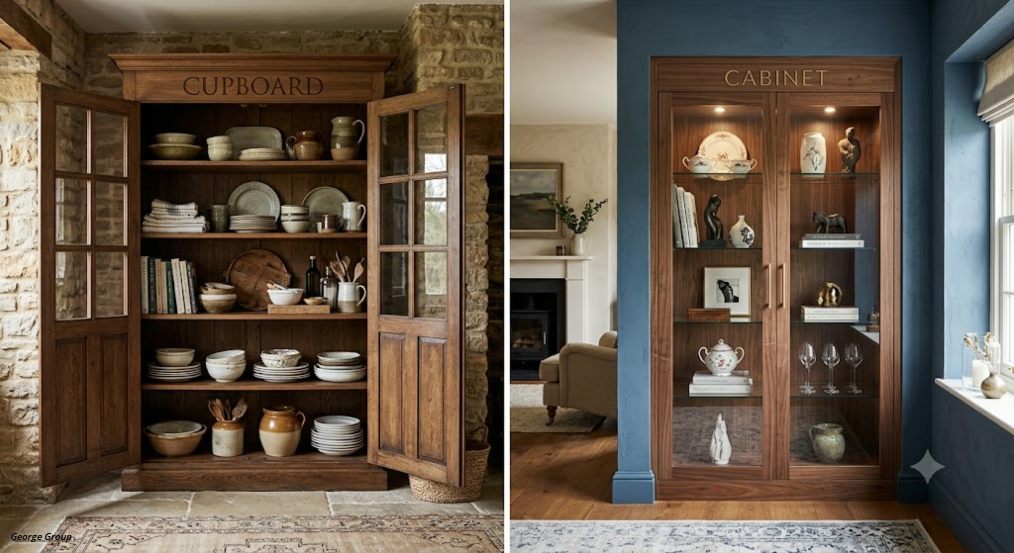
3. What Is a Cupboard?
A cupboard refers to a conventional storage device that is used to store household goods. Cupboards are frequently found in bedrooms, dining rooms, utility rooms, and laundry rooms.
Behind one or two doors, there are shelves in most cupboards. Solid wood, plywood, MDF, particle board, and laminate finishes are some common materials.
They are a convenient and cheap option to store clothes, dishes, and other daily necessities.
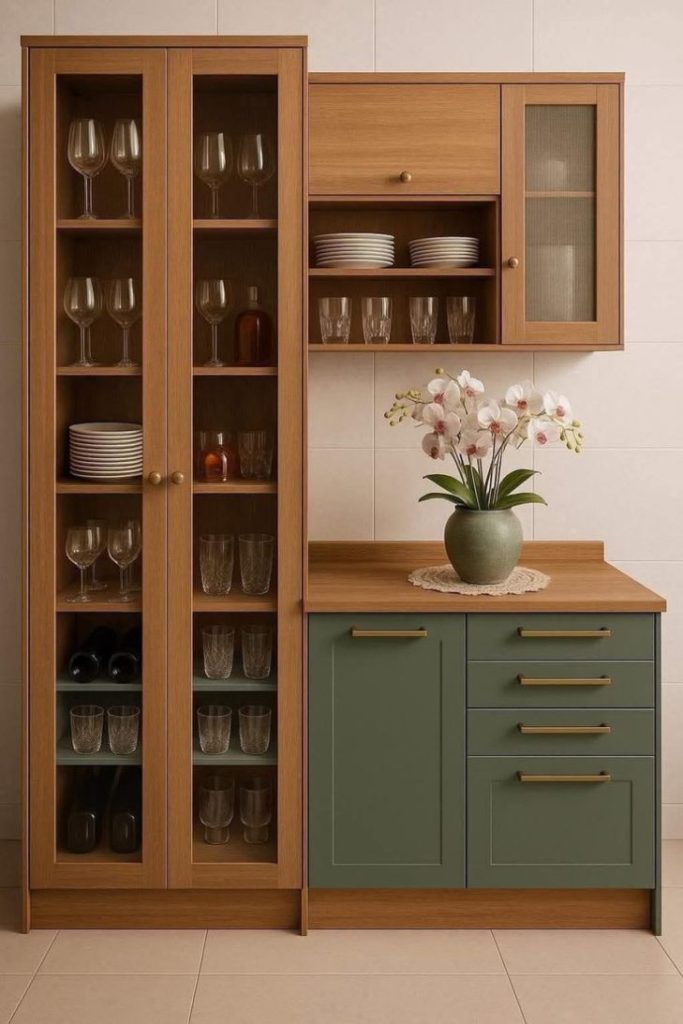
4. What Is a Cabinet?
A cabinet is a contemporary storage unit that is both functional and stylish. It usually features drawers, pull-out baskets, adjustable shelves, and soft-close hardware to organize it better.
Cabinets are common in kitchens, bathrooms, offices, hotels, hospitals and retail stores.
They can be found in solid wood, plywood, HPL, veneer, stainless steel, glass, and powder-coated steel. In case of commercial projects, moisture-resistant, antibacterial, or fire-rated materials can also be used in cabinets to suit project needs.
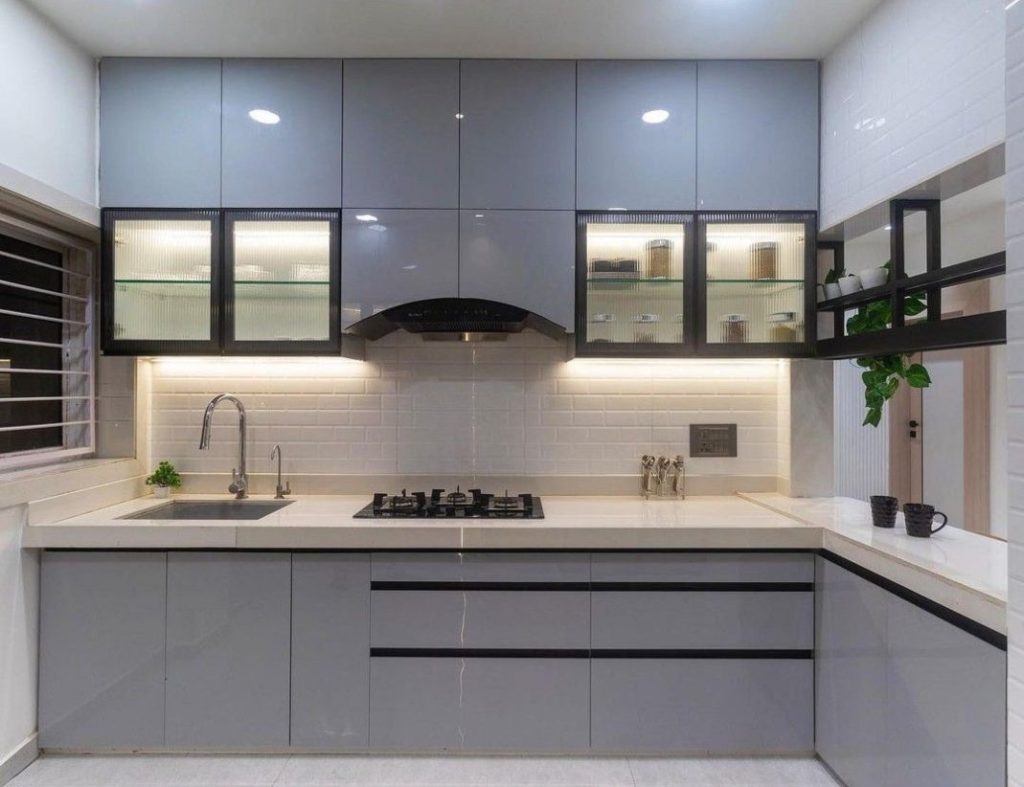
5. Kitchen Cupboard vs Cabinet: Which is better?
Cabinets are more cost-effective in the long term in most contemporary kitchens. They enhance the organization through pull-out shelves, drawer dividers, and corner storage solutions that utilize every inch of space.
Kitchen cupboards are easy to store and can be used in traditional houses or with a smaller budget, though they have less organization.
| Feature | Kitchen Cupboard | Kitchen Cabinet |
| Storage Efficiency | Good | Excellent |
| Organization | Basic | Advanced |
| Moisture Resistance | Depends on material | Better with premium finishes |
| Customization | Limited | Highly customizable |
| Hardware Options | Basic hinges | Soft-close hinges, pull-out systems, push locks |
| Modern Appearance | Traditional | Contemporary |
Cabinets are generally preferred in busy families and commercial kitchens due to the fact that they enhance workflow and minimize clutter.
At George Group, we assist homeowners, architects, designers, and developers to select the right cabinet solutions to fit their projects. We also offer 2D layout planning, 3D rendering and custom design to the project drawing, which will enable you to see the end result before it is produced.
6. Cabinets vs Cupboards: Material Comparison
Material selection also plays an important role in the Cupboard vs Cabinet comparison.
The material influences durability, appearance, maintenance and cost. Both cupboards vs cabinets are made of similar materials, but cabinets tend to be more high-end.
Solid Wood
Powerful, tough, and suitable to luxury homes, hotels, and high-end projects.
Plywood
A common option for custom cabinets, as it is strong, moisture resistant, and works well in kitchens and bathrooms.
MDF
Inexpensive and smooth finish, which can be used in painted cabinets in dry interior areas.
High-Pressure Laminate (HPL)
Scratch-resistant, moisture-resistant, and easy to maintain. It is extensively applied in hotels, offices, schools, and commercial buildings.
Glass and Steel
Glass gives a contemporary appearance, whereas stainless steel is very hygienic and durable in hospitals, laboratories and commercial kitchens.
7. Cabinet vs Cupboard: Durability and Performance
Durability is another key factor when evaluating Cupboard vs Cabinet.
Durability is an issue when you are supplying a single house or hundreds of rooms at a hotel. A cabinet made of good materials and professional hardware tends to be longer lasting as compared to a simple cupboard.
The various performance requirements of commercial projects can also be met by modern cabinets.
- Moisture Resistance: Moisture-resistant HPL finishes and plywood cabinets can be used to protect cabinets in bathrooms, kitchens, and laundry rooms.
- Fire Resistance: Fire-rated cabinet systems can meet 20, 60, or 90-minute fire resistance requirements depending on project specifications and applicable NFPA fire safety standards.
- Scratch Resistance: HPL and high-quality laminates minimize visible scratches in high-traffic offices and hotels.
- Load Capacity: The heavy-duty shelves and drawer systems have a greater load-bearing capacity without bending.
- Simple to Maintain: Smooth finishes do not get stained, and they are easy to clean on a daily basis.
The quality selection of materials at the start of the process can save on the costs of repair and replacement in the future.
8. Cupboards vs Cabinets: Installation Differences
One of the largest disparities between cupboards and cabinets is installation.
A cupboard is typically freestanding and does not need much installation. You just put it where you want to store it.
Cabinets are more flexible. They can be installed on the wall, base, pantry, or built-in units so that you can maximize space and have a cleaner appearance.
In the case of villas, hotels, offices, and apartments, custom cabinets are used to fit your project size and enhance space planning.
9. Cabinet vs Cupboard Cost: Which Offers Better Value?
Cost is important, but the Cupboard vs Cabinet comparison should also include long-term value.
Cupboards are generally cheap due to their simple design. They, however, have less storage and fewer customization options.
Cabinets are more expensive to install but are better organized, durable, and long-lasting. In the case of commercial projects, custom cabinets also enhance space efficiency and minimize the cost of future renovations.
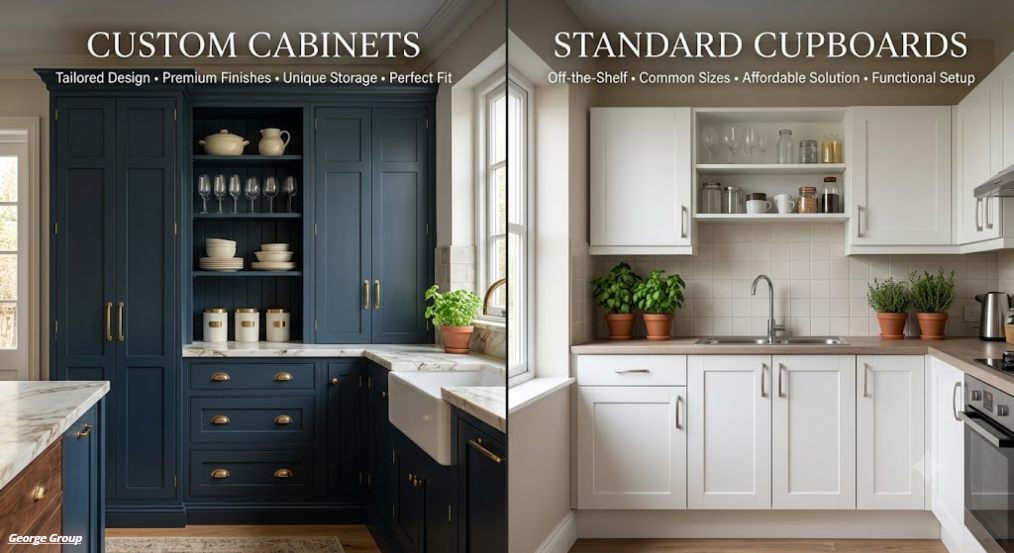
10. Custom Cabinets vs Standard Cupboards: Which Should You Choose?
The standard cupboards are used in small projects that have simple storage requirements.
Custom cabinets are more suitable when it comes to projects that have special sizes or designs.
They help:
- Maximize space
- Personalize your interior.
- Support custom finishes
- Improve functionality
- Increase property value
We make custom cabinets based on your project drawings at our company. We also offer 2D layouts and 3D renderings to enable you to review the design prior to production.
11. Cabinet vs Cupboard of Various Projects
The correct decision is based on your project.
- Homes and Villas: Luxury custom cabinets.
- Hotels and Apartments: More organized, high-quality finishes, and sound insulation.
- Contemporary Offices: Built-in cabinets conserve space and provide a professional appearance.
- Hospitals: Antibacterial and moisture-resistant surfaces enhance hygiene.
- Retail Stores: Display cabinets are a combination of storage and product display.
12. Certifications and Features to Consider Before Buying
When dealing with international projects, it is advisable to use products that are of standard quality.
Look for:
- ISO-certified manufacturing
- CE compliance
- UL-certified components
- BS standards
- FSC-certified wood
- CARB-compliant composite wood.
Good hardware is also an issue. Soft-close hinges, heavy-duty drawer slides, pull-out organizers, and push-lock systems enhance durability and daily use.
In case of commercial projects, the features facilitate easier installations, approvals, and reliability over time.
13. Why Source Custom Cabinets from China?
China is the destination of many homeowners and commercial buyers due to its competitive prices, quality manufacturing, and customization. You can be supplying villas, hotels, offices, or apartments; in any case, sourcing in China can save you a lot of money without compromising on quality.
Cabinets come in solid wood, plywood, HPL, stainless steel and glass, custom sizes, finishes, colors, and hardware. Bulk orders can also be done in large factories with consistent quality.
14. Can Chinese Cabinets Meet US, UK, Europe, and Australia Standards?
Yes. The trick is to deal with a supplier who has knowledge of international quality requirements.
Depending on your project, custom cabinets can be made to meet ISO, CE, UL, and BS standards. You may also order moisture-resistant boards, fire-resistant materials, and low-formaldehyde boards that are in accordance with local laws.
Always check certifications, material specifications, and testing reports prior to production.
15. How We Support Large Commercial Cabinet Projects
Big projects need to be planned and executed.
We offer a one-stop solution to residential and commercial projects at our company. We assist architects, designers, developers, contractors, and homeowners in the procurement process.
At George Group, we have experience supporting cabinet projects ranging from private homes to large hotels, offices, apartments, and commercial developments. Our team works closely with architects, designers, contractors, and developers throughout the planning, manufacturing, and export process to help ensure every project meets its quality, budget, and timeline goals.
- Project consultation
- 2D layout planning
- 3D renderings
- Material recommendations
- Sample production
- Custom manufacturing
- Quality inspection
- Export packaging
- Global logistics
- Installation guidance
This assists in enhancing efficiency, cost management, and schedule adherence of projects.
16. Common Mistakes Buyers Make When Choosing Between Cupboards vs Cabinets
Many buyers make mistakes because they do not fully understand the Cupboard vs Cabinet differences.
These are some of the pitfalls to avoid:
- Selecting the lowest price in the long term.
- Neglecting the material quality in wet places.
- Purchasing standard sizes rather than custom solutions.
- Overlooking required certifications
- Selecting low-quality hardware
- Omitting professional designing assistance.
Pre-planning will save you the expense of alterations and help you select the appropriate storage solution.
17. Cupboard vs Cabinet: Which One Should You Choose?
Choosing between Cupboard vs Cabinet becomes easier when you compare design, materials, durability, and project needs.
The most appropriate option will be based on your project.
A cupboard would be appropriate in terms of easy and inexpensive storage. The cabinet is more suitable when you require modern design, superior organization, durability, and customization for homes or commercial areas.
At George Group, we assist our customers in selecting solutions to their cabinets that suit their budgets and project needs. We simplify procurement, whether it is design support or manufacturing and delivery around the globe.
In case you have a residential or commercial project, we can help you to get expert advice, 2D layouts, 3D renderings, and customized solutions for your cabinets that save time and help to achieve successful project delivery.
FAQs About Cupboard vs Cabinet
Is a cupboard the same as a cabinet?
No. A cupboard is typically a basic storage device, whereas a cabinet provides more complex storage capabilities, customization and installation.
Which is better, a cupboard vs cabinet?
It is based on your requirements. Cupboards are practical in simple storage, whereas cabinets are more organized, durable, and flexible.
What is the difference between a kitchen cupboard and a kitchen cabinet?
Kitchen cabinets usually have drawers, organizers, and built-in storage systems. Kitchen cupboards tend to be more of a shelf design.
Are cabinets more expensive than cupboards?
In many cases, yes. Nevertheless, cabinets can be more economical in the long term, as they are more durable and more functional.
Which material is best for custom cabinets?
Plywood is among the most used materials since it is very strong, durable, and resistant to moisture. HPL laminates or solid wood can also be used in premium projects.
Can custom cabinets fit any room size?
Yes. Custom cabinets are designed to fit your project drawings and can be used in small areas and in large commercial buildings.
Can Chinese cabinets meet international quality standards?
Yes. Depending on the project requirements, professional manufacturers can manufacture cabinets that are internationally certified (ISO, CE, UL, or BS) according to the requirements.
Why do hotels and offices prefer custom cabinets?
Custom cabinets are highly efficient in terms of storage; they give the room a uniform look, are more durable, and utilize space better.
How long does it take to manufacture custom cabinets?
The time of production is determined by the size of the project, the level of customization, and the quantity of the order. Commercial projects are large and normally involve more time in manufacturing and quality inspection.
Should I choose custom cabinets for a large project?
Yes. Custom cabinets can be used to enhance the use of space, reinforce your design vision, and offer enhanced long-term value to villas, hotels, offices, apartments, and commercial developments.