
You do not simply pick a door when you are planning a home, villa, office, or commercial building. You select it based on safety, durability, compliance, and long-term performance. This is why the issue of fiberglass vs steel doors is so significant in contemporary construction.
The two are commonly applied in residential and commercial projects. But they have other purposes. Certain consumers desire design flexibility. Others desire maximum security or fire safety certification of international projects.
In simple words:
- Fiberglass doors are design-oriented, weather resistant and low-maintenance.
- Steel doors are concentrated on security, fire protection, and commercial strength.
At George Group, we assist architects, developers, and homeowners with a single objective, and that is to assist you in selecting the correct door system that meets compliance, saves money, and fits in your project design at the beginning of the project.
1. Fiberglass vs Steel Doors: Key Material Differences
What is a Fiberglass Door?
A fiberglass door is a type of door made from a composite material of reinforced glass fibers and resin that is intended to give it strength, durability, and energy efficiency. It has become very popular in residential and commercial buildings due to its ability to work in varying weather conditions and low maintenance.
Key features:
- Well insulated outer shell.
- Modern textured or wood grain finishes.
- Very resistant to moisture and rust.
- Good thermal performance
What is a Steel Door?
A steel door is a heavy-duty door constructed of galvanized or cold-rolled steel sheets, typically filled with insulating material to enhance strength, safety, and fire resistance. It is mainly used in commercial, industrial, and high-security buildings where durability and protection are essential.
Key features:
- Powerful steel outer coating.
- Reinforced internal frame
- High security structure
- Typical of commercial and industrial buildings.
Fiberglass vs Steel Doors Comparison Table
| Feature | Fiberglass Doors | Steel Doors |
| Strength | Medium–High | Very High |
| Maintenance | Low | Medium |
| Lifespan | Long | Very Long |
| Cost | Medium | Medium–High |
| Design Options | High | Medium |
| Installation | Easy | Moderate |
2. Compliance & Safety Standards (Important Industry References)
In modern construction, door selection must follow international safety codes and certifications:
- Fire-rated doors are tested under standards from the National Fire Protection Association (NFPA).
- Product safety and testing certifications are often verified by UL Solutions.
- Construction compliance and building standards often align with ISO standards.
- Accessibility requirements in commercial buildings follow the Americans with Disabilities Act (ADA).
- European projects may require CE marking compliance.
These certifications are especially important for fire-rated steel doors, hospital doors, and commercial projects.
2. Types of Fiberglass vs Steel Doors
Types of Fiberglass Doors
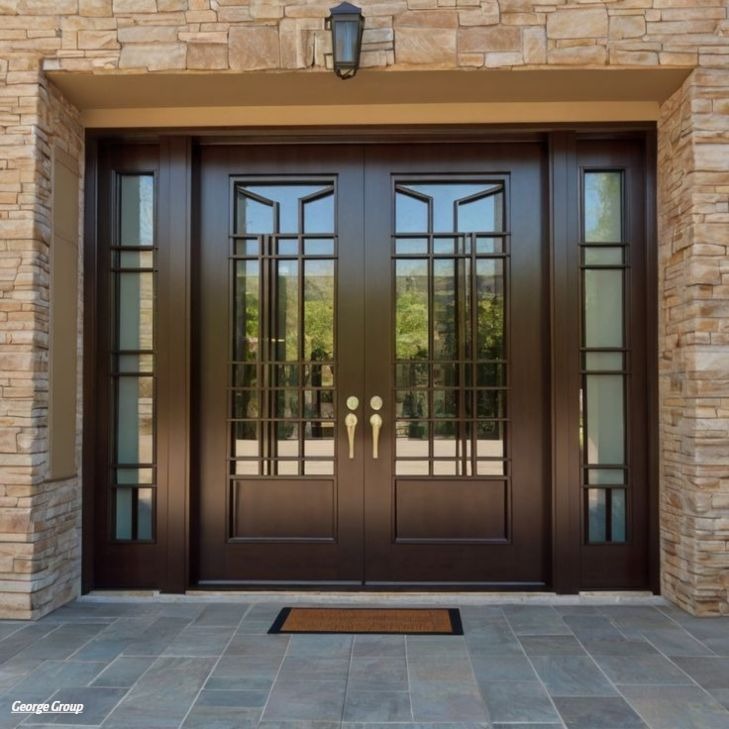
Fiberglass Front Doors
They are intended to be used in the main entrances of homes, villas, and offices. They are a combination of security, insulation, and aesthetics. They are usually adorned with decorative panels and glass insertions to suit modern architecture.
Fiberglass Exterior Doors
These doors are designed to be exposed outdoors. They are also efficient in extreme weather conditions since they do not absorb moisture, UV rays, or changes in temperature. They are common in villas, coastal houses and business doors.
Insulated Fiberglass Doors
These doors contain a high-density foam core that enhances thermal performance and acoustics. They assist in the saving of energy in homes and offices.
Decorative Wood-Grain Fiberglass Doors
These doors are made to look like the natural wood but are more durable. They are usually employed in high-end residential developments and luxury villas where design is a consideration but maintenance has to be minimal.
Types of Steel Doors
Hollow Metal Steel Doors
They are normal commercial steel doors stuffed with insulation material. They are mostly applied in offices, schools, hospitals, and industrial buildings because they are durable and cheap.
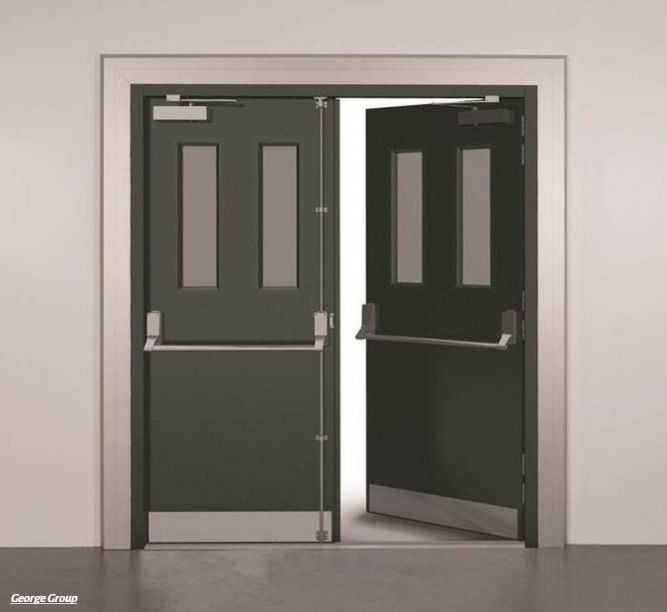
Fire-Rated Steel Doors (20/60/90 minutes)
These doors are designed to withstand fire over given periods of time. They must be provided in commercial buildings, stairwells, corridors, and emergency exits to comply with international fire safety codes.
Security Steel Doors
These doors have heavy-duty steel frames and locking mechanisms. They are applied in banks, data centers, warehouses, and high-security areas where forced entry protection is a significant concern.
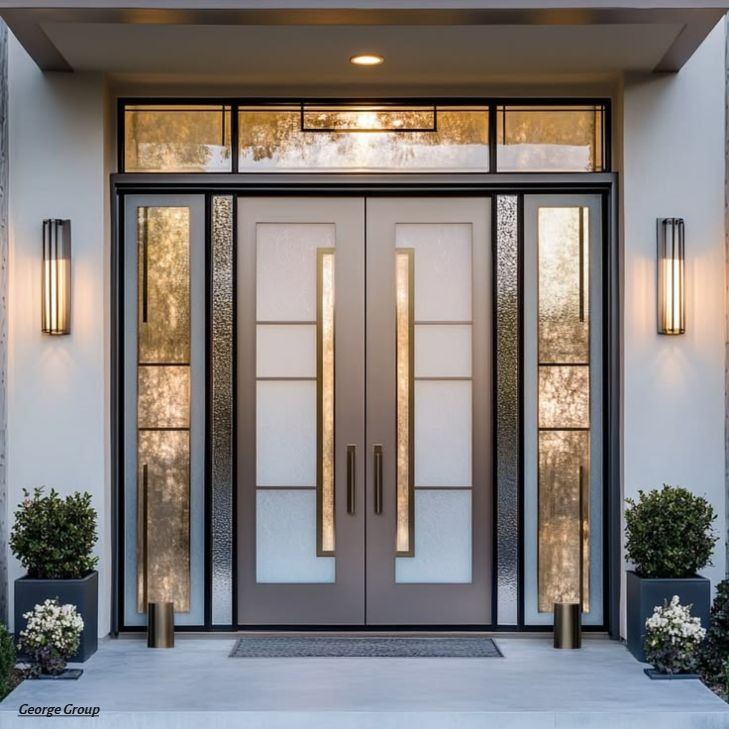
They are meant to be used in busy entrances like malls, office buildings, and institutions. They are durable, safe, and have a long life under continuous operation.
3. Performance Comparison: Fiberglass Doors vs Steel Doors
Durability & Impact Resistance
Steel has the best impact and forced entry resistance in a steel vs fiberglass door comparison. It is most effective in commercial buildings and other security-sensitive areas where strength is a major concern.
Fiberglass doors, however, are very good in residential and light commercial applications. They are harder to dent than wood and hold their shape when put under moderate pressure, which is why they are best suited to villas and modern homes.
Weather & Corrosion Resistance
Fiberglass exterior doors vs steel: Fiberglass obviously is superior in humid, seaside, and rainy climates.
Protective coating is needed on steel doors to avert rust and corrosion over time.
Fiberglass doors are inherently resistant to moisture, and hence, they stand the test of time in changing climates.
This renders fiberglass suitable for coastal villas and tropical areas.
Thermal Insulation & Energy Efficiency
In most instances, fiberglass doors are more thermally insulated due to their foam core construction. They minimize heat exchange between the indoors and outdoors.
This helps:
- Reduced energy expenses in villas.
- Enhance efficiency of HVAC in offices.
- Keep the indoor temperatures constant during extreme weather.
Sound Insulation (STC Ratings)
In the case of fiberglass vs steel exterior doors, both types of doors can have high sound insulation, based on the internal core design.
Use cases:
- Hotels: guest room and suites privacy.
- Hospitals: patient comfort and silent recovery rooms.
- Offices: meeting rooms and executive cabins.
Models with higher STC ratings have better privacy and less exterior noise.
4. Customization for Large-Scale Projects
We encourage complete customization of the developers, contractors, and architectural firms to suit the precise project requirements.
Key customization options:
- Tailor-made door sizes depending on architectural designs and project requirements.
- Fire-rated, acoustic, or security adjustments to thickness.
- Core systems of 20/60/90-minute compliance.
- Surface finishing such as HPL laminates, wood grain textures, powder coating and antibacterial coating.
We also offer engineering services for large-scale villa, hotel, and commercial projects at George Group, such as 2D technical layout matching and 3D visualization prior to production, which guarantees design accuracy and approval confidence prior to the commencement of manufacturing.
5. Project Management & Supply Chain Strength
We make it easier to procure products for buyers worldwide as we provide an end-to-end system that helps in every phase of your construction project. You no longer have to deal with several suppliers but have a single coordinated workflow that saves time and minimizes risk.
Key strengths include:
- Design-to-deliver One-stop solution: We do all the work, including preliminary drawings, sample approval, manufacturing, and final delivery to ensure your project is completed without any coordination problems.
- Quick bulk production schedules: We streamline production schedules to accommodate large volumes of villas, hotels, and commercial production without stalling construction.
- Export packaging and logistics services: Our export packing systems are safe and secure to avoid damages during delivery and facilitate easy clearance of international projects.
- Large development cost control: Bulk production and direct factory supply are useful in lowering unit cost and enhancing the overall project profitability.
This system will assist you to minimize the time wastage in construction projects where doors are always essential early-stage materials that need to be received on time before any work can be done.
6. Industry-Specific Applications
Residential Villas & Homes
In residential villas and homes, choosing between steel and fiberglass front doors improves both security and design. Fiberglass doors are usually used in luxury modern homes due to the premium and stylish look they present.
Hotels & Apartments
Fiberglass exterior doors are frequently used in hotels and apartments instead of steel due to sound control. There are also fire-rated steel doors installed to comply with the safety requirements.
Hospitals & Healthcare
To ensure that the level of hygiene and accessibility is maintained, hospitals and healthcare facilities must comply with the ADA, have easy-clean surfaces, and have the possibility of antibacterial coating.
Modern Offices
In modern offices, glass-built doors, meeting room acoustics, and flexible steel vs fiberglass exterior doors are used depending on the design and functionality requirements.
7. Buying Guide: Fiberglass vs Steel Doors – Which Should You Choose?
The decision to use fiberglass or steel is based on the environment and priorities of your project.
Choose fiberglass if:
- You desire a contemporary and fashionable look.
- You are constructing in wet, coastal, or rainy conditions.
- You require low maintenance and longevity of color.
Choose steel if:
- You need high security and impact resistance
- Your project needs to be fire-rated.
- You are working in commercial or industrial buildings.
Simply put, fiberglass is concerned with design and environmental resistance, whereas steel is concerned with strength and compliance safety.
8. Cost Comparison: Fiberglass vs Steel Doors
| Pricing Factor | Fiberglass Doors | Steel Doors |
| Base Door Only (Slab) | $150 – $3,000+ (Premium wood-grain models command top dollar.) | $150 – $1,400 (Highly budget-friendly for standard sizes) |
| Average Installed Cost | $500 – $1,500 (Standard single entry) Premium systems: $3,200 – $5,000 | Standard single entry: $1,000 – $3,000 $600 – $1,800 (High-gauge or specialty units) |
| Grand Entrance Systems (With dual sidelites & custom hardware) | $11,200 – $15,000+ | $8,500 – $11,500+ |
| Long-Term Maintenance Cost | Very Low: Won’t rust, dent, or corrode. May need an occasional UV-finish topcoat. | Moderate: Susceptible to dents and scratches. Rusting can occur if the coating is compromised. |
| Return on Investment (ROI) | varies by market conditions | varies by market conditions |
9. Common Pain Points in International Procurement
The sourcing of doors internationally by many buyers in the US, Europe, and Australia encounters common challenges.
Key issues include:
- The process of approval of installations is delayed by the absence of compliance documents.
- Expensive pricing in the local market than factory sourcing.
- Tough hurricane, fire, and safety certification.
- Strict construction timelines that require speedy delivery.
Our solution to these problems is to offer fully certified products that are UL, CE and ISO certified with quick and dependable production schedules that are geared towards global project schedules.
10. Why Choose George Group as Your Door Supplier
We provide a fully project-oriented supply system to architects, developers, and contractors at the George Group to minimize risk and enhance efficiency.
We provide:
- One-stop supply of building materials (residential and commercial).
- Precise matching of the 2D layout to the alignment of the technical project.
- Visual approval before production with 3D rendering.
- International standards such as ISO, CE and UL certification.
- Tailor-made engineering projects on a large scale.
Our aim is to save you time, minimize the risks of procurement, and make sure that the approval will be provided after the initial stage of submissions. We intend to help you with your project till the final installation without any unwarranted delays.
11. Conclusion: Fiberglass vs Steel Doors
Both fiberglass vs steel doors provide good performance; however, they can meet various construction requirements and project objectives.
Fiberglass is ideal in contemporary residential areas, villas, and coastal locations where design, moisture resistance, and low maintenance are of utmost importance. Commercial buildings, high-security areas, and fire-rated systems are the most suitable steel to be used when compliance and structural integrity are the highest priorities.
When you need professional advice on your next project, we can advise you on the appropriate door system, technical drawings, and certified solutions that suit your architectural and compliance needs throughout the project at George Group.
The correct decision will always be based on your project objectives, budget, and safety requirements, but the correct supplier will make that decision a lot easier, quicker, and more trustworthy.
If you need more information or want to discuss your project requirements, feel free to contact us anytime — we are here to help you choose the right solution.
FAQs About Fiberglass vs Steel Doors
1. Fiberglass vs steel doors: which is stronger?
Steel doors are more impact- and security-resistant, whereas fiberglass is more effective in residential durability.
2. Are fiberglass doors better than steel doors for homes?
Yes, fiberglass doors tend to be more effective in a house because of the flexibility in design and resistance to moisture.
3. Which door is best for fire rating: steel vs fiberglass?
Steel doors tend to work better in fire-rated systems (20/60/90 minutes).
4. Do fiberglass exterior doors last long?
Yes, fiberglass exterior doors are long-lasting and low maintenance, particularly in damp climates.
5. Which is cheaper: fiberglass vs steel doors?
Fiberglass is typically a little less expensive initially, but steel has more value in its lifecycle.
6. Can both fiberglass and steel doors meet US compliance standards?
Yes, they both can comply with UL, ADA, and hurricane impact standards with appropriate certification.
7. Which is better for hotels and offices?
Fiberglass is superior in sound control and design, whereas steel is superior in fire safety and security areas.