
The selection of the appropriate bathroom vanity can be a minor choice, but it can entirely transform the appearance and functionality of your bathroom. A vanity is more than just a place to wash your hands. It provides you with storage, sustains your sink, and assists in forming the general style of your bathroom.
Today, most homeowners choose between two popular options: a freestanding bathroom vanity vs wall mounted bathroom vanity. Each has its own advantages, though the most appropriate option will be determined by the size of the bathroom, design, budget, and maintenance requirements in the future. When you are planning a hotel, apartment, villa, office, or healthcare project, you also have to consider durability, accessibility, standards of installation, and long-term costs.
This guide is a comparison between Freestanding Bathroom Vanity and Wall Mounted in easy terms to enable you to be sure about the correct choice in your next project.
1. What Is a Freestanding Bathroom Vanity?
A freestanding bathroom vanity is placed on the floor, just like a normal cabinet. It can support itself, and therefore installers do not have to fix it on the wall. Its easy installation makes it one of the most used in residential bathrooms.
There are numerous styles, such as traditional wooden cabinets and modern minimalist designs. A freestanding bathroom vanity with a sink is preferred by many homeowners, as it provides storage and functionality in a single unit.
Common options include:
- Freestanding single bathroom vanity
- Freestanding two-vanity bathroom.
- Bathroom vanity cabinets that are freestanding.
- Freestanding vanity in the bathroom with drawers and shelves.
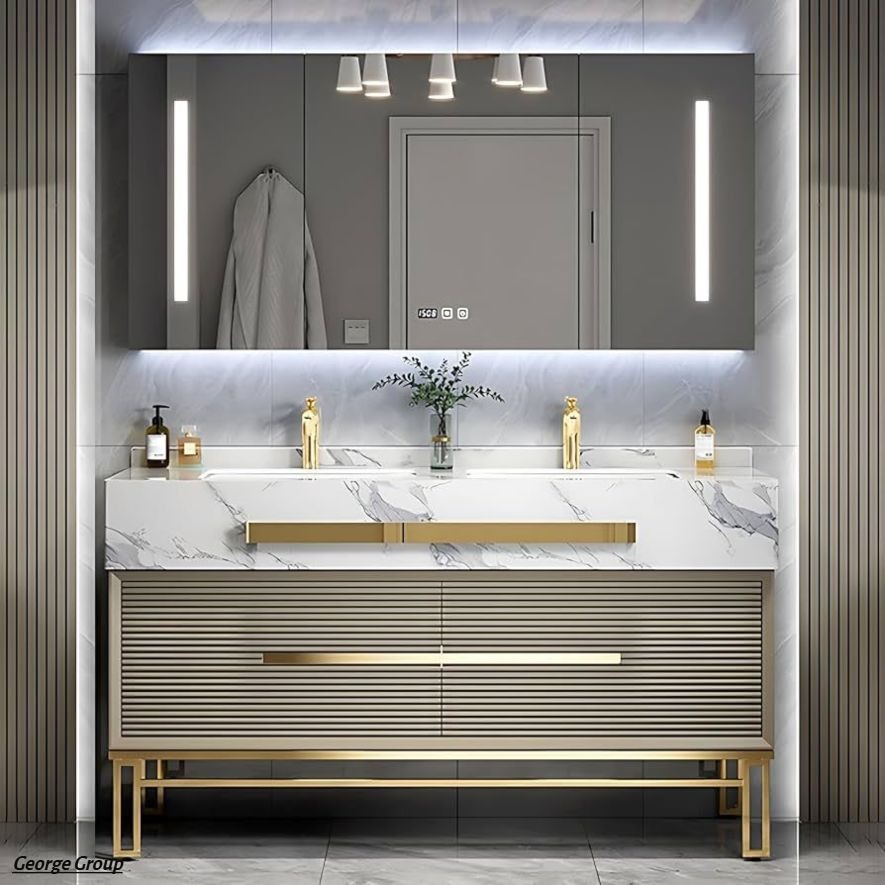
The most popular sizes are a freestanding 24 inch bathroom vanity that can fit in a small bathroom and a freestanding 30 inch bathroom vanity that can fit in a medium-sized bathroom. Other manufacturers also have fancy designs such as freestanding 24-inch blue bathroom vanities, where the homeowner desires to create a strong impression.
Where does a freestanding vanity work best?
A freestanding vanity can be used in the following:
- Family homes
- Luxury villas
- Apartments
- Guest bathrooms
- Bathroom renovation projects
When you require the maximum storage of towels, toiletries, and cleaning supplies, this style tends to provide more cabinet space as compared to a floating vanity.
2. What Is a Wall Mounted Bathroom Vanity?
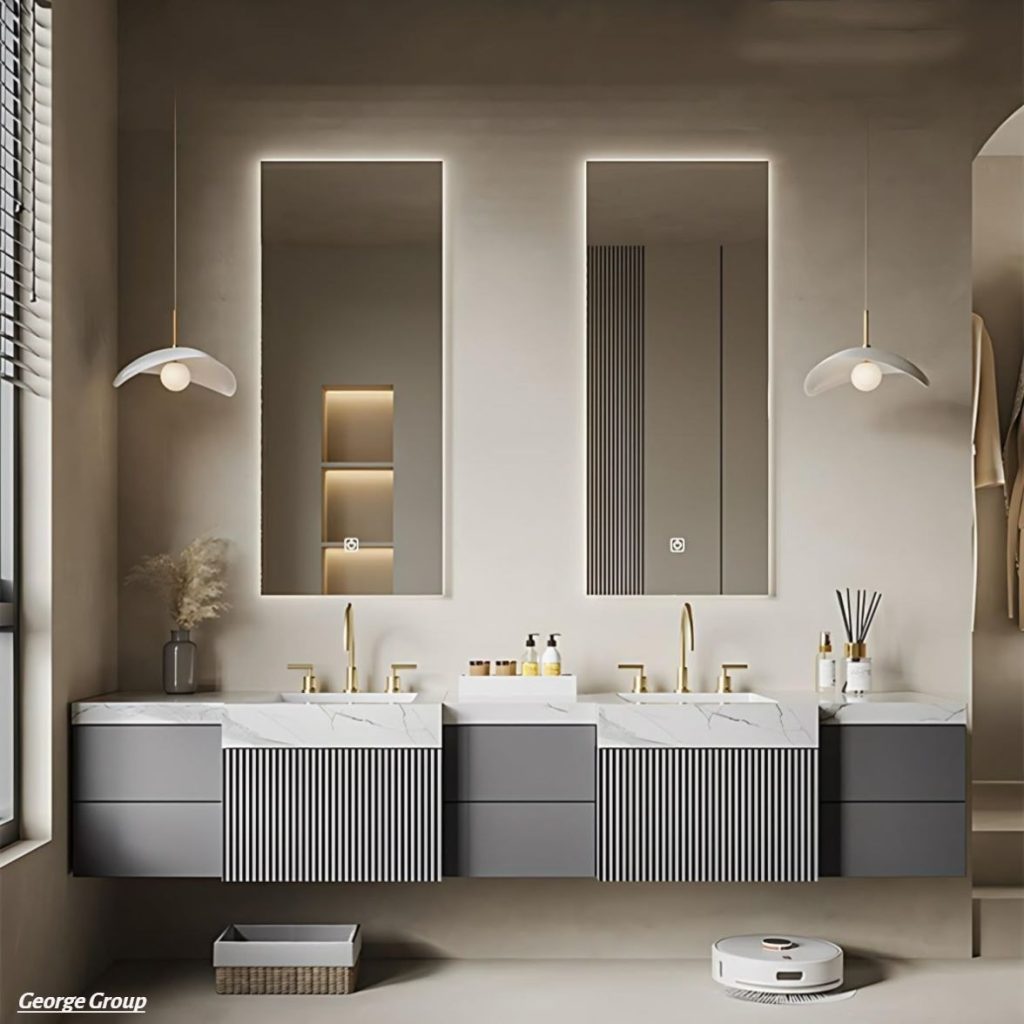
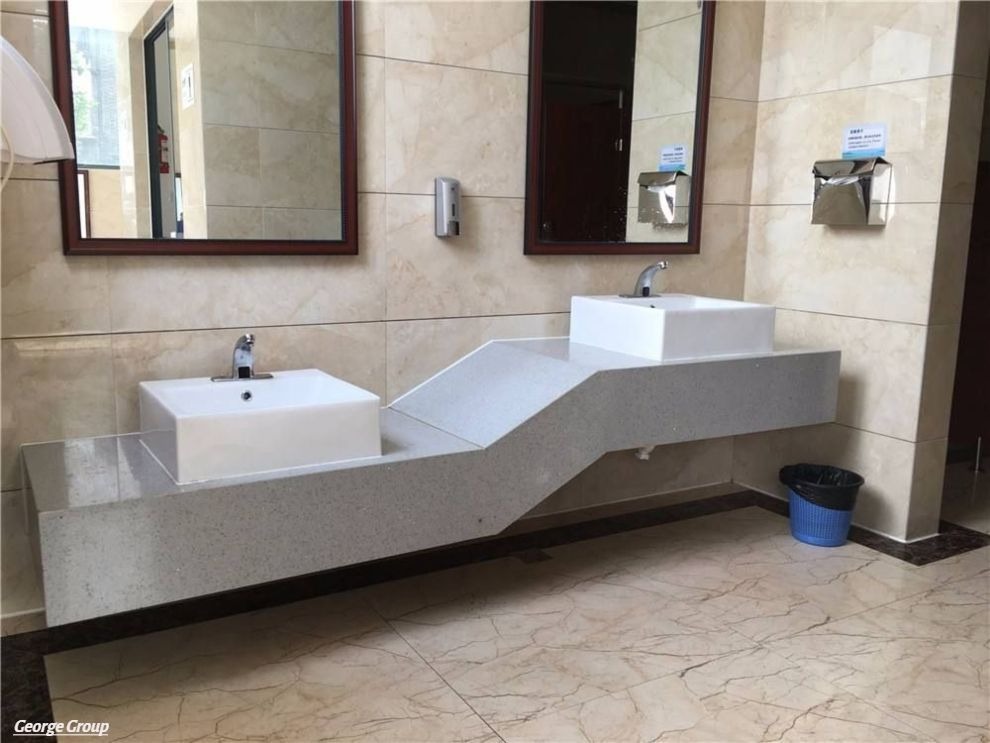
A wall mounted bathroom vanity (also known as a wall mount bathroom vanity) is a bathroom vanity that is mounted directly on the wall and does not touch the floor. The cabinet is suspended in the air, hence giving it a neat and contemporary look.
Modern wall mounted bathroom vanities are preferred by many interior designers as they make the bathrooms appear bigger and brighter. They also simplify cleaning floors.
Popular styles include:
- Wall mounted bathroom vanities.
- Contemporary wall mounted bathroom vanity cabinets.
- Wall mounted contemporary bathroom vanities
- Small bathroom wall mounted vanities.
Where does a wall mounted vanity work best?
A floating vanity is particularly effective in the following:
- Luxury hotels
- Modern apartments
- Office buildings
- Small bathrooms
- Hospitals
- Senior living facilities
Wall mounted vanities are also installed in many commercial projects since they enhance accessibility and cleaning is quicker.
3. Freestanding Bathroom Vanity vs Wall Mounted: Complete Comparison
The two types of vanity are effective, but they are used to meet various needs. It helps you select the appropriate solution by comparing their features.
| Feature | Freestanding Bathroom Vanity | Wall Mounted Bathroom Vanity |
| Installation | Easier | Requires strong wall support |
| Storage | More cabinet space | Less storage |
| Cleaning | Clean around the base | Easy to clean underneath |
| Design | Traditional and versatile | Modern and minimalist |
| Best for | Homes and villas | Hotels, offices, apartments |
| Cost | Usually lower | Usually higher |
Appearance
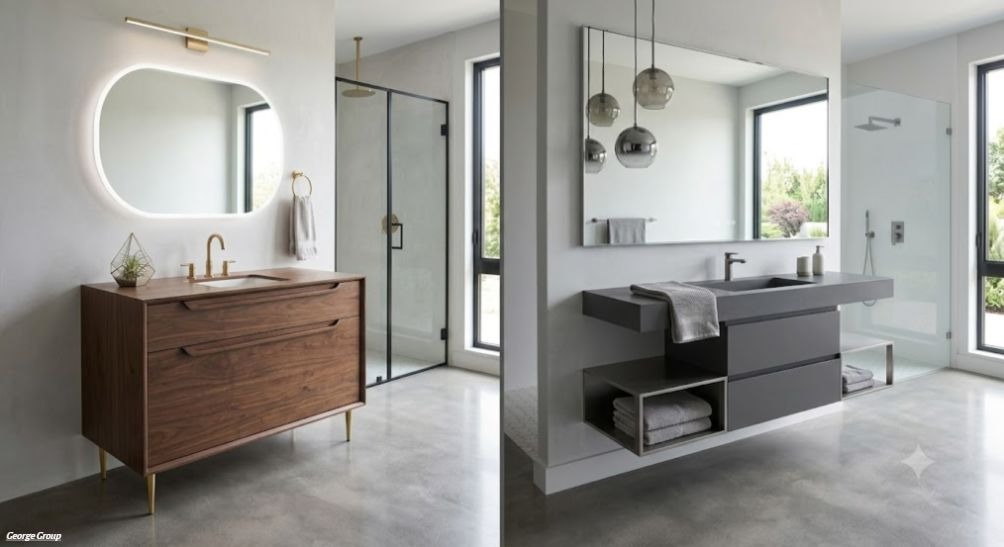
When you prefer a traditional, homey, or classic bathroom, a freestanding vanity can offer you numerous design options.
A wall mounted vanity would provide clean lines and open up the room should you want a modern, luxurious appearance.
Installation
A freestanding vanity is normally easier to install since it is placed on the floor.
A vanity attached to the wall needs a solid structural wall. Installers are required to install heavy mounting brackets and to position plumbing carefully. This tends to add more time and labor expenses in terms of installation.
Storage Space
Storage is important when your family consumes a lot of bathroom products.
A freestanding vanity typically has more cabinets, deeper drawers, and additional storage underneath the sink.
A wall mounted vanity is space-saving but tends to lose storage space.
Cleaning and Maintenance
Floating vanities are easy to clean as nothing is touching the floor.
Robot vacuum cleaners and mops can easily clean underneath them, making this design popular in hotels and modern homes.
Free-standing cabinets would make you wash around the bottom yet the maintenance is easy.
Plumbing Access
Freestanding vanities typically have easier access to plumbing in case you intend to do repairs in the future.
Plumbing in the wall is also used in wall mounted vanities, making them appear cleaner but potentially costing more to repair in case of a major plumbing job.
Durability
The two types of vanity may take years when the manufacturers apply quality materials.
Find cabinets that are made of:
- Solid wood
- Marine plywood
- Waterproof MDF
- PVC
- Stainless steel
These are moisture resistant materials as compared to normal particle board.
Cost
A free-standing vanity is usually cheaper since the installation remains easy.
Wall mounted vanities may be more expensive because of more robust mounting, extra labor, and high-quality contemporary designs.
4. Which Bathroom Vanity Is Better for Different Projects?
The needs of different buildings are different. The right vanity is based on the way individuals utilize the space.
Residential Homes
Freestanding vanity tends to be a good choice in case you need the highest storage and easy installation.
Families usually like the additional drawers and cabinets.
Luxury Villas
The style and functionality of luxury villas are often mixed.
Big master bathrooms can have a freestanding double vanity bathroom, whereas modern guest bathrooms frequently have floating vanities to give them a clean look.
Hotels and Resorts
Hotels emphasize guest experience.
Wall mounted bathroom vanities are selected by many luxury hotels due to their appearance of elegance, effectiveness in cleaning, and spaciousness.
Apartments
Bathrooms in apartments typically are small.
A wall mounted vanity creates an open floor and makes a smaller bathroom look bigger.
Hospitals and Nursing Homes
The healthcare facilities are concerned with hygiene and accessibility.
Wall mounted vanities are installed in many hospitals, as they are easily cleaned by the staff beneath the vanity.
These projects ought also to be designed in accordance with ADA accessibility guidelines, with sufficient knee clearance to accommodate wheelchair users.
Offices and Commercial Buildings
Floating vanities are a common choice in modern offices to make the office look professional and to ease the maintenance in busy restrooms.
5. Materials, Certifications & Technical Standards You Should Know
When purchasing bathroom vanities in a commercial project, look beyond the looks. Quality, safety, and long-term performance are also influenced by materials, certifications, and technical standards.
Cabinet Materials
Typical cabinet materials are
- Solid wood
- Plywood
- MDF
- PVC
- Stainless steel
- Aluminum
- HPL laminate panels
The materials have various advantages.
To illustrate, marine plywood is more resistant to moisture than standard MDF whereas stainless steel is suitable in hospitals and laboratories.
Countertop Materials
Commonly used countertop materials are:
- Quartz
- Sintered stone
- Ceramic
- Artificial stone
- Natural marble
Quartz and sintered stone are still in demand due to the resistance to stains, scratches, and water.
Waterproof Performance
Bathrooms remain wet all year round.
Select vanities that have waterproof finishes, moisture-resistant cores, and closed cabinet edges to minimize swelling and increase product life.
Fire Safety
Commercial buildings usually demand material that is in accordance with the local fire safety standards.
Materials can be required to meet 20-minute, 60-minute, or 90-minute fire resistance requirements depending on the project. Before buying, always consult your local building regulations.
ADA Accessibility
The United States has a lot of public buildings that adhere to the ADA (Americans with Disabilities Act) standards.
Wheelchair users should have access to sinks without difficulty and this is achieved through proper vanity height and knee clearance.
International Certifications
Certifications that are usually given by reliable manufacturers include:
- ISO 9001 Quality Management
- CE Certification
- FSC Certification on responsible sourcing of wood.
- CARB-compliant wood panels
- E0 or E1 standards of low-formaldehyde.
The certifications assist architects, developers, and contractors to select products that are of international quality.
6. Custom Bathroom Vanity Solutions for Large Commercial Projects
Bathroom vanities that are of a standard size are not commonly used in large commercial projects. Hotels, villas, office buildings, apartments, shopping centers, and hospitals have distinctive layouts. Custom bathroom vanities will allow you to utilize all the space and have a consistent design throughout the building.
Why Choose Custom Bathroom Vanities?
Custom vanities can assist you:
- Perfectly match your project drawings.
- Make better use of space.
- Maintain the same design in all rooms.
- Reduce installation problems
- Produce high quality look.
As an example, a luxury hotel can require hundreds of vanities of the same finish but of varying width to accommodate various room designs. This is possible through a custom solution.
Customization Options
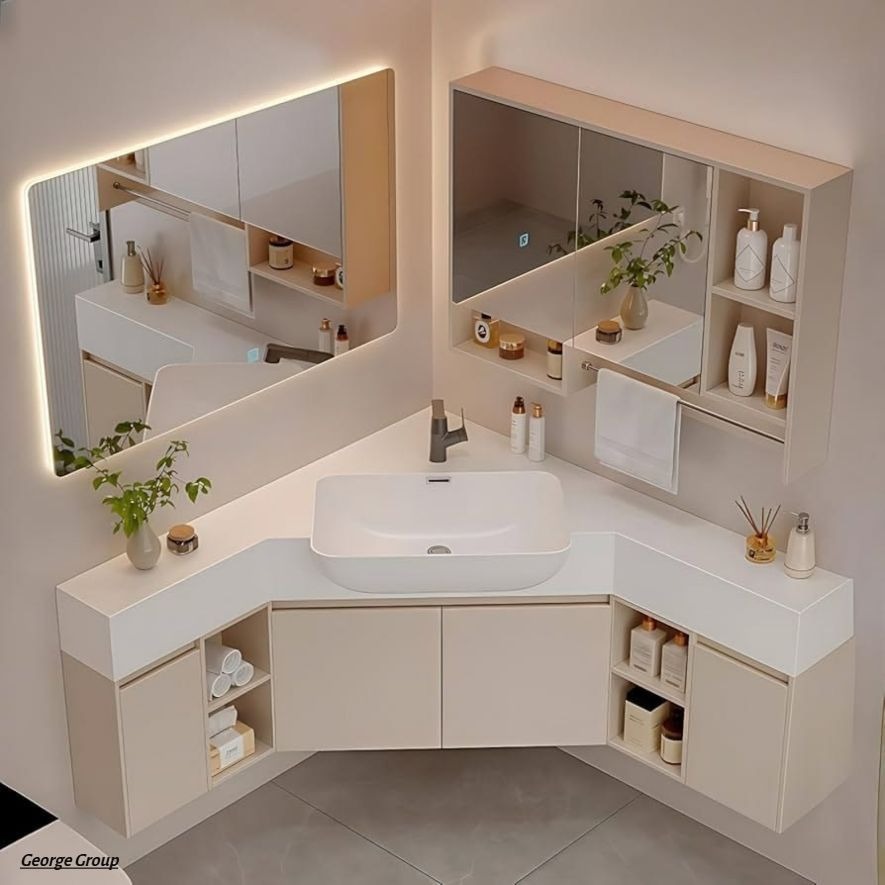
A skilled manufacturer can tailor nearly all components of the vanity, such as:
Size and depth of cabinet.
- Countertop material
- Single or dual sink design.
- Drawer and shelf layout.
- Color and finish
- Handle style
- Mirror cabinets
- Storage accessories
Other materials that you can use in healthcare projects include solid wood, plywood, stainless steel, HPL laminate, quartz, sintered stone, or antibacterial surfaces.
Design Support for Architects and Developers
Big projects tend to start with architectural drawings rather than the size of finished products.
A lot of manufacturers provide services such as the following:
- 2D layout matching
- 3D rendering design
- Material recommendations
- Pilot production prior to mass production.
These services allow you to view the appearance of the bathroom prior to the beginning of production. They also minimize errors and accelerate the project approval.
7. Buying Bathroom Vanities from China vs Local Suppliers
Most developers are comparing local suppliers with Chinese manufacturers prior to making huge orders. The two are both good; thus, you need to compare them.
| Factor | Local Supplier | Chinese Manufacturer |
| Initial Cost | Usually higher | Often more competitive |
| Customization | Limited options | Extensive customization |
| Product Range | Smaller selection | Wide variety of materials and styles |
| Production Capacity | Limited for large projects | Suitable for bulk orders |
| Design Support | Varies | Often includes 2D and 3D design services |
Can Chinese Bathroom Vanities Meet International Standards?
Yes. Numerous established manufacturers manufacture bathroom vanities that are of international quality.
Prior to ordering, request certifications like
- ISO 9001
- CE Certification
- FSC Certification
- CARB compliance
- E0 or E1 standards of low-formaldehyde.
These certifications assist in assuring the quality expectations of projects in the United States, Europe, Australia, and most other countries.
How Long Does Production Take?
Time to production is dependent on your size of order and customization.
In the case of big business projects, you need to order early since the bathroom vanities may have to be delivered before the interior work has started.
Planning will also save you time and money that will be wasted in construction.
Expert Tip
Never accept a large order without first asking to see production samples. A sample enables you to test the material, finish, hardware, and workmanship prior to full production.
8. How to Choose Between a Freestanding and Wall Mounted Bathroom Vanity
You may still be wondering what the best option for your project is. It depends on your priorities.
Select a freestanding bathroom vanity when you wish:
- More storage space
- Easier installation
- Lower installation costs
- Old-fashioned or traditional designs.
- Easy plumbing access
Select a wall mounted bathroom vanity where you want it:
- A modern appearance
- Easier floor cleaning
- A larger-looking bathroom.
- Better accessibility
- An apartment or a luxury hotel style.
Questions to Ask Before Buying
You need to answer the following questions before you give your final decision:
- What is the size of your bathroom?
- What size of storage should you have?
- What is your project budget?
- Will the children or old people use the bathroom?
- Is there a floating vanity on your wall?
- Are there any local building codes that mandate ADA accessibility?
- Are you in need of custom sizes?
The answers to these questions will assist you in selecting a vanity that is not only fitting your design but also your future needs.
9. Conclusion
The decision to use a freestanding bathroom vanity vs wall mounted bathroom vanity is based on your space, budget, and storage requirements, as well as design aspirations. A freestanding vanity provides great value when you want to install easily and have as much storage as possible. A wall mounted vanity may be more suitable to you in case you want a more contemporary look, less cleaning, and more openness. In case of commercial projects, you also need to take into account the customization, the quality of materials, certifications, the requirements of accessibility, and the long-term maintenance before making the final decision.
At George Group, we offer one-stop solutions of indoor building materials to homeowners, architects, designers, developers, engineers, and contractors worldwide. Your project is supported by our team: custom manufacture of bathroom vanities, 2D matching of layout, 3D design, production of samples, strict quality control, international certification, and effective global logistics.
You want a single custom solution or a massive commercial order; we can assist you to save time, manage costs, and get your project finished with confidence. Get in touch with George Group today and talk about your project and get a tailor-made solution that suits your specific needs.
FAQs About Freestanding Bathroom Vanity vs Wall Mounted
Is a freestanding bathroom vanity better than a wall mounted vanity?
Both alternatives are not superior in all cases. A freestanding vanity has more storage and is easier to install, whereas a wall mounted vanity has a modern appearance and is easier to clean.
Which bathroom vanity lasts longer?
The two styles can be of many years of use provided that the manufacturers apply quality materials like solid wood, marine plywood, stainless steel, or moisture-resistant panels.
Are wall mounted bathroom vanities strong enough?
Yes. An installed wall mounted vanity is safe to use on a daily basis. The wall should be structurally strong enough and installers need to install the right mounting hardware.
Which vanity works best in a small bathroom?
A bathroom vanity mounted on the wall is generally more effective since it provides more floor space and makes the room look bigger.
Which vanity provides more storage?
A freestanding bathroom vanity typically has an increased number of drawers, shelves, and cabinet space.
Can I customize a bathroom vanity for a commercial project?
Yes. Most of the manufacturers provide custom sizes, finishes, countertop materials, storage layouts, and sink designs to hotels, apartments, offices, and healthcare facilities.
Which countertop material needs the least maintenance?
Quartz and sintered stone are also popular due to their ability to resist stains, scratches, and moisture, and minimal maintenance is needed.
Should commercial projects look for certified bathroom vanities?
Yes. The ISO, CE, FSC, CARB, and low-formaldehyde certifications are useful in proving the quality of products and aiding in the compliance of projects.