
Have you ever wondered why there’s a small recessed space beneath your kitchen cabinets? This recessed space is called a kitchen toe kicks and even though it appears to be a minor detail, it improves comfort, protects cabinets, and enhances the overall appearance of your kitchen.
A toe kick lets you stand closer to the counter without banging your feet on the bottom of the cabinet. It also keeps your cabinets in good condition and gives your kitchen a clean and finished look.
In this guide, you will get to know all about the kitchen toe kicks, such as the standard sizes, materials, lighting, installation, and design ideas. We will also compare local purchasing to Chinese sourcing to enable you to select the most suitable choice to use in your project.
1. What Is a Kitchen Cabinet Toe Kick? (And Why It Matters)
The inset at the base of a base cabinet is called a kitchen cabinet toe kick. It sits between the cabinet and the floor to provide your feet with additional space to enable you to stand comfortably when cooking or washing dishes.
Despite being neglected, a kitchen toe kicks has a number of significant advantages.
- Protects Your Cabinets: It minimizes the harm caused by shoes, cleaning tools, and water.
- Enhances Comfort: It allows you to be closer to the countertop, which will lessen the burden on your back when preparing meals.
- Creates a Finished Look: A similar toe kick will provide your cabinets with a neat and smooth look.
- Increases Durability: It protects the cabinet base against daily scratches and increases its life.
At George Group, we make toe kicks as a complete system of the cabinet so that they fit perfectly, last longer, and create a professional finish.
2. Kitchen Cabinet Toe Kick Dimensions and Standard Sizes
The right size of toe kick enhances comfort and looks. A toe kick that is too small might be uncomfortable, whereas a too-large toe kick can disrupt the proportions of the cabinet.
Standard Height and Depth
The general size of most kitchen cabinet toe kicks is:
- Height: 3.5–4.5 inches (89–114 mm)
- Depth: About 3 inches (76 mm)
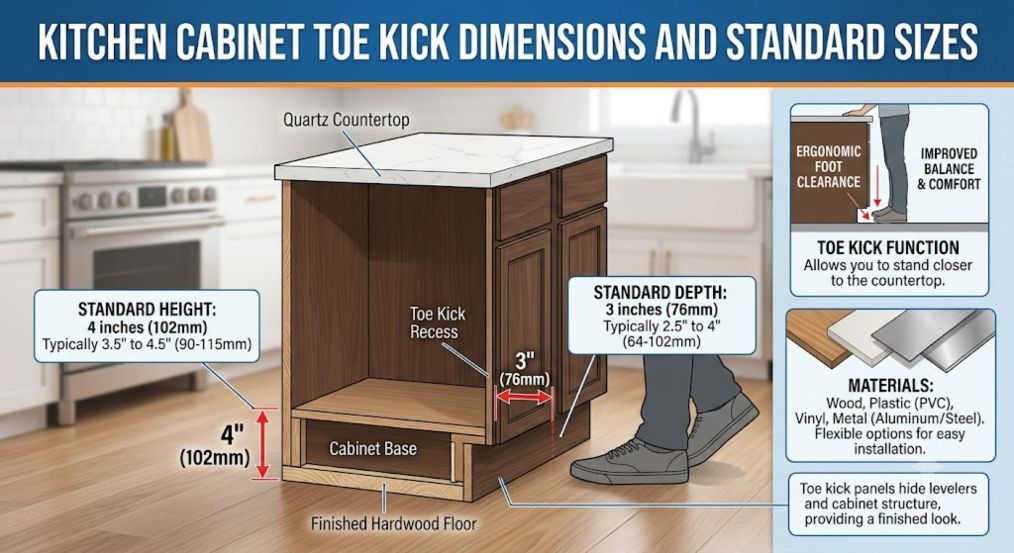
These measurements follow common kitchen design practices used throughout the industry. For additional kitchen planning recommendations, you can also refer to the National Kitchen & Bath Association (NKBA) kitchen design guidelines.
Sizes for Commercial vs. Residential Projects
Standard dimensions are typically used in residential kitchens, but a commercial kitchen can have larger toe kicks due to heavy use or compliance with accessibility.
| Project Type | Toe Kick Height | Toe Kick Depth | Notes |
| Residential Kitchen | 3.5–4 in | 3 in | Standard home use |
| Hotel or Apartment Kitchen | 4–4.5 in | 3–3.5 in | Designed for higher traffic |
| Commercial/ADA Kitchen | 4.5 in+ | 3.5–4 in | Improved accessibility |
When your project needs to be accessible, verify the dimensions before production and review the ADA accessibility guidelines for commercial spaces.
- Expert Hint: Determine the completed floor height and then place an order of cabinets. Installation of thick flooring material like tile or natural stone can decrease the visible toe kick height.
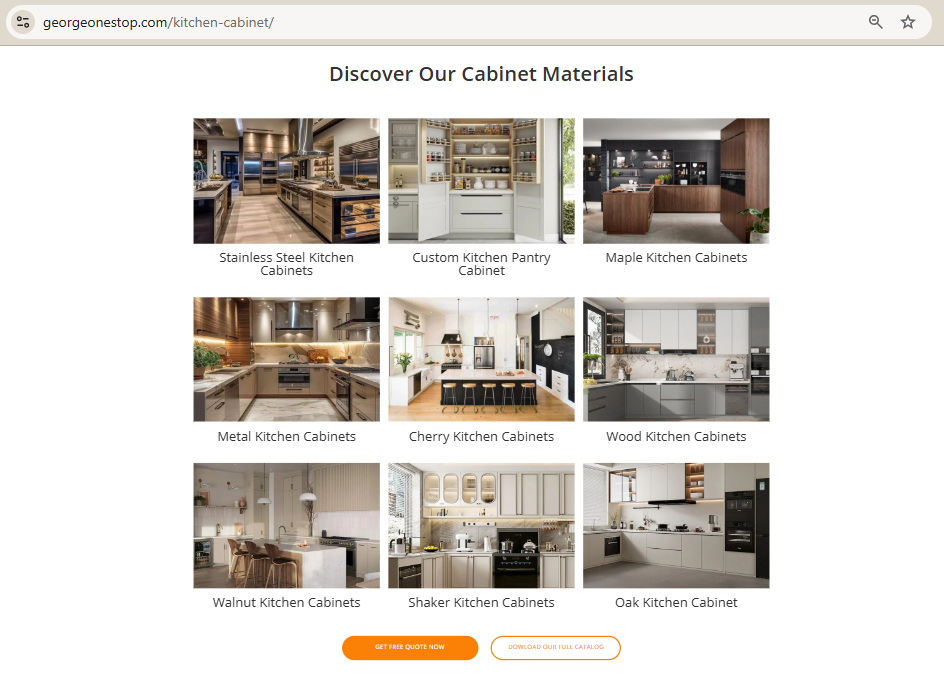
3. Kitchen Cabinet Toe Kick Materials: What’s the Difference?
The type of material you use influences the length of your toe kick and its ability to withstand moisture, scratches, and everyday wear.
Wood, HPL Laminate, and Steel Toe Kick Plates
Wood
Wood toe kicks have a natural, warm look and are suitable to traditional or luxury kitchens. They must be well sealed to keep off moisture.
HPL Laminate
High-pressure laminate (HPL) is a common option due to its durability, resistance to scratches, moisture, and numerous colors and wood-grain finishes.
Steel Toe Kick Plates
The stainless steel toe kicks are suitable in commercial kitchens, restaurants, and health care facilities due to their durability, hygiene, and ease of maintenance.
Waterproof Rating and Moisture Resistance
Toe kicks are susceptible to spills, steam, and regular cleaning, and therefore moisture resistance is needed.
Good materials will aid in avoiding:
- Swelling
- Warping
- Mold growth
- Peeling
- Delamination
HPL laminate, PVC-coated panels, marine-grade plywood, and stainless steel are the materials that can be used as great protection against moisture and everyday wear.
If you want to learn more about moisture-resistant engineered wood panels, the APA—The Engineered Wood Association provides useful technical resources.
Fire Resistance Rating for Commercial Kitchens
Hotels, restaurants, hospitals, and other commercial projects usually demand that the cabinet materials used be in accordance with the local fire safety standards.
Fire safety requirements vary by country and project type. Industry professionals often reference standards published by the National Fire Protection Association (NFPA).
Toe kick materials might require a 20-minute fire rating or greater depending on the project. Collaborating with a well-established manufacturer assists in making sure the products are safe before production is commenced.
- Real Case: In a hotel renovation, a customer required toe kicks that were durable to heavy cleaning and at the same time met fire safety standards. We suggested using steel-backed HPL laminate panels, which passed the test and continue to perform well in everyday use.
4. Toe Kick Molding for Kitchen Cabinets: Styles and Finishes
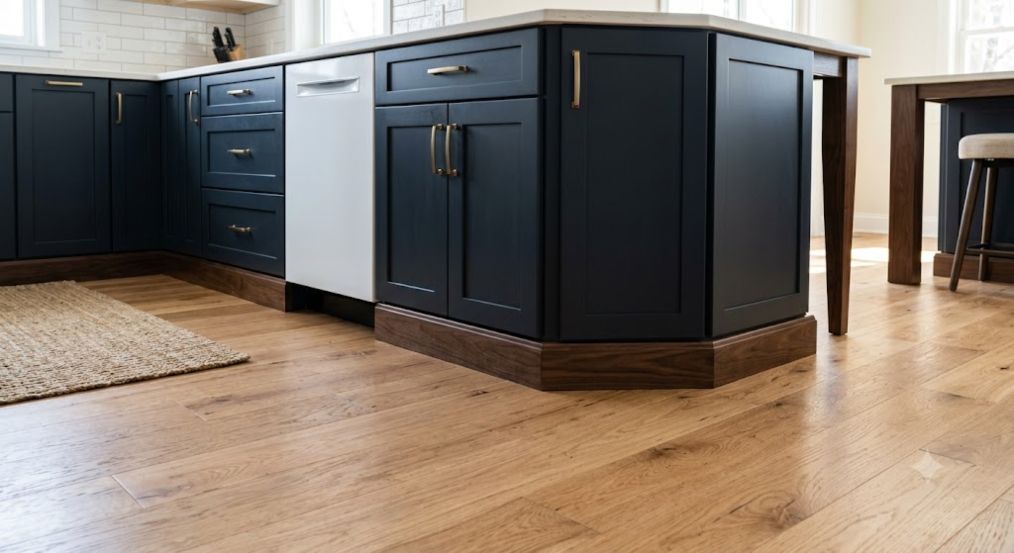
Toe kick molding can be considered a minor detail, but it can make your cabinets look clean and finished. It fills the void at the bottom of the cabinets and forms a smooth transition between the cabinetry and the floor.
Selecting the appropriate molding will enhance the overall look of your kitchen and will assist in establishing a more harmonious look to your cabinet design.
Matching Molding to Cabinet Trim
To achieve the best possible outcomes, your toe kick molding should be of the same type as your cabinet.
- Flat-panel cabinets: A plain, flat toe-kick gives a neat, contemporary appearance.
- Shaker cabinets: The simple design is enhanced with a recessed or painted toe kick.
- Raised-panel cabinets: Decorative molding gives it a traditional appearance.
- Modern kitchens: Toe kicks are concealed or minimal, which keep the lines smooth.
Balancing your cabinets with the matching of the molding makes it professional.
Custom Finish Options
Toe kicks come in many different finishes to match your cabinets, such as:
- Painted finishes
- Natural wood grain
- Matte finishes
- High-gloss finishes
- Wood-look HPL laminates
Color-matched toe kicks are used in custom projects, which is more integrated with the cabinetry, producing a more cohesive kitchen design.
5. Kitchen Toe Kick Lighting: Is It Worth Adding?
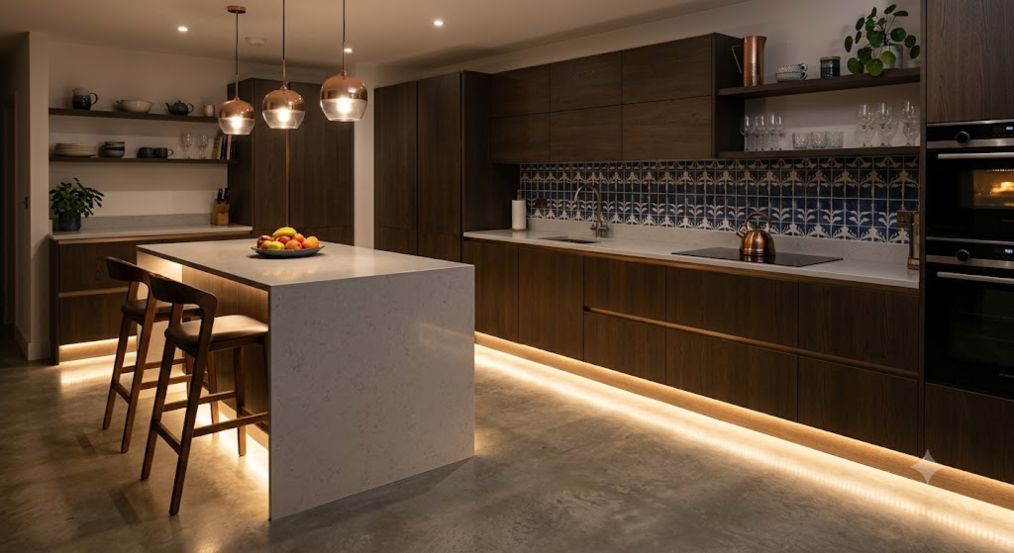
Yes. A popular upgrade is toe kick lighting, which provides both style and functionality. LED lights, which are installed under the cabinets, give the kitchen a high-end look and provide a soft glow that enhances visibility in the kitchen.
Benefits of Toe Kick Lighting
- Improves visibility at night.
- Produces a high-end, floating cabinet look.
- Enhances security through illuminating the floor.
- Improves the general kitchen design.
- Consumes minimal power using LED.
Installation Basics for LED Toe Kick Lighting
The most prevalent option is LED strip lights due to their thinness, low energy consumption, and simple installation.
According to the U.S. Department of Energy, LED lighting uses significantly less energy and lasts much longer than traditional lighting technologies.
A typical installation consists of:
- LED strip lights
- Power supply and transformer.
- Wall switch or motion sensor.
- Optional dimmer
The lights are typically mounted behind the toe kick panel, and are pointed onto the floor to provide a gentle, diffused light.
- Expert Advice: Warm white LEDs (2700K-3000K) should be used to make the room comfortable and match most cabinet finishes and flooring materials.
6. Kitchen Cabinet Toe Kick Installation: Step-by-Step Overview
A kitchen toe kicks is something that needs to be measured and correctly aligned. An installed toe kick will enhance the look and the life of your cabinets.
Tools and Materials You’ll Need
These are the basic tools you will need beforehand:
- Measuring tape
- Spirit level
- Pencil
- Saw (when necessary to trim)
- Drill or screwdriver
- Mounting clips or screws.
- Construction adhesive (optional)
- Shims
Common Installation Mistakes to Avoid
To achieve a professional finish, avoid the following mistakes:
- Leaving out the level check may result in uneven gaps.
- The panel cutting can leave spaces visible.
- Weak fasteners may lead to loosening of the panels with time.
- Disregarding flooring thickness can influence the eventual fit.
- The cabinet run may be uneven due to poor alignment of the panel.
Allowing a little more time in the installation process will assist in the attainment of a cleaner and more durable outcome.
Do You Need a Professional Installer?
A single toe kick panel is a relatively easy DIY project. But in the case of a full kitchen or commercial installation, it is advisable to have an expert.
Professional installers make sure that the cabinets are straight, the toe kicks are perfectly aligned, and the final kitchen looks clean and consistent. They are also able to cope with LED lighting and other customization features, which will save you the hassle of spending a lot of money on installation errors.
7. Can You Have Kitchen Cabinets Without a Toe Kick?
Yes. Most kitchens include a toe kick, but most contemporary designs feature toeless or floating cabinets to create a minimalist appearance. These cabinets do not have a recessed base but are instead flat with the floor or seem to be floating.
Being stylish, this design has its merits and demerits.
Pros and Cons of Kitchen Toe Kicks Cabinet Designs
Pros
- Produces a sleek, contemporary look.
- Provides a floating effect to cabinets.
- Facilitates cleaning of the floor.
- Perfect with minimalist kitchen designs.
Cons
- Not very comfortable when spending long periods in the kitchen.
- Bases of the cabinets are more vulnerable to damage.
- Frequently needs concealed structural support.
- May raise costs of installations.
A classic kitchens toe kick would typically be more comfortable.
When This Style Works Best
Toeless cabinets are suitable for:
- Modern homes
- Luxury villas
- High-end apartments
- Boutique hotels
- Contemporary office kitchens
They are most effective in areas where looks matter more than comfort in day-to-day life. A traditional toe kick is more comfortable and durable in busy family kitchens.
8. Kitchen Cabinet Toe Kick Ideas for Every Style
The right kitchen toe kicks will enhance the appearance and functionality of your kitchen. The following are some of the common notions:
Modern Kitchens
Select a black or matching flush-toe-kick cabinet to create a smooth appearance. With the addition of LED toe kick lighting, it provides a floating effect.
Traditional Kitchens
Combine your toe kick and your cabinet finish and molding to make a warm, timeless look.
Transitional Kitchens
A simple and balanced design is achieved by a painted toe kick and shaker cabinets.
Small Kitchens
The space is brighter and more open because of toe kick lighting and the similarity of the colors of the cabinets.
Open-Concept Kitchens
Apply a single continuity toe kick to all cabinets and islands to produce a neat, cohesive look.
9. Local Purchase vs. Sourcing from China: Which Is More Cost-Effective?
The choice to purchase locally or to purchase in China will depend on the size and budget of your project. Local suppliers are easy to use in small projects whereas sourcing in China is usually cheaper in large residential or commercial projects.
Cost Comparison Breakdown
| Factor | Local Purchase | Sourcing from China |
| Unit Cost | Higher | Lower |
| Bulk Pricing | Limited discounts | Better volume pricing |
| Shipping Cost | Lower | Higher but often offset by product savings |
| Customization | More expensive | More affordable |
| Product Range | Limited | Wider selection |
In large quantities, sourcing in China can be of a higher overall value, particularly when it comes to purchasing cabinets, doors, and toe kicks as a set.
Quality and Certification Standards
Quality is a factor of the manufacturer, rather than the country of origin. The suppliers with good reputation will be able to supply products that are of international standards in terms of moisture resistance, fire safety, and durability.
Prior to an order, request:
- Product specifications
- Material certifications
- Fire test reports (where applicable)
- Product samples
At George Group, all orders are subject to quality checks prior to delivery to the project to ensure that they satisfy the project requirements.
Lead Time: Can Overseas Sourcing Meet Your Project Schedule?
It is more time-consuming to source overseas than locally, although with proper planning it is possible to avoid delays. Your project schedule will be used to schedule production and shipping to make sure materials are available when you require them.
In the case of large projects, sourcing with a single manufacturer will also guarantee uniform quality, matching finishes, and simplified project management.
10. Why Choose George Group for Custom Kitchen Toe Kicks Solutions
Selecting the appropriate supplier is equally as important as selecting the appropriate materials. We offer tailor-made kitchen cabinets in homes, apartments, hotels and commercial projects at George Group. Our toe kicks are made to fit the entire cabinet system, which has a perfect fit, long life span, and professional finish.
You may require one custom kitchen or a large production to cater to a large development; our skilled team assists you in designing and delivering.
3D Rendering and Design Matching Service
We also offer 3D images of how your cabinets and toe kicks will appear in your completed kitchen before they are made. This allows you to revisit the design, compare finishes, and make adjustments prior to the manufacturing process, saving time and money.
Bulk Order Capabilities and Lead Times
We are able to take orders of any size, whether it is a small residential project or a big commercial development. Our lean manufacturing will guarantee a steady quality, delivery, and support of your project.
One-Stop Sourcing: Design, Sample, Production, and Installation Support
George Group provides a one-stop sourcing process, which comprises design consultation, sample production, manufacturing, quality inspection, shipping, and installation support. By having a single supplier that you can trust, it is easy to work with, and all the parts of the cabinets are of the same quality.
11. Final Thoughts on Kitchen Toe Kicks
A kitchen toe kicks might not be a big thing, but it makes a difference in the comfort and durability of your cabinets and their look. Selecting the appropriate size, material and design assists in producing a better-looking and functioning kitchen that will last years.
Whether you are designing a home kitchen or managing a large commercial project, George Group offers custom kitchen toe kicks solutions to match your needs. Contact us today to discuss your project and receive a customized quotation and find out about high-quality cabinet solutions that will be able to perform over time.
FAQs About Kitchen Toe Kicks
What is the standard kitchen cabinet toe kick size?
The average height of most cabinet kitchen toe kicks is 3.5 to 4.5 inches, and the depth of the kicks is 3 inches. Commercial kitchens can be bigger in size due to the need to accommodate accessibility.
Can I install toe kick lighting myself?
Yes. The majority of LED toe kick lighting systems are simple to set up. For hardwired systems, it is best to hire a qualified electrician.
Do toe kicks need to be waterproof?
Yes. Moisture-resistant materials are used, as they resist warping, swelling, and water damage, which would be suitable in the kitchen.
Are toeless cabinets more expensive?
Not always. The price will vary depending on the type of cabinet, material, and any extra structural support needed.
How long does custom toe kick sourcing from China take?
The lead times depend on the order size, customization, and mode of shipping. Preparation will enable you to deliver your products in time.