
Modern upper kitchen cabinets are not just about appearance. They focus on smart storage planning that improves functionality, organization, and long-term value in any space.
That is why upper kitchen cabinets are a key element in both residential and commercial projects. From luxury villas to apartments, hotels to offices, and healthcare institutions to any other type of project, the selection of upper cabinets for kitchen designs has a direct impact on storage efficiency, compliance approval, installation planning, and project cost.
The priorities of buyers are different. Homeowners are more interested in design, durability, and certifications, whereas developers and architects are more interested in controlling costs, customization, and procurement efficiency. At George Group, we make this easier with one-stop indoor building material solutions to help deliver successful projects.
1. What Are Upper Kitchen Cabinets?
Upper kitchen cabinets are wall-mounted storage cabinets above kitchen countertops. They help to provide additional storage capacity without consuming floor area.
Upper cabinets are used to store
- Plates
- Glassware
- Food containers
- Cooking supplies
- Small kitchen appliances
- Decorative kitchen items
Upper cabinets are essential to modern kitchens for the following reasons:
- Space efficiency
- Kitchen organization
- Property value
- Daily functionality
- Interior appearance
For large residential projects, luxury villas and hospitality developments, cabinet systems are frequently combined with custom layouts to achieve maximum performance.
For more information, General knowledge about cabinetry and construction basics:
Cabinetry Overview (Wikipedia)
2. Upper Kitchen Cabinets vs Base Cabinets
Many buyers ask about the difference between upper and lower cabinets.
For example, the following is a simple comparison:
| Feature | Upper Kitchen Cabinets | Base Cabinets |
| Installation Position | Mounted on walls | Installed on floor |
| Main Purpose | Storage | Storage + countertop support |
| Standard Depth | 12–24 inches | 24 inches |
| Weight Capacity | Light to medium items | Heavy appliances |
| Space Function | Vertical storage | Working and storage area |
Both types of cabinets complement one another to create a well-balanced kitchen design.
Luxury developments may tailor both systems to their needs for improved workflow and luxury looks.
3. How Deep Are Upper Kitchen Cabinets?
One of the most frequently asked questions by buyers is the following:
How deep are upper kitchen cabinets?
The standard depth of cabinets typically consists of:
| Cabinet Type | Standard Depth |
| Standard Upper Cabinet | 12 inches |
| Deep Storage Cabinet | 15 inches |
| Pantry Wall Cabinet | 24 inches |
Dishes, bowls and pantry use benefit from 12″ cabinets.
But in the case of luxury villas and custom kitchens, deep cabinet solutions are often needed.
The depth of the cabinet needs to be determined by the project requirements.
Typically, architects and designers assess the following:
- Kitchen size
- Appliance placement
- Storage requirements
- User accessibility
- Workflow efficiency
4. Upper Kitchen Cabinet Height Standards
The height of the cabinet impacts comfort, ease of use, and approval.
The most popular cabinet sizes are:
| Cabinet Height | Typical Application |
| 30 inches | Standard kitchens |
| 36 inches | Medium-height ceilings |
| 42 inches | Luxury villas |
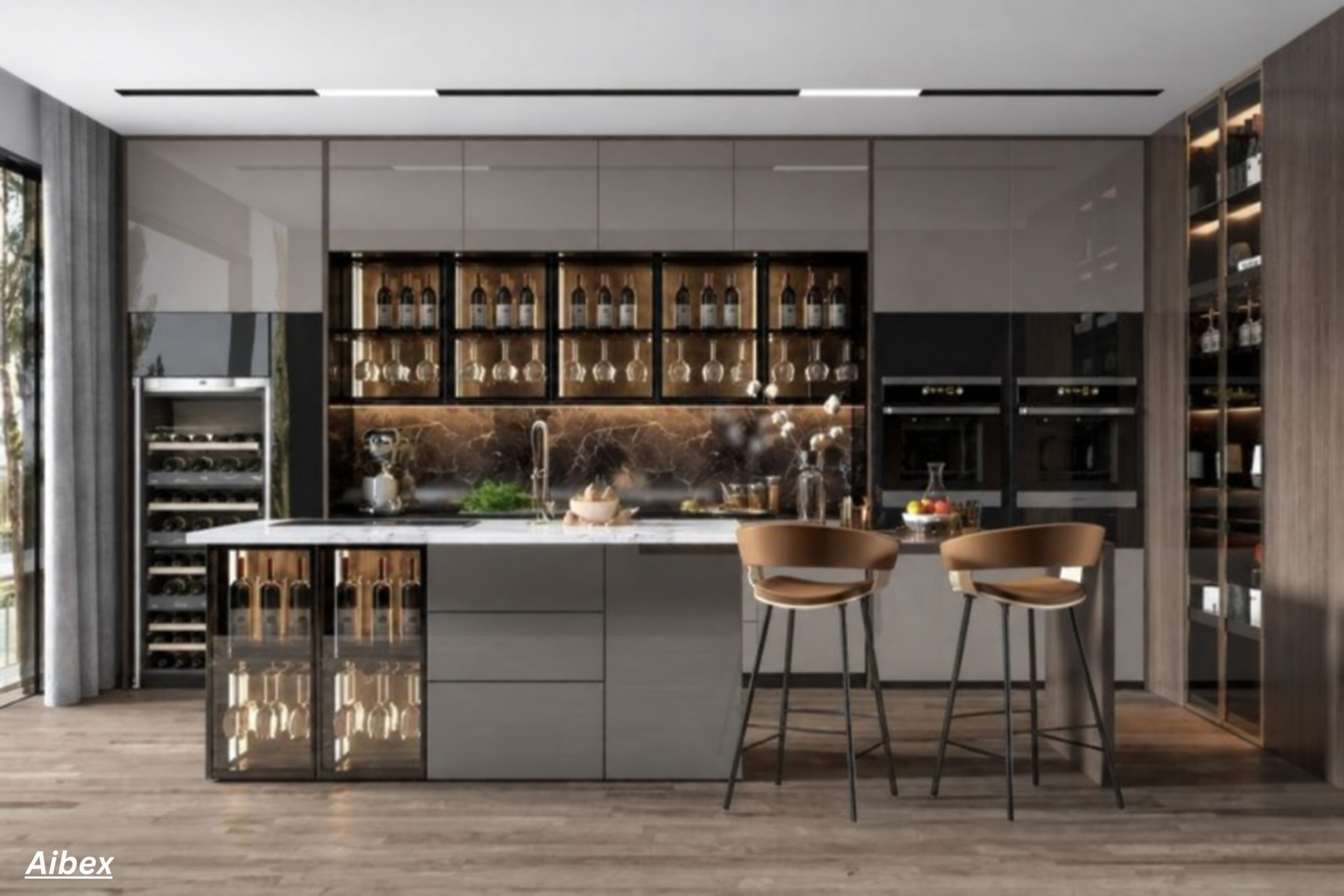
Upper Kitchen Cabinet Height From Floor
In most professional installations, upper cabinets are installed around 54″ off the finished floor.
This placement provides approximately 18″ of clearance between countertops and the bottoms of cabinets.
But for professional projects, there may be more compliance planning to be done.
ADA Accessibility Considerations
ADA requirements are sometimes taken into account in commercial projects in the United States.
Accessibility planning improves:
- Wheelchair usability
- Reach range efficiency
- User comfort
- Multi-generational living support
Accessibility is often a priority when planning a cabinet in hospitals, healthcare facilities and senior housing developments.
5. 30 Inch Upper Kitchen Cabinets: When Do They Work Best?
30 inch upper kitchen cabinets are still in use due to their storage and cost-efficient nature.
These cabinet systems are ideal for the following:
Apartments
Compact cabinets work well in smaller kitchens.
Standard Homes
Residential ceiling heights are generally the same as 30” cabinet systems.
Budget-Conscious Projects
The use of shorter cabinets will save material costs without sacrificing functionality.
In luxury homes, the taller the cabinet systems, the more storage space they can be expected to have.
6. Upper Kitchen Cabinets Materials: Which Option Works Best?
The materials used in the cabinets can have a significant impact on their durability, maintenance needs, and lifespan.
In large-scale projects, material performance is generally assessed prior to procurement approval.
Solid Wood Upper Kitchen Cabinets
Solid wood is one of the most luxurious choices.
Advantages include:
- Luxury appearance
- Strong structural durability
- Long service life
When it comes to luxury villas, they typically opt for:
Moisture exposure can impact wood performance, however.
Professional finishing systems enhance moisture resistance and durability.
HPL Laminate Cabinets
HPL cabinets are still gaining in popularity.
Benefits include:
- Waterproof performance
- Scratch resistance
- Competitive pricing
- Easy maintenance
HPL laminates are often chosen for apartment developments and commercial projects because they result in cost efficiency.
Upper Kitchen Cabinets With Glass Doors
Glass doors on upper kitchen cabinets add a luxurious feel to the kitchen.
For luxury projects, the following are being installed:
- Frosted glass panels
- Clear glass systems
- Aluminum-framed glass cabinets
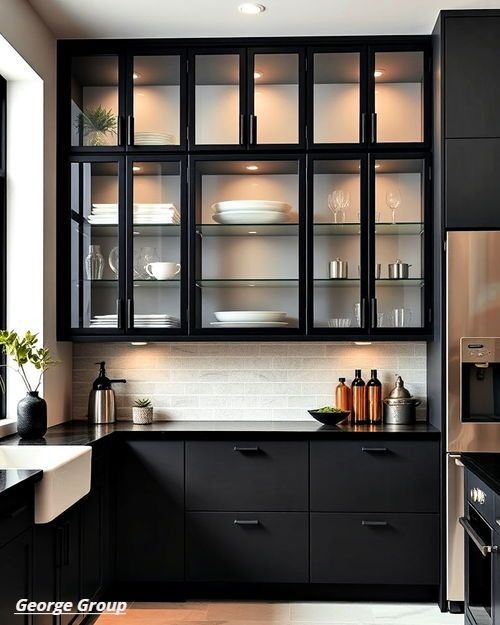
Benefits include:
- Better light reflection
- Luxury appearance
- Larger visual effect
- Decorative display capability
Glass door upper kitchen cabinets are often used in hotels and high-end homes to enhance their appearance.
Steel Cabinet Systems
Steel cabinets are frequently favored in healthcare and commercial kitchens.
Advantages include:
- Fire resistance
- Impact resistance
- Moisture resistance
- Long-term durability
The antibacterial surfaces of cabinets are also important in healthcare settings.
7. Kitchen With Upper Cabinets vs Kitchen Without Upper Cabinets
With all the modern design trends making their way around the world, an important question arises:
But what about a kitchen with upper cabinets or a kitchen without upper cabinets?
Both methods are advantageous.
| Feature | Kitchen With Upper Cabinets | Kitchen With No Upper Cabinets |
| Storage Capacity | High | Lower |
| Organization | Better | Limited |
| Open Feeling | Moderate | Strong |
| Luxury Appearance | Premium | Minimalist |
| Best For | Families, Villas | Open Designs |
Kitchen With Upper Cabinets
A kitchen upper cabinets enhance the following:
- Storage space
- Organization
- Functionality
- Property value
This layout is typically preferred in families and luxury developments.
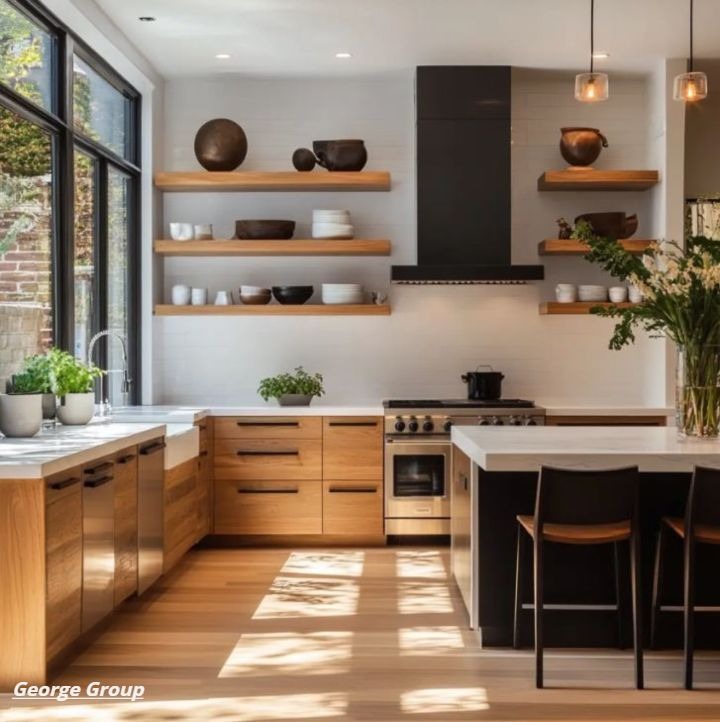
Kitchen No Upper Cabinets Design
A kitchen without upper cabinets will open up a visual space.
Benefits include:
- Cleaner appearance
- More wall visibility
- Minimalist design style
But storage capacity decreases.
Open shelving and upper cabinets are frequently used together in luxury projects to balance each other out.
For more information, see Kitchen planning and design guidelines (industry resource):
8. Upper Corner Kitchen Cabinet Solutions
Planning for corner cabinets has an impact on kitchen efficiency.
Use an upper corner kitchen cabinet to make the most of the space.
Popular solutions include:
Lazy Susan Systems
Storage rotation helps to make the most of space.
Pull-Out Storage Mechanisms
Sliding systems are used to maximize storage efficiency.
Blind Corner Cabinets
The designs enhance challenging corners.
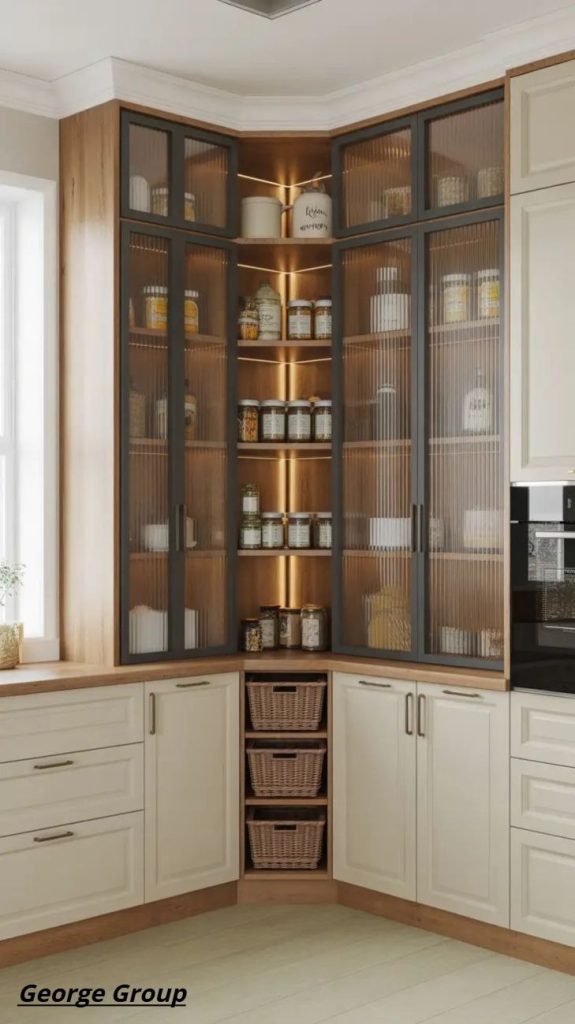
For villas and apartment developments, custom kitchen cabinet upper corner planning is particularly beneficial.
9. Compliance Standards and Certifications Buyers Should Understand
When it comes to cabinet procurement, there’s more to it than looks.
Certifications affect:
- Installation approval
- Project compliance
- Procurement confidence
- Long-term performance
European, Australian and North American customers tend to value certified products.
ISO Certification
ISO systems increase manufacturing uniformity.
Professional buyers may ask ISO certified suppliers to minimize the risk of procurement.
CE Certification
CE certification is often a requirement for European projects.
CE standards enhance approval procedures.
UL and BS Standards
Commercial developments typically state:
- UL compliance requirements
- BS standard compatibility
These certificates enhance trust and facilitate project approvals.
Fire Resistance Ratings
Fire performance is being assessed for commercial projects more and more.
The following are some of the professional specifications that may be included:
- 20-minute fire rating
- 60-minute fire rating
- 90-minute fire rating
Fire resistant building materials are typically preferred for hotels, offices, and healthcare facilities.
Waterproof and Moisture Resistance Performance
There is frequent moisture exposure in the kitchen.
Today’s cabinet specifications are more likely to contain the following:
- Waterproof performance evaluation
- Moisture resistance testing
- Humidity protection systems
The higher the level of moisture protection, the longer the cabinet will last.
STC Ratings and Sound Insulation
Acoustic performance is also assessed for many commercial projects.
The Sound Transmission Class (STC) is a rating of sound insulation.
Improved STC performance benefits:
Hotels
Better guest comfort.
Hospitals
Improved patient privacy.
Offices
Improved meeting room acoustics.
Sound insulation is becoming increasingly important in premium projects.
10. Hardware Compatibility for Commercial and Luxury Projects
The durability of cabinets is directly influenced by cabinet hardware.
Professional developments may state compatibility with:
Heavy-Duty Hinges
Provide larger cabinet doors.
Push Lock Systems
Improve storage security.
Soft-Close Mechanisms
Minimize noise and enhance the luxury experience.
Door Closers
Functionality is a key consideration in commercial projects.
Professional hardware planning ensures a high quality of installation and long-term performance.
11. Custom Upper Kitchen Cabinets for Large Projects
Customized cabinet systems are becoming the preferred option in developed markets.
Luxury villas, hotels and office developments frequently need the following:
- Custom dimensions
- Project-specific layouts
- Material matching
- Finish coordination
At George Group, we support customization in the following ways:
2D Layout Matching
Prior to production, design teams fine-tune cabinet planning.
3D Rendering Design
The client can visualize projects before manufacturing.
One-to-One Design Coordination
Special design assistance is provided for project drawings.
Real House Matching Effect
Clients can preview layouts before approval.
This process not only reduces procurement uncertainty but also enhances the accuracy of the project.
12. Local Procurement vs China Procurement: Which Creates Better Value?
Many developers ask:
Where to source cabinets from—local supply or China procurement?
Either choice has its own merits.
| Factor | Local Procurement | China Procurement |
| Initial Cost | Higher | Lower |
| Customization | Moderate | Extensive |
| Material Selection | Limited | Larger Options |
| Bulk Supply Capability | Moderate | Strong |
| Cost Control | Moderate | Better Optimization |
In addition to the above, professional buyers ask the following:
Can imported cabinets meet local standards?
Certification verification alleviates this concern.
Will procurement timelines affect construction schedules?
Project planning and logistics coordination safeguards installation timelines.
Can overseas procurement reduce costs?
Professional one-stop procurement systems are used by many developers to increase their cost efficiency.
We make procurement easier at George Group by:
- Sample production
- Material coordination
- Installation guidance
- Lead-time planning
- Logistics management
We have solutions for the integrated supply chain, which reduce projects’ complexity.
13. Industry Applications
Luxury Villas and Residential Projects
When building a luxury development, it’s important to focus on:
- Premium finishes
- Glass cabinet systems
- Moisture resistance
- Custom dimensions
Hotels and Apartments
Hospitality projects prioritize:
- Luxury appearance
- Better sound insulation
- Durability
- Cost efficiency
Hospitals and Nursing Homes
Healthcare facilities may need the following:
- Wheelchair accessibility
- Antibacterial materials
- Hygiene performance
- Easy cleaning systems
Modern Offices
There are more and more commercial projects that emphasize the following:
- Flexible storage systems
- Glass cabinet integration
- Lighting optimization
- Space efficiency
14. Why George Group One-Stop Procurement Creates Better Results
Having multiple suppliers causes delays and complexity.
Integrated procurement improves:
- Cost control
- Material consistency
- Lead-time management
- Installation coordination
We at George Group are here to assist architects, designers, developers, engineers, contractors, and homeowners with a one stop indoor building material solution.
We provide:
- Design support
- Sample production
- 2D layout matching
- 3D rendering design
- Material recommendations
- Global logistics coordination
- Installation guidance
Our objective is to assist our clients to achieve projects successfully, with quality and good procurement.
15. Conclusion
Modern upper kitchen cabinets have a lot more impact than storage. They impact compliance approval, procurement effectiveness, installation performance, durability, and project value over time. Successful project outcomes are determined by material selection, certifications, accessibility planning, hardware compatibility and customization capability.
Our design expertise, customization support, project coordination, logistics planning and global supply solutions enable projects to proceed faster and smarter.
Contact us today to discuss project drawings, cabinet requirements and procurement goals to help build the right solution for your next project.
Frequently Asked Questions About Upper Kitchen Cabinets
How deep are upper kitchen cabinets?
Typically, the depth of standard upper kitchen cabinets is 12 inches. Custom options are available from 15″ to 24″.
What is the standard upper kitchen cabinet height?
The typical height of upper cabinets is 30, 36 or 42 inches.
What height should upper kitchen cabinets sit from the floor?
For most professional installations, cabinets are placed about 54 inches off the finished floor.
Are upper kitchen cabinets with glass doors practical?
Yes. Glass cabinets enhance the beauty, reflect light and create a sense of luxury in design.
Does a kitchen without upper cabinets reduce storage?
Yes. Open layouts result in cleaner designs and less storage.
Why do developers choose custom cabinets?
Custom systems provide flexibility in projects, space efficiency, and consistency in designs.
Can imported cabinets satisfy local building requirements?
Professional suppliers can help with compliance with certification and project-specific needs.