
You do not simply consider tables and chairs when you plan a restaurant, cafe or hotel dining space. You consider the way people move, the way they feel, and how easy your staff can work. This is what makes Restaurant Design so significant in contemporary projects.
You may have already realized that good design can transform a small cafe into a hot spot or a hotel restaurant into a luxury experience. Conversely, bad design will slow down service, decrease comfort and even decrease your revenue. That is why restaurant design is not a mere decoration but a business decision.
We have architects, developers, and restaurant owners at George Group who desire more than appearance. We assist you in integrating compliance, durability and cost-effectiveness to ensure a smooth flow of your project is carried out between the concept and installation. You can rely on our team to assist you with design planning, materials and complete procurement solutions, so you can save time and prevent costly mistakes on your next project.
1. What Is Restaurant Design and Why Does It Matter?
Understanding Restaurant Design Beyond Aesthetics
“Restaurant design” refers to the way you plan and construct your dining area in a way that is effective for both the customers and the employees. It incorporates design, materials, lighting, safety regulations, and comfort.
It is not just about beauty. It affects:
- The speed at which your employees deliver food.
- The level of comfort of your customers.
- The amount of your maintenance expenditure.
- How safe your building is
Key Elements of Successful Restaurant Design
To have a successful restaurant, you should concentrate on the following:
- Space flow: The customers are not to be crowded.
- Seating plan: You will have to strike a balance between comfort and maximum occupancy.
- Lighting: Cafes are bright; fine dining is warm.
- Materials: powerful, easy to clean and durable.
- Acoustics: Noise control for better dining experience
You know, by putting these factors together in the right way, you enhance the experience and profit.
2. Top Restaurant Design Ideas for Modern Cafes, Hotels & Dining Spaces
Minimalist Restaurant Design Ideas for Contemporary Spaces
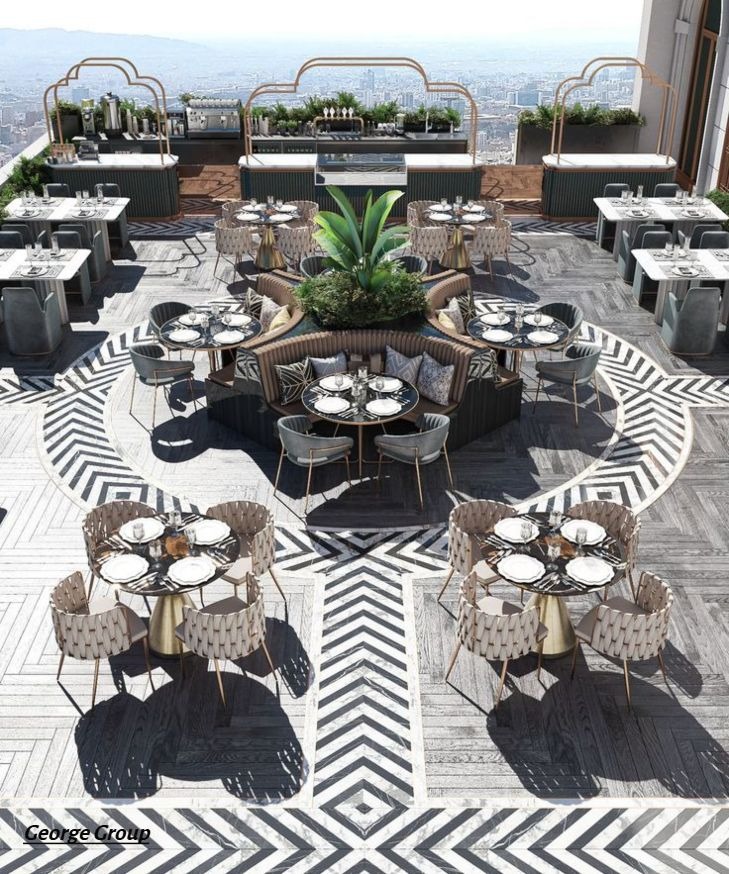
Minimalist design is most effective when you desire a clean, modern and distraction-free space. It makes customers relaxed and concentrated on food and experience rather than on clutter and heavy decoration.
You usually use:
- White and beige, grey, and soft earth colors.
- Minimal detailing and simple furniture.
- Open space designs that do not overcrowd and enhance movement.
This type of design also enhances efficiency in operations since employees can move freely in between tables. It minimizes visual clutter, making even small areas appear larger and more luxurious.
Luxury Hotel Restaurant Interior Design Concepts
Luxury hotel restaurants focus on developing an excellent and memorable dining experience. All the details must be elegant, comfortable and exclusive.
You often see:
- Expensive finishes such as marble countertops, natural stone walls, or rich wood finishes.
- Chandeliers of statements or works of art lighting that make a strong visual impression.
- VIP/business-meeting/family dining areas.
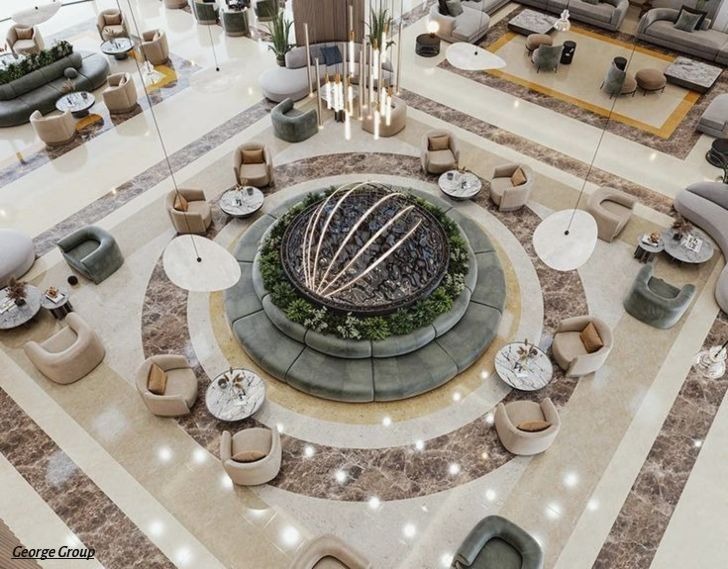
Emotional impact is also a concern of luxury design. Lighting, ideal spacing and quality furniture make the guest feel appreciated and comfortable.
Modern Cafe Design Trends That Attract Customers
Contemporary cafes are very experience-oriented and social media friendly. Nowadays, customers do not go to buy coffee; they go to get the atmosphere, photos, and comfort.
Design features that are popular are the following:
- Instagram-friendly walls that have creative textures, neon signs or artistic murals.
- Open kitchen designs that allow food and coffee preparation to be viewed by customers.
- Adjustable seating areas for individual visitors, groups, and remote workers.
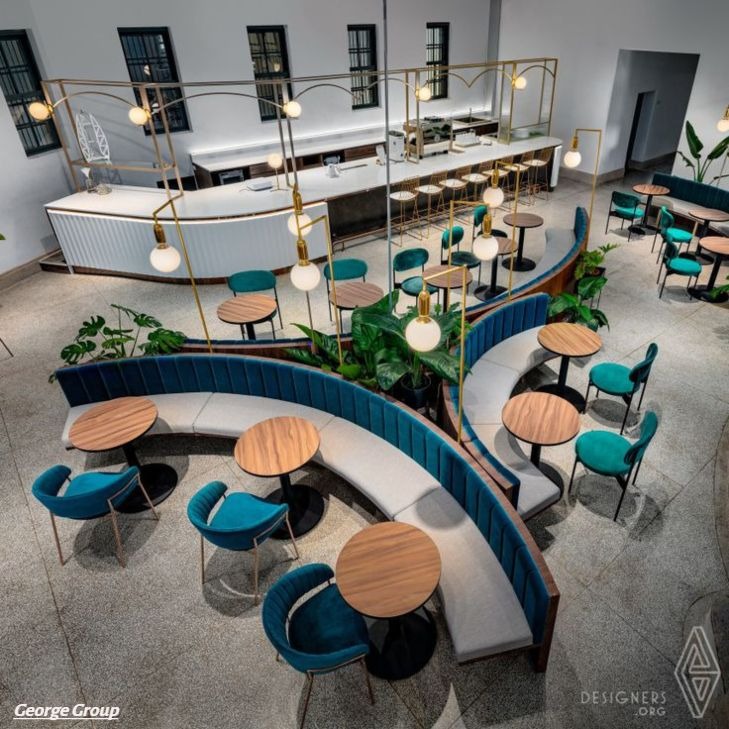
Charging stations, Wi-Fi-friendly designs, and small furniture are also used by modern cafes to accommodate digital lifestyles.
Industrial Restaurant Design for Urban Dining Spaces
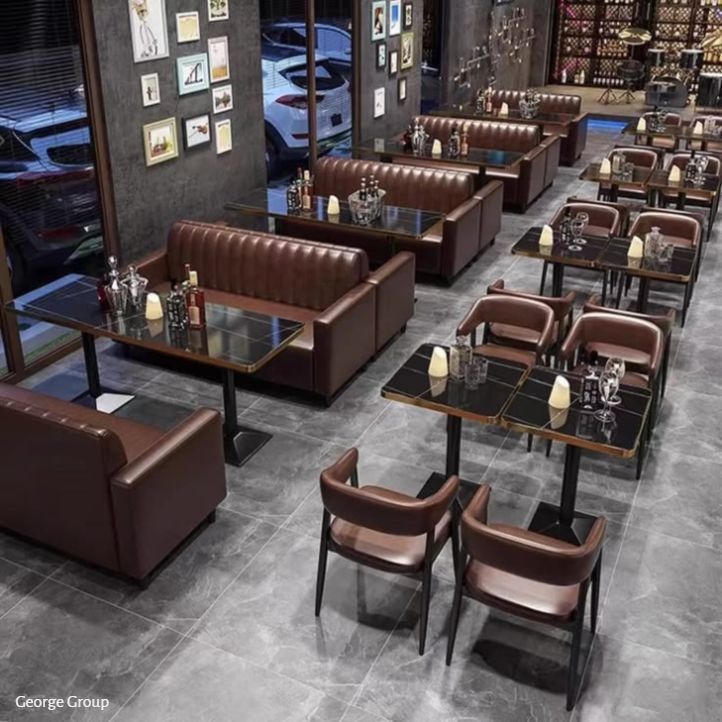
In urban restaurants, industrial design is quite popular, as it makes a bold and modern identity. It usually appears crude yet deliberate.
Key features include the following:
- Uncovered brick walls or concrete surfaces.
- Furniture and partitions, metal frames and steel structures.
- Unpolished wooden tables and rustic finishes are contrasting.
It is a style that is particularly effective in urban settings where restaurants are interested in having a strong personality.
Industrial design is also economical in the sense that fewer finishing materials are usually used yet it provides a high-end look. It is appropriate in casual restaurants, bars and contemporary fusion restaurants.
Sustainable and Eco-Friendly Restaurant Design Ideas
Sustainable design is no longer a choice; it is now a worldwide necessity. A lot of customers are turning to environmentally friendly restaurants.
Important elements include:
- LED lighting systems that save energy and save on electricity bills.
- Reused and environmentally friendly materials such as recycled wood and eco-panels.
- Plants and greenery that enhance aesthetics and air quality.
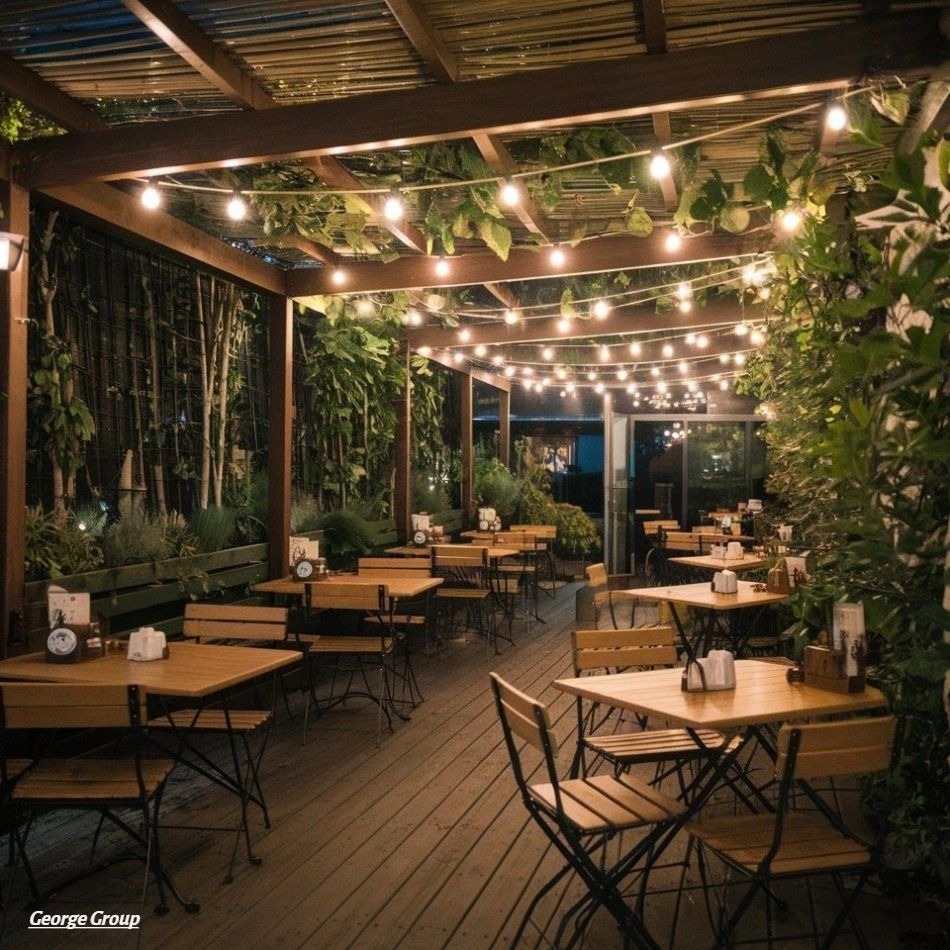
Green design also contributes to lowering the cost of operation in the long term. It develops a favorable brand image and appeals to the environmentally aware customers.
Sustainable restaurants tend to be more trusted and have stronger customer loyalty.
3. Restaurant Interior Design: Essential Factors to Consider
The interior design of restaurants is not merely a matter of appearance. It has direct impacts on safety, comfort and business performance.
Restaurant Floor Design and Space Planning
An intelligent floor plan enhances the efficiency and customer experience simultaneously.
You should distinctly separate the following:
- Comfortable and flowing seating area for customers.
- Safe and efficient food preparation area.
- Service corridors to allow personnel to move at a fast pace without delays.
Good space planning also minimizes waiting time and eliminates the crowding during peak times. It enhances customer satisfaction and employee productivity.
Floor Design for Restaurant Safety and Durability
The floors in restaurants are subject to heavy daily traffic, spills and continuous cleaning. That is why the choice of materials is significant.
Always use:
- Anti-slip flooring to minimize the risk of accidents.
- Waterproof surfaces to deal with spills and cleaning.
- Durable wear-resistant and pressure-resistant materials.
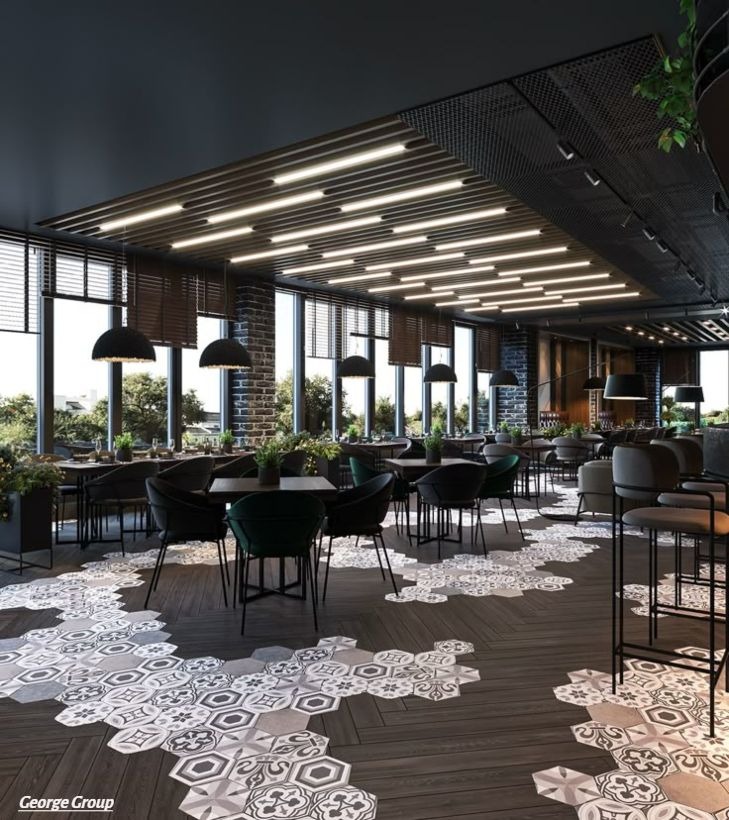
Good flooring does not only enhance safety but also minimizes the long-term maintenance costs. It maintains the appearance of the restaurant as clean and professional despite years of use.
Restaurant Lighting Design Strategies
Lighting contributes significantly to the customer mood and behavior.
Various lighting styles produce various effects:
- The use of warm lights gives a relaxed ambiance to the dining area.
- Bright lights enhance visibility and are appropriate in cafes that serve quickly.
- Accent lighting illuminates decoration, food display and luxury areas.
A balanced lighting scheme enhances both beauty and practicality. It also assists in bringing out brand identity and enhancing customer comfort.
Restaurant Acoustics and Sound Insulation Requirements
One of the most significant aspects of restaurant comfort is noise control. When customers are unable to hear one another, they lose their experience instantly.
We take into account the sound insulation (STC ratings) of better acoustic performance:
| Area | Recommended STC Level | Purpose |
| Dining area | STC 40–50 | Reduce background noise and improve conversation clarity |
| Private rooms | STC 50–60 | Ensure privacy for meetings and VIP guests |
| Hotels | STC 55+ | Create a luxury, quiet dining experience |
Effective acoustic design can be used to manage crowd noise, kitchen sound, and outside noise.
4. Restaurant Design Compliance and Commercial Standards
Any commercial restaurant project requires compliance, safety and long-term success.
ADA Requirements for Restaurant Accessibility
ADA compliance is of high importance in international projects, particularly in the US.
You must include:
- Large, open wheelchair walkways.
- Available seating to all guests.
- Access to proper toilets with mobility support.
These properties make it inclusive and allow your project to go through inspections with ease.
Fire Safety Requirements in Restaurant Design
Fire safety is paramount in any restaurant setting, particularly in kitchens where heat and oil are being utilized all the time.
You must consider:
- Fire resistance of 20, 60 and 90 minutes.
- Safety zone fire-rated doors and partitions.
- UL certified materials with high safety standards.
Effective fire safety planning keeps customers and business property safe.
International Certifications That Matter
Certifications demonstrate quality, safety, and compliance. They also assist in approvals of projects in other countries.
Important standards include:
- ISO standards for quality management and production control
- European safety certification (CE).
- UL certification to approve of the US market.
- Construction safety BS standards in commercial projects.
At George Group we are always steering you towards approved materials to ensure that your project sails through approvals without delays and unnecessary rework.
5. Restaurant Design Equipment & Supply: What Buyers Need to Know
Restaurant projects require a full system and not furniture only. All the parts should collaborate in order to operate smoothly.
Essential Restaurant Design Equipment and Supply Components
A complete restaurant system consists of:
- Seating arrangements such as tables, chairs and booths.
- Safety and organization partitions of the kitchen.
- Ambient and efficiency lighting systems.
- Commercial heavy doors and hardware.
All elements should be aligned with design and operation requirements.
6. Choosing Durable Materials for Commercial Projects
The choice of materials determines the duration of your restaurant and the amount of maintenance required.
Wood vs Steel vs Glass
| Material | Strength | Best Use |
| Wood | Warm and natural appearance | Cafes, lounges, casual dining |
| Steel | Very strong and long-lasting | Industrial kitchens, high-traffic areas |
| Glass | Modern and elegant look | Hotels, fine dining, luxury spaces |
The materials will produce a customer experience that is different, and therefore you need to choose the material that will produce the customer experience that you want based on your brand identity.
HPL and Antibacterial Coatings
High-pressure laminates (HPL) have become popular in current restaurant projects due to their good performance.
Advantages of HPL are:
- Long-term resistance to scratches.
- Easy cleaning and hygiene, water resistant.
- Economical answer to large scale projects.
Another layer of protection is provided by an antibacterial coating. They assist in minimizing bacterial growth, particularly in busy restaurants and contact surfaces.
This enhances the level of hygiene and customer confidence in your restaurant setting.
7. Restaurant Menu Design: How to Create Menus That Increase Sales
A restaurant menu is not a list of food. It is an effective selling instrument that directly impacts what your customers order. With a good menu, you can make more money without altering the quality of your food.
How to Design a Restaurant Menu That Works
A well-designed menu will lead your customers in the right direction towards high-profit products without making it hard to read and comprehend.
You should:
- Boxes, icons, or a location in the upper right corner should be used to highlight high-margin items.
- Use easy to read fonts that can be used in both print and electronic form.
- Avoid clutter so customers don’t feel confused or overwhelmed
The well-organized menu also saves time on ordering, enhances customer satisfaction, and assists staff to serve more quickly. The easier customers comprehend your menu, the more likely they will be to taste new dishes and spend more.
Restaurant Menu Design Trends
Contemporary restaurant menus are no longer printed but are digital-first. This transformation enhances speed, flexibility, and customer interaction.
Popular trends include:
- QR code order systems that enable the customers to scan and browse immediately.
- Online screens in cafes and fast-service restaurants to update in real-time.
- Slim printed menus with emphasis on clean design and branding.
These new formats also save on printing expenses and enable restaurants to change prices or add new seasonal products faster.
To learn more about QR code technology and digital customer experiences:
Common Mistakes in Menu Design
There are numerous examples of restaurants losing sales due to bad menu design, despite having excellent food.
Avoid these mistakes:
- Excessive products that disorient the customers and slow down the decision-making process.
- Fonts that are difficult to read and make it less accessible to customers.
- Ineffective price alignment that causes high-priced products to be too conspicuous or low-priced products to be too opaque.
An organized menu that is clean enhances faster decision making and the value of the overall order.
8. Restaurant Website Design: Building a Strong Digital Presence
Many customers will be introduced to your restaurant through your website. When your site appears to be old or slow, the customers might become uninterested even before they come to your place.
Why Restaurant Website Design Matters
The powerful restaurant site has a direct influence on your business. It assists you to gain trust, attract new customers, and book more.
A good website will assist you:
- Increase the number of reservations with online booking systems.
- Enhance customer confidence through professional images and concise details.
- Display your menu in a way that customers can make decisions prior to coming.
Your site is a virtual shop front. When it appears clean and modern, customers will believe that your restaurant is the same.
Essential Features of a Restaurant Website
An effective restaurant website should be easy, quick and convenient.
Key features include the following:
- Easy table reservations with an online booking system.
- Friendly to mobile devices to allow customers to navigate on any gadget.
- Quick page loading to decrease bouncing.
Search engine optimization friendly structure to enable customers to locate your restaurant on Google.
The inclusion of quality food pictures and transparent menu sections also enhance the engagement and conversions.
9. Design Support Services for Architects and Developers
The restaurant projects usually need to be technically planned, designed and coordinated among different teams. Professional design support comes into play there.
2D Layout Planning
We assist you in designing intelligent and effective restaurant layouts that enhance customer experience and employee performance.
We focus on:
- Layouts that are space efficient and can fit as many people as possible.
- Reduced waiting time and confusion in customer flow systems.
- Optimization of the kitchen to prepare and deliver foods faster.
A 2D layout will help avoid expensive redesigns in the construction process.
3D Rendering Support
The 3D visualization will allow you to view your restaurant prior to construction. This will minimize risk and enhance decision-making.
You get:
- Life-like images of your entire restaurant design.
- You can compare finishes by previewing materials.
- Simulation of lighting to learn the end atmosphere.
This process assists you in discovering the issues at an early stage and making more informed design decisions prior to spending money on building.
One-on-One Project Support
At George Group, our design team works directly with your project drawings. We do not provide generic solutions but fit your specific needs.
We help you:
- Modify plans to actual site specifications.
- Choose appropriate materials to be durable and designed.
- Match design to budget and compliance requirements.
Such a method saves time and enhances the accuracy of the project.
10. Custom Restaurant Design Solutions for Large Commercial Projects
Megaprojects in the restaurant industry need flexibility, accuracy, and tailoring. Off-the-shelf products are not always suitable to actual project needs.
Custom Manufacturing
We provide complete customization depending on your project requirements.
You can customize:
- Furniture dimensions and special floor plans.
- Commercial performance door systems.
- Wall panels that reflect your brand.
Bespoke production makes your restaurant layout special and practical.
Material Options
We offer materials that are very diverse in terms of design styles and durability requirements.
We offer:
- Warm and natural interiors made of solid wood.
- Industrial strength and durable steel frames.
- Glass systems for modern and open designs
- Scratch and moisture resistant HPL finishes.
- Hygienic antibacterial surfaces.
Every material is applicable to various restaurants, such as cafes and luxury hotels.
Hardware Compatibility
We make everything work together in business settings.
Our systems support:
- Controlled movement door closers.
- Emergency safety panic bars.
- Long-lasting heavy-duty hinges.
- Security and safety commercial locks.
This guarantees your restaurant runs safely and efficiently on a daily basis.
Explore More Hotel Design & Procurement Guides
https://georgeonestop.com/hotel-remodeling-ideas-reception-lobby-2026/
https://georgeonestop.com/hotel-room-decoration-service-china-wholesale/
https://georgeonestop.com/hotel-room-layout-ideas-hotels-resorts-2026/
https://georgeonestop.com/luxury-kitchen-cabinets/
11. Procurement Challenges in Restaurant Projects and How to Solve Them
Cost, timing and quality issues are common in restaurant procurement. Knowledge of sourcing options will aid you in making superior choices.
Is China Sourcing Better Than Local Buying?
Local sourcing is compared to international sourcing by many buyers. The basic breakdown is as follows:
| Factor | Local Purchase | China Sourcing |
| Cost | Higher pricing | More cost-effective |
| Customization | Limited options | Highly flexible designs |
| Lead Time | Faster delivery | Moderate with planning |
| Certification | Basic standards | Global certifications available |
China sourcing can be very advantageous to large commercial projects when done right.
Can Chinese Products Meet Global Standards?
Yes. There are numerous suppliers such as George Group that supply materials that are international.
We follow:
- UL certification for safety compliance
- European market certification of CEs.
- Quality management standards at ISO.
- Construction safety BS standards.
These certifications guarantee timely passage of inspections on your project.
Delivery Time Concerns
The procurement schedules are based on the size of the project and customization.
Typical timelines include the following:
- Production: 20-45 days based on complexity.
- Shipping: 15-30 days depending on location.
At George Group, we assist you in scheduling the procurement early to ensure your project is on track and does not experience delays.
12. Restaurant Design Applications Across Different Industries
The design of restaurants varies according to the requirements of the industry. The priorities of each sector are different.
Hotels and Resorts
You need:
- Luxury interiors that impress the guests.
- Powerful sound damping to ensure privacy.
- Comfortable dining environments
Cafes
You need:
- Flexible seating arrangements
- Good branding and appearance.
- Elements that are social media friendly.
Healthcare Dining Areas
You need:
- Patients and staff can easily access it.
- Antibacterial and hygienic materials.
- Wheelchair-friendly layouts
Office Dining Spaces
You need:
- Space-saving furniture systems
- Lighting to save energy.
- Glass walls of the present day.
13. Design District Restaurants: Inspiration from Global Trends
Miami Design District Restaurants
The Miami Design District restaurants are oriented on luxury, creativity and artistic experience. Areas such as Estefan Restaurant Design District demonstrate the combination of culture and design to form distinctive dining areas.
Dallas Design District Restaurants
Dallas design district restaurants specialize in the following:
- Modern finishes and industrial style interiors.
- Open and functional designs.
- Dining areas that are creative and appealing to young professionals.
These sites demonstrate that effective design has a direct positive impact on customer interaction and brand recognition.
14. Why Choose George Group for Restaurant Design and Procurement?
At George Group, we help you with your project, starting with the initial concept all the way to the final installation. We do not simply provide materials; we assist in creating fully functional restaurant areas.
We provide:
- Single source of all restaurant supplies.
- Unique project support through custom design.
- International standard certified materials.
- Quick worldwide delivery and effective logistics management.
- Full-fledged architectural and developer solutions.
We collaborate with architects, developers, and business owners who desire quality reliability, quicker implementation, and cost-efficient solutions without sacrifices.
15. Conclusion: Build Smart, Functional, and Profitable Restaurant Spaces
The design of a good restaurant is not decoration but performance, comfort, and profit. By planning properly, you enhance the customer experience, minimize operational issues, and boost long-term success.
When you desire to develop a restaurant, cafe, or hotel dining area that is well designed, has certified materials and effective procurement, we at George Group can assist you from concept to finalization.
If you are planning a restaurant, cafe or hotel project, contact us today and let our team help you turn your idea into a fully functional, high-performing dining space.
FAQs About Restaurant Design
1. What is the most important part of restaurant design?
The importance of space planning and workflow is the most significant since they influence the speed of service and comfort of customers.
2. How do I design a restaurant menu effectively?
You need to emphasize saleable products and maintain layouts clean and not cluttered.
3. What certifications do restaurant materials need?
Find UL, CE, ISO, and BS safety and compliance certifications.
4. What is the best floor design for restaurants?
Apply non-slippery, waterproof and hard-wearing flooring in high traffic areas.
5. How long does restaurant procurement take from China?
The production and shipping time normally takes 20-45 days.
6. Can restaurant interiors be fully customized?
Yes, you can tailor materials, sizes, finishes and layouts to your project.