
When selecting thermally broken aluminum windows, don’t just pay attention to the frame price. Your climate, glass specification, thermal performance, water and air resistance, wind loads, acoustic requirements, local building requirements, and project budget should all be considered when selecting the right system.
At George Group, we assist architects, designers, developers, engineers, and homeowners in comparing window specifications, reviewing project drawings, coordinating customizations, and sourcing from China. Before you order a lot of windows, if you are planning a villa, hotel, apartment, office, or commercial project, we can help you choose the right window system.
1. What Is a Thermally Broken Aluminum Window?
A thermally broken aluminum window features a layer of insulation between the inside and outside aluminum components to minimize heat transfer through the frame. This design helps increase thermal insulation and can also minimize condensation as opposed to a standard non-thermally broken aluminum frame.
Aluminum transfers heat quickly, and a standard aluminum frame conducts the heat easily. A thermal break provides a break in that path.
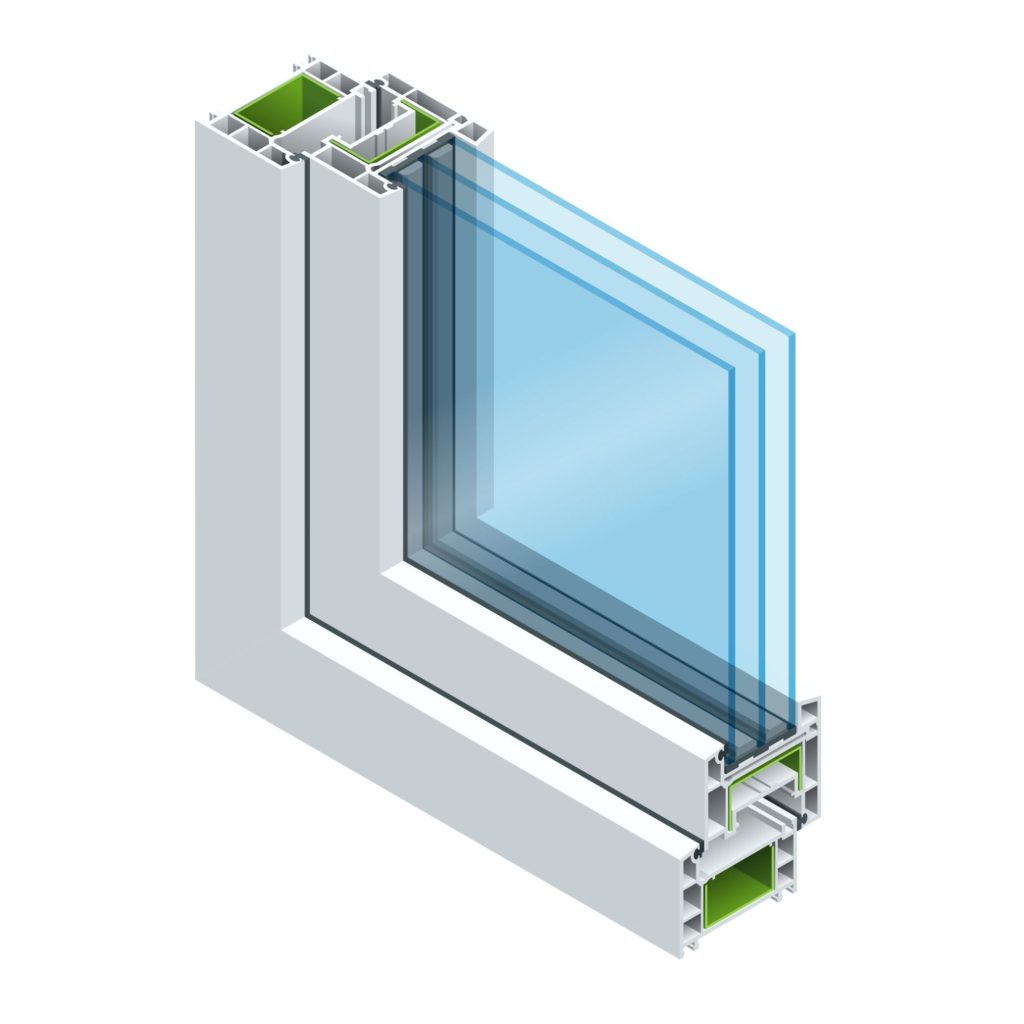
Imagine the frame as two strips of aluminum, separated by an insulating strip. The outside section is exposed to the outside temperature, and the inside section is more isolated from the outside temperature.
For instance, on hot days, the outer frame can get hot in a hot climate. The thermal break helps to slow the rate at which that heat transfers into the interior frame. In a cold climate, it helps to reduce the heat loss from the room to the outside.
How Does a Thermal Break Work?
A basic system consists of:
- Exterior aluminum profile
- Interior aluminum profile
- Insulating thermal barrier made of polyamide or other appropriate insulating material
- Glass unit
- Gaskets and seals
- Hardware
- Drainage and pressure-management features that offer a range of comfort levels.
The thermal barrier provides a less conductive path between the two aluminum pieces.
But there is one important detail to keep in mind: the thermal break is not the only factor that affects the overall performance of a window. Other factors that influence the end result are glass, spacer, seals, frame geometry, installation, and the surrounding wall system.
2. Thermally Broken vs Non-Thermally Broken Aluminum Windows
The key difference is in the thermal separation.
| Feature | Thermally Broken Aluminum Windows | Non-Thermally Broken Aluminum Windows |
| Thermal insulation | Better | Lower |
| Heat transfer through frame | Reduced | Higher |
| Condensation control | Generally better | Generally weaker |
| Energy performance | Better potential | Lower potential |
| Initial cost | Usually higher | Usually lower |
| Long-term comfort | Better for demanding climates | More limited |
| Suitable for premium projects | Yes | Depends on project |
So, is it better to have thermally broken aluminum windows? They generally provide a better solution for projects where thermal performance, comfort, condensation control and energy efficiency are important.
A non-thermal-break system could still be suitable for a simple building in a mild climate.
Are Thermally Broken Aluminum Windows Worth the Extra Cost?
Yes, they can be worth the extra expense if the project requires greater thermal performance and long-term comfort.
The full system, not just the price of purchase, should be compared. If a lower cost window leads to increased energy consumption, condensation issues, decreased comfort, or early replacement, it can end up costing more than a more expensive window.
A developer constructing a high-end apartment project, for instance, may be willing to spend more on thermally broken frames and superior glazing to obtain a more robust product specification and a more comfortable interior environment.
3. Types of Thermally Broken Aluminum Windows: Features and Applications
Thermally broken aluminum systems can accommodate a variety of window configurations. The choice of the right one will depend on the ventilation requirements, space, building design, cleaning requirements, safety, and project budget.
Casement Windows
Casement windows are windows with a hinged sash that moves outward, typically operated by a handle or crank. They offer good ventilation, as it is possible to open a large part of the window area.
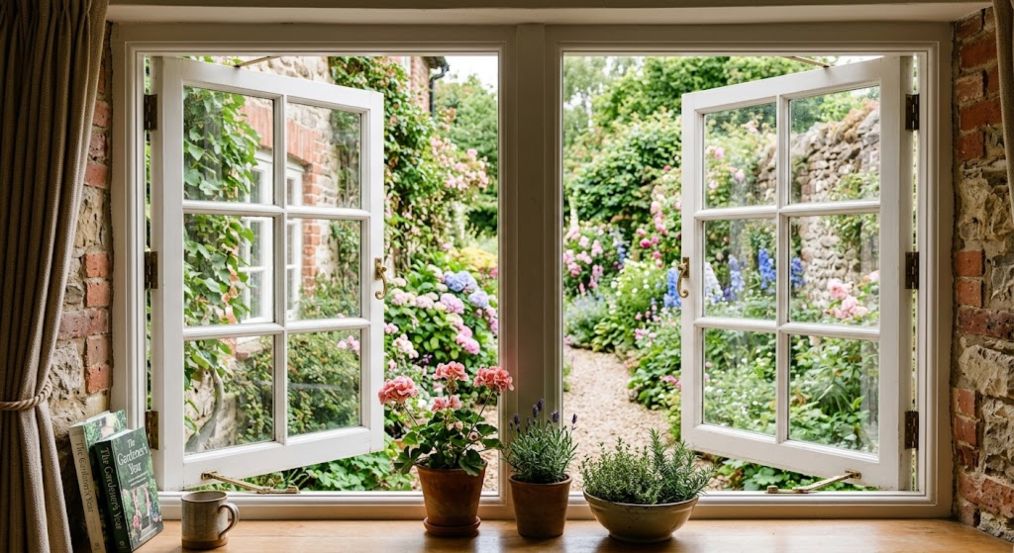
They are suitable for villas, apartments, bedrooms, offices, and other areas where fresh air is important. With a well-designed system, their compression seals can also help ensure good air and water performance.
Awning Windows
Awning windows have hinges at the top and open outward from the bottom. This design will enable a room to be ventilated but will offer some protection from light rain.
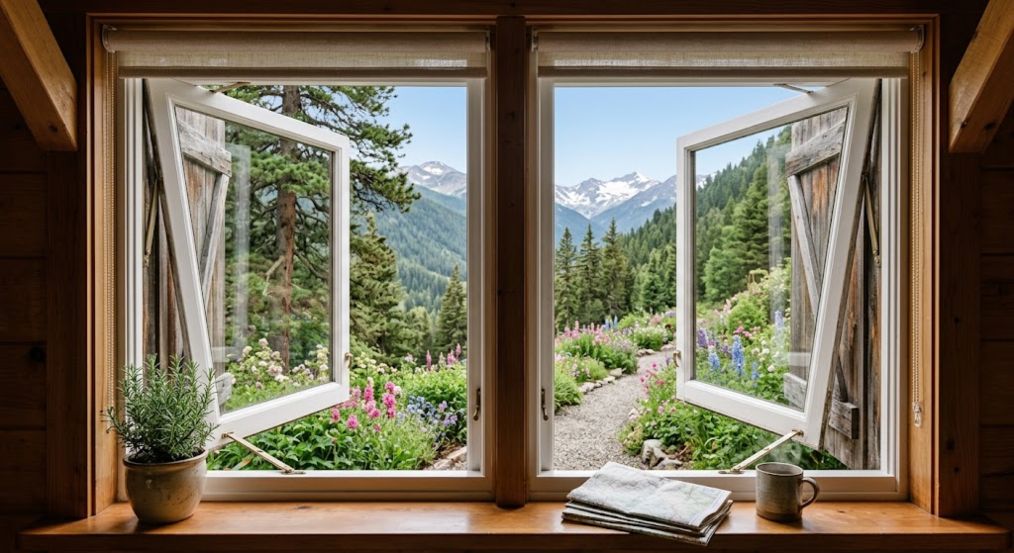
These are great for bathrooms, kitchens, basements, and other spaces that require frequent air exchange. Awning windows can also be mixed with fixed glazing to make a larger window design.
Tilt-and-Turn Windows
Tilt and turn windows have two ways of opening. The top can be tilted inwards to allow for controlled ventilation, and the sash can be turned inwards to allow for a larger opening and cleaning.
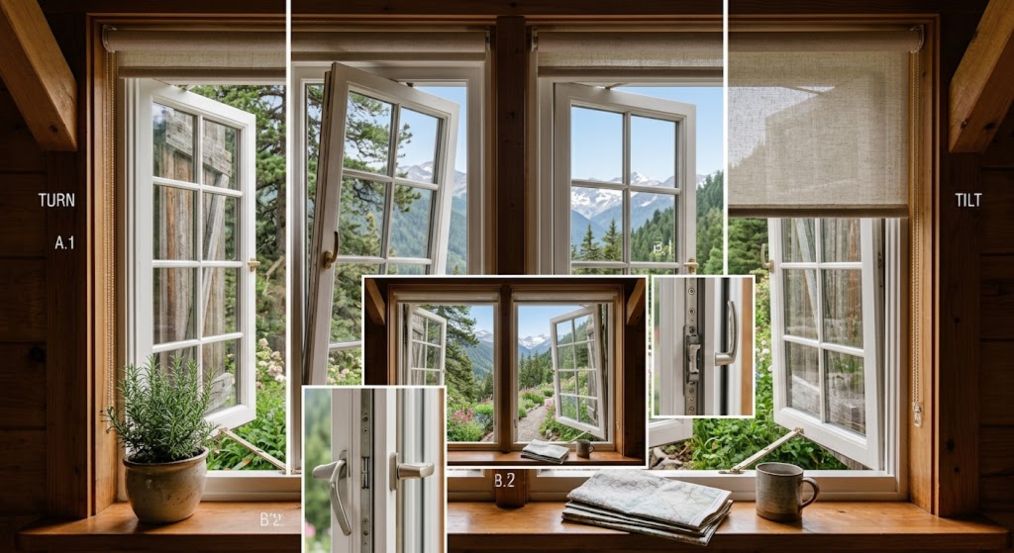
They are ideal for modern houses, apartments, hotels and offices where you are looking for flexibility, ventilation, and easy maintenance. They can also provide a clean and modern appearance.
Sliding Windows
Sliding windows are windows that can be moved horizontally along a track rather than outward or inward. They are ideal for situations where you don’t have a lot of room around the window.
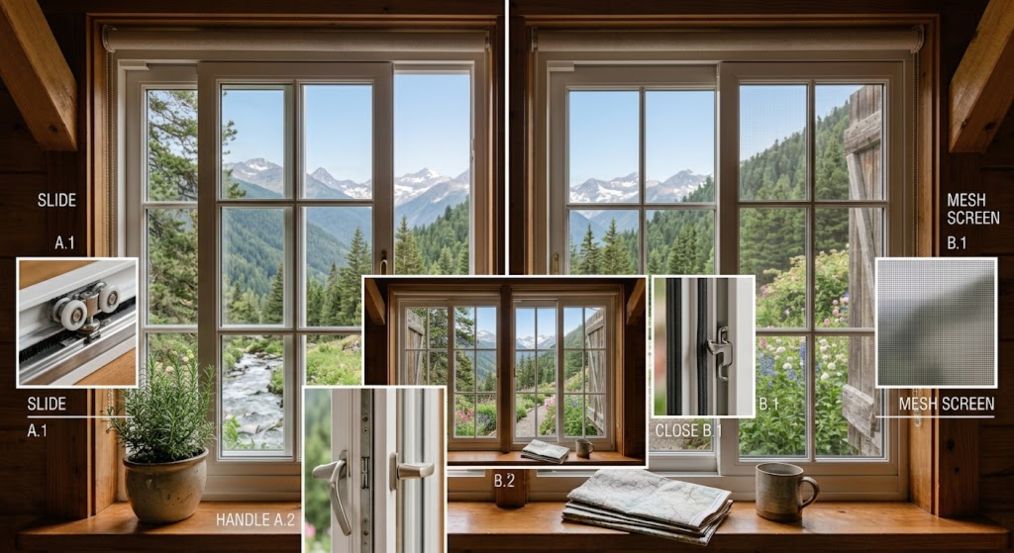
They are suitable for apartments, balconies, offices and modern residential projects. You should, however, be very attentive to the track, rollers, seals, and drainage, as these are the parts that will have an impact on your long-term performance.
Fixed Windows
Fixed windows are windows that can’t be opened. Instead, they allow for natural light and an unobstructed view.
They are particularly suitable for large facades, living rooms, staircases, hotel rooms, offices, and buildings with nice views of the outside. They can also have a simple and clean design due to no opening hardware.
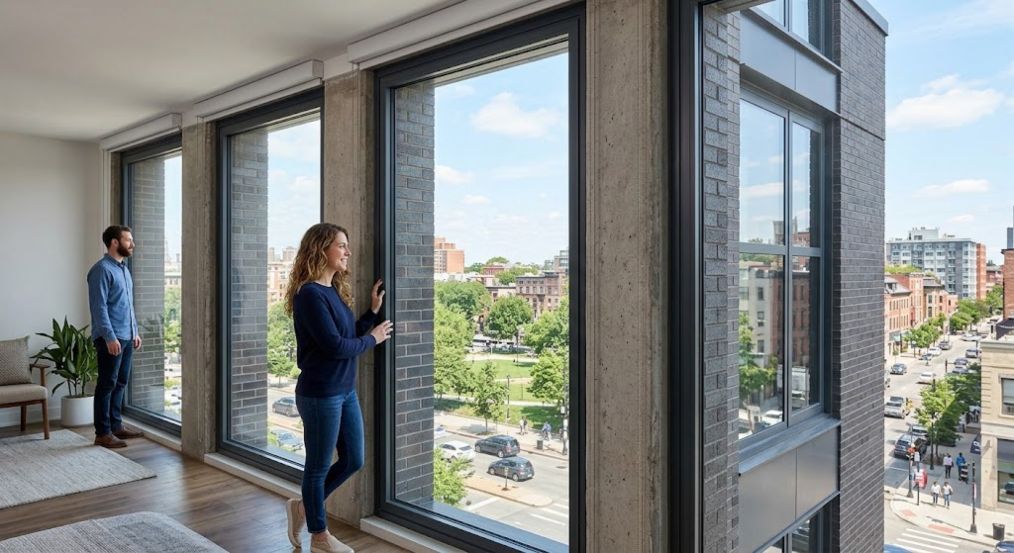
For instance, a large fixed window can be paired with smaller opening windows to ensure ample natural light and ventilation.
Large-Format Glazing
Large format glazing involves the installation of larger glass panels, which can help to create a more open and modern feel. These designs can be achieved with thermally broken aluminum frames when the profile, glass, hardware, and structural requirements are compatible with the project.
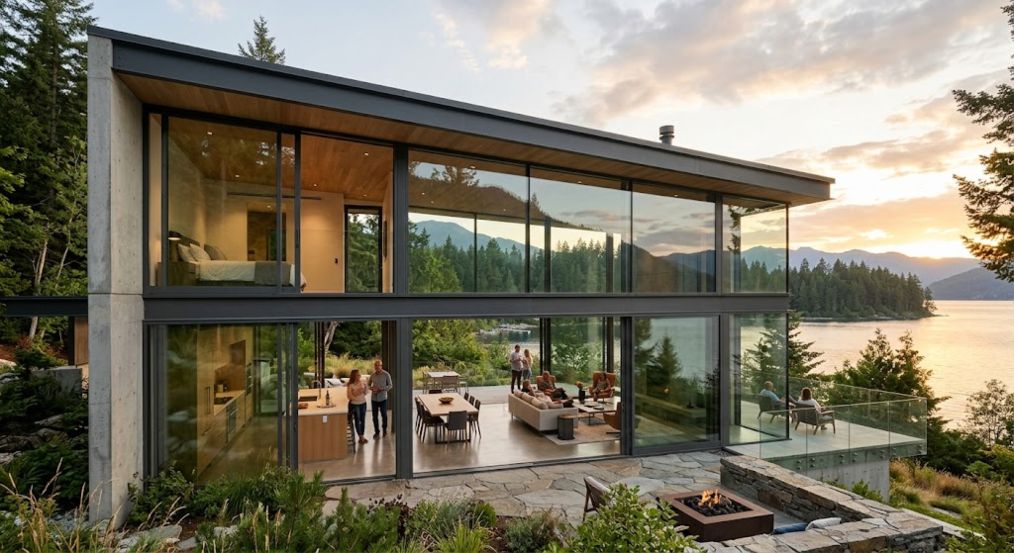
It is suitable for luxury villas, hotels, commercial buildings, showrooms, and modern offices.
Consider the glass weight, wind load, thermal performance, solar exposure, transportation, and installation requirements before selecting large glass panels.
Bi-Fold Windows
Bi-fold windows open up by folding and stacking multiple panels to one or both sides. They can provide a large opening between inside and outside spaces.
They are commonly used for luxury villas, restaurants, hotels, patios, balconies, and entertainment areas.
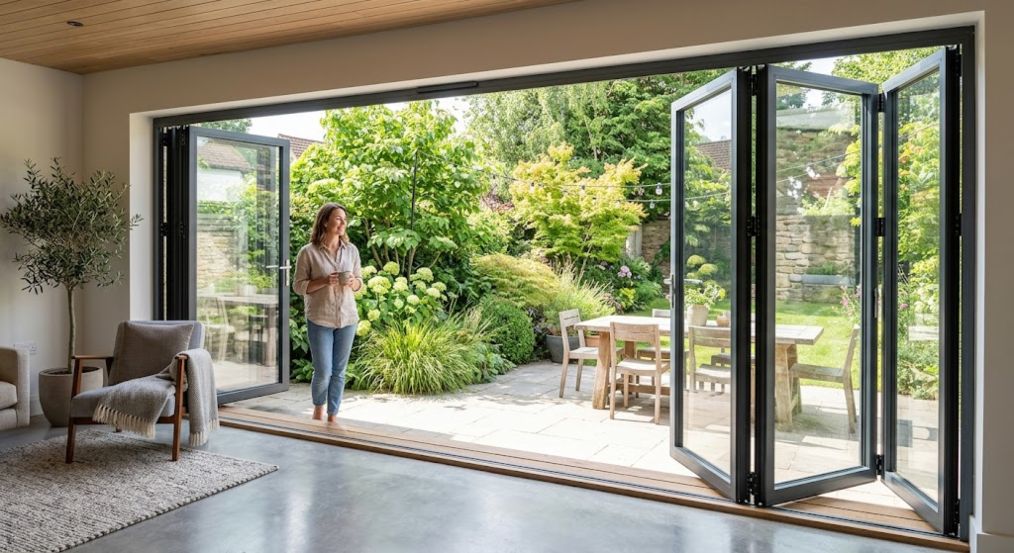
If you are looking at a large bi-fold, be sure to check out the track, the rollers, the hinges, the weight of the panels, the seals, and the installation; all of these can create smooth operation and long-term durability.
How to Choose the Right Window Type
| Window Type | Best For | Main Benefit |
| Casement | Villas, bedrooms, offices | Strong ventilation |
| Awning | Kitchens, bathrooms | Ventilation with rain protection |
| Tilt-and-turn | Homes, hotels, apartments | Flexible opening |
| Sliding | Apartments, balconies | Saves space |
| Fixed | Views and large façades | Maximum daylight and views |
| Large-format glazing | Luxury and commercial projects | Modern appearance |
| Bi-fold | Patios, hotels, villas | Wide indoor-outdoor opening |
EXPERT TIP: You should not rely on the look of the window type. First review the project’s climate, ventilation requirements, glass type, wind load, waterproofing requirements, thermal performance, space constraints, and installation requirements. If you are working on a large project, you should also make sure that you are matching the type of window with the architectural plans before production, which will prevent you from making costly changes later.
4. Key Specifications to Check Before Buying Thermally Broken Aluminum Windows
Before asking for a quotation, make a technical specification. This makes it easier to compare suppliers.
U-Value and Thermal Performance
The lower the U-value, the more resistant to heat transfer. According to NFRC, U-factor is a measure of product resistance to heat loss; the lower the number, the better the product will prevent heat loss.
But don’t compare just the frame U-value.
Request a window system performance, as the frame, glass, spacer, and other factors have an impact on performance.
A simple single glazed frame with a thermal break, for instance, can have a lower R-value than a high-performance insulated glass system with a good thermal break.
Solar Heat Gain and SHGC
SHGC (Solar Heat Gain Coefficient) indicates the amount of solar heat that is transmitted through the window into the building. Generally, lower SHGC values help to minimize unwanted solar gain in warm climates. The U.S. Department of Energy explains that low-SHGC glazing is particularly useful in warm climates where reducing solar heat gain can reduce cooling demand.
The ENERGY STAR window guidance also explains that U-factor and SHGC requirements vary according to climate zone.
This is particularly important for large glazed surfaces.
If the hotel is located in a hot region and faces the sun, solar control glass and an appropriate SHGC might be considered. The design team can select another balance for a cold climate.
Therefore, don’t select the same glass specification for all countries.
Air Infiltration and Airtightness
Leaky air impacts comfort and energy performance.
A good window system will prevent the uncontrolled movement of air through the frame, joints, seals, and opening parts of the window.
Request air-leakage test results from suppliers for the specific window system. Not all windows are created equal, even if they are the same aluminum style.
Water resistance and waterproof performance.
Water resistance is important if the window is subjected to rain, wind, and pressure.
Appropriate seals, drainage paths, joints, and flashing details should be used to control water in a good system.
Water performance should be given additional consideration for high-rise buildings, coastal properties, and exposed facades.
Structural and Wind Load Performance
The larger the window, the more the structure is challenged.
The level of performance required will vary based on the factors, including:
- Building height
- Window size
- Site location
- Wind speed
- Exposure
- Building shape
- Installation method
- Glass thickness
- Frame design
When you are looking for a window for a large villa in a windy coastal area, you can’t just go for a standard window, as it seems to have the same dimensions. Inquire with the manufacturer regarding project-specific requirements.
5. Hurricane and Impact Resistance
When purchasing windows for a hurricane-prone U.S. area, look at the complete tested system and not just a marketing term like “hurricane resistant.”
The window may require appropriate impact glass, frame reinforcement, hardware and structural performance.
North American fenestration standards address areas such as structural integrity, water penetration, and air leakage. The AAMA/WDMA/CSA 101/I.S.2/A440-22 North American Fenestration Standard covers windows, doors, and skylights and includes requirements related to these performance areas.
The specific requirements for the project’s location should be verified by your architect or code professional.
6. Sound Insulation and STC Ratings
For projects that require privacy or acoustical performance, inquire about the performance of the entire window assembly.
STC, or Sound Transmission Class, is a means of comparing the sound transmission of building elements.
A typical residential project may not require as high a performance level as a hotel, hospital, office, or apartment.
Glass is a key component. Acoustic performance can be altered by laminated glass, insulated glass, varying thicknesses of glass, and increased air space.
For instance, a hotel next to a main road might require a higher acoustic specification than a villa in a quiet suburban location.
7. Glass Options for Thermally Broken Aluminum Windows
The frame is important, but so is the glass.
Double Glazing vs Triple Glazing
Double glazing is a combination of two glass panes with insulating space between them. Triple glazing is an additional pane and insulating layer.
The U.S. Department of Energy notes that adding multiple glazing layers, Low-E coatings, and insulating gas between panes can help reduce thermal transmittance and improve window performance.
| Factor | Double Glazing | Triple Glazing |
| Initial cost | Lower | Higher |
| Weight | Lower | Higher |
| Thermal performance | Good | Generally higher |
| Acoustic potential | Good | Can improve depending on design |
| Frame/load requirements | Easier | More demanding |
| Best use | Many residential/commercial projects | High-performance projects |
Never go with the triple glazing option. Always inspect the climate, energy target, frame capacity, glass weight and project budget.
Low-E, Laminated, Tempered, and Acoustic Glass
Thermally broken frames can be used with a variety of glass types, depending on the project.
- Low-E Glass: Helps control heat transfer and solar radiation.
- Laminated Glass: Enhances safety and can contribute to acoustics.
- Tempered Glass: Offers greater safety and strength for appropriate uses.
- Insulated Glass: This is a combination of various panes for better thermal and acoustic performance.
- Solar-Control Glass: Assists in the control of solar heat.
- Acoustic Glass: Helps reduce unwanted outdoor noise.
If the supplier is a good one, he or she should assist you in coordinating the glass with the window frame rather than as a standalone item.
8. Aluminum Profile Materials, Finishes, and Customization
Aluminum Alloy and Profile Thickness
The thickness of aluminum is not the only indicator of quality.
The performance of a window is determined by the full window profile design, alloy, thermal-break setup, reinforcement, hardware, glass, seals and testing.
In the case of large commercial projects, request technical drawings and section details. These documents will enable your architect or engineer to understand exactly what you are purchasing.
Powder Coating and Anodized Finishes
With powder coating, you have a variety of colors and finishes to choose from. Anodizing produces a separate surface texture and can achieve an architectural finish.
You should take into account:
- Project appearance
- Exposure to weather
- Coastal conditions
- Maintenance
- Color requirements
- Local coating specifications
For some projects, you can also order custom RAL colors and wood-look finishes.
9. Thermally Broken Aluminum Windows for Different Projects
Villas and Residential Buildings
In the case of villas, pay attention to thermal comfort, energy performance, condensation control, appearance, and noise reduction.
Large windows can help to create a modern appearance, but they also increase solar exposure. Combine the frame with appropriate glazing and shading.
Hotels and Serviced Apartments
Hotels require comfort and durability.
The temperature difference and noise from the outside are quickly noticed by guests. An appropriate thermally broken system combined with the appropriate glass can contribute to better room comfort and acoustics.
Modern Office and Commercial Buildings
Large glazed areas are used to allow daylight to enter the offices and to give an open feel.
In this case, it is a question of balancing daylight, solar heat, thermal performance, glare and acoustic privacy.
Hospitals and Healthcare Facilities
Careful consideration of thermal comfort, hygiene, safety, acoustic control, accessibility, and local code requirements is important for healthcare projects.
The window specification should be based on the technical requirements of the project and not a standard residential window product.
10. What Standards and Certifications Should You Check?
Depending on the country of destination and project, a certification is required.
U.S. Projects
Inquire about the local building-code requirements and applicable performance standards, testing, and energy ratings for U.S. projects.
NFRC offers third-party energy-performance ratings for windows, doors, and skylights, including U-factor, SHGC, visible transmittance, air leakage, and condensation resistance.
For applicable U.S. and Canadian projects, the AAMA/WDMA/CSA 101/I.S.2/A440 standard provides a major reference for fenestration performance.
European Projects
In the case of European projects, review the relevant EN standards and CE requirements for the particular product.
The European Commission’s Construction Products Regulation information explains the harmonized framework for construction products and the role of performance information and CE marking.
Don’t only ask a supplier, “Do you have CE?” Request documentation for the specific window system and use.
Australian Projects
Requirements for windows and external glazed doors vary from project to project in Australia.
Standards Australia’s Consumer Reference Guide for Windows and External Glazed Doors provides plain-language information about the relevant standards and their application.
The key lesson is simple: certification has to fit the product and project.
11. How to Choose Thermally Broken Aluminum Windows for a U.S. Project
There are three primary issues that U.S. buyers are concerned about: compliance, cost, and delivery time.
Should You Buy Locally or Import From China?
The lowest factory price isn’t necessarily the lowest overall cost.
Compare:
| Cost Factor | Local Purchase | China Procurement |
| Factory/product price | Usually higher | Often competitive |
| Customization | Available | Often flexible |
| Shipping | Lower | Additional |
| Duties/taxes | Different | Must calculate |
| Quality inspection | Easier locally | Should arrange before shipment |
| Certification | Easier to verify locally | Must verify documentation |
| Lead time | Often shorter | Production and shipping required |
| Large-volume pricing | Depends on supplier | Can be competitive |
Total landed cost, not factory price, is the correct comparison.
Can Windows From China Meet U.S. Requirements?
Yes, a Chinese manufacturer will be able to make systems that will comply with applicable requirements, but you should check the actual product documentation.
Don’t assume the general certificate from a manufacturer is applicable to all windows.
Ask for:
- Product technical drawings
- Test reports
- Performance ratings
- Glass specifications
- Profile details
- Thermal-break specifications
- The results of air and water tests.
- Structural/wind performance as required
- Applicable certification documents
In this way, your project team will have proof instead of the supplier’s word.
How Long Does It Take to Source Windows From China?
The timing will vary based on customization, quantity, testing, manufacturing capacity, manufacturing schedules, and shipping.
The typical sequence of procurement is as follows:
- Drawings → Technical specification → Supplier matching → Sample → Approval → Production → Inspection → Packaging → Shipping → Customs → Delivery
Begin the process early. Delays in the windows can impact other building operations, as windows are a frequent part of the building envelope.
12. How to Calculate the Real Cost of Imported Windows
Much more than what the factory quotes is the real cost.
Total Landed Cost
Factory Price + Packaging + Inland Freight + Export Charges + Ocean Freight + Insurance + Duties + Taxes + Customs Clearance + Port Charges + Local Delivery + Installation
Inquire about possible fees for:
- Custom tooling
- Special colors
- Special glass
- Hardware upgrades
- Testing
- Samples
- Replacement parts
- Storage
- Additional packaging
This calculation will help you do a fair comparison with Chinese and local suppliers.
13. How We Help With Thermally Broken Aluminum Window Procurement
We believe at George Group that we should make it easier for architects, developers, designers, engineers, and homeowners to procure building materials.
Project Drawing Review
Your project drawings can be reviewed, and the window sizes, types of openings, finishes, glass selections, and technical requirements can be determined.
2D Layout Matching
We have a team that will be able to assist you with window specifications that match your project layouts to help reduce measurement and ordering errors.
3D Rendering Support
If appearance is important in the project, we can provide 3D visualization for you to see how chosen materials and finishes will fit into the design.
Samples Before Bulk Production
If you are doing a big job, samples will enable you to verify:
- Frame color
- Profile appearance
- Glass
- Hardware
- Finish
- Opening style
The specification can be approved prior to bulk production.
Bulk Procurement and Cost Control
These large projects may require hundreds of windows, each of which may be a different size and type.
Support in specifying, quantifying, and communicating with suppliers, quality control and logistics, enabling you to better control costs.
Quality Control Before Shipment
You should confirm dimensions, finishes, glass, hardware, packaging, quantities and approved specifications with your team before shipping.
This will avoid costly issues once the container has arrived at its destination.
14. Common Mistakes When Buying Thermally Broken Aluminum Windows
Choosing Only by Price
But a low quotation is not necessarily good value. Look at performance, glass, hardware, certification, packaging, logistics, and installation.
Ignoring the Glass
There is no substitute for a good thermal-break frame and a bad glass specification.
Comparing Only Aluminum Thickness
Consider the entire window system, not just one measurement.
Ignoring Local Building Requirements
One product may not be suitable for the needs of another country’s project.
Buying Without Technical Documents
Before placing a big order, always ask for drawings, specifications, test reports, and pertinent certificates.
Forgetting Installation
Even a high-performance window can be compromised by the installer creating gaps, poor seals, incorrect drainage, or weak connections.
Ordering Too Late
Design, samples, approvals, production, inspection, shipping, customs, and local delivery time.
15. Thermally Broken Aluminum Windows: Quick Buyer Checklist
Prior to ordering, please check:
- The location of the project and the climate.
- Local building requirements
- Window dimensions
- Opening type
- Aluminum profile
- Thermal-break specification
- Glass type
- U-value
- SHGC
- Air infiltration
- Water resistance
- Wind-load performance
- Where applicable, hurricane/impact requirements apply.
- Acoustic requirements
- Hardware
- Surface finish
- Test reports
- Certifications
- Packaging
- Production lead time
- Shipping schedule
- Installation requirements
- Total landed cost
16. Conclusion: How to Choose the Right Thermally Broken Aluminum Window System
The thermal performance of the right thermally broken aluminum windows should be in line with the climate, building requirements, window dimensions, thermal goal, glass type, wind exposure, waterproofing, acoustic requirements, and the visual and budget of your project. Don’t select a system just because the factory sells it for the lowest price.
At George Group, we can assist you in reviewing project drawings, matching window specifications, 2D layout and 3D design, arranging samples, coordinating bulk procurement, checking product documentation, and sourcing and logistics from China. If you have project drawings or a window schedule, please reach out to our team and let us assist you in determining the right system, specifications, and total procurement cost prior to production.
This approach can help you save time and money while reducing procurement errors for large villas, hotels, apartments, offices, and commercial projects. Contact us to discuss your project requirements and start planning your thermally broken aluminum window procurement.
FAQs About Thermally Broken Aluminum Windows
Are thermally broken aluminum windows better than standard aluminum windows?
Yes, they offer higher thermal insulation and comfort levels compared to non-thermally broken systems. But the performance of the window is also influenced by glass, seals, frame design, and installation.
Are thermally broken aluminum windows energy efficient?
Yes. When used in conjunction with appropriate insulated glazing, Low-E glass, seals, and installation, they can help enhance energy performance.
Are thermally broken aluminum windows suitable for hot climates?
Yes. They are effective in warm climates when used with appropriate SHGC and solar-control or low-E glass and the thermal break. This combination can help to minimize unwanted solar heat gain.
Are thermally broken aluminum windows worth the cost?
Yes, they can be worthwhile considering their value for villas, hotels, apartments, offices, and other projects requiring improved thermal performance, comfort, and long-term value.